



- Home
- /
- High Courts
- /
- Orissa High Court
- /
- Orissa High Court Grants Relief To...
Orissa High Court Grants Relief To IMFL Shop Owner; Says License Fee Can't Be Levied During Period Of Closure Due To SC's Highway Liquor Ban
Jyoti Prakash Dutta
12 Nov 2025 2:45 PM IST
The Orissa High Court recently granted relief to the owner of an IMFL On Shop who was asked to pay license fees from 2018-19 for considering the renewal of the license, even though the shop had been closed following the Supreme Court's judgment in State of Tamil Nadu & Ors. v. K. Balu & Anr. (2016), which ordered the closure of all liquor shops located within 500 metres of National...
This is a premium content
Available exclusively to
Our subscribers
Subscribe Premium 
INR 1099+GST
Your support helps us to bring you more content at
an affordable subscription scheme !!!
All payment options available
The Orissa High Court recently granted relief to the owner of an IMFL On Shop who was asked to pay license fees from 2018-19 for considering the renewal of the license, even though the shop had been closed following the Supreme Court's judgment in State of Tamil Nadu & Ors. v. K. Balu & Anr. (2016), which ordered the closure of all liquor shops located within 500 metres of National and State Highways.
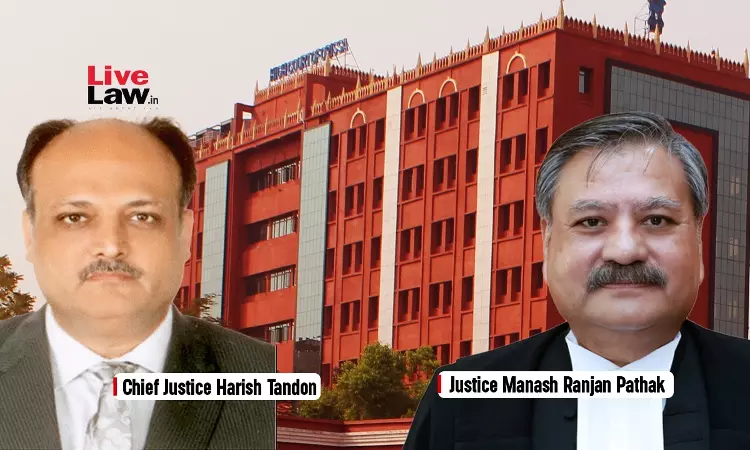
A Division Bench of Chief Justice Harish Tandon and Justice Manash Ranjan Pathak said –
“If the Government has taken a conscious decision to waive the license fees or the other statutory imposition provided in the statute for the period when the shop allotted to the petitioner comes within the mischief of the distance norms, we do not find any rationality and/or reasonability in the decision of the Government in charging the fees for the next year when the Government was conscious that the petitioner was not permitted to run the shop at the said site.”
The petitioner was granted a license in 2009-10 for running an IMFL On Shop from the existing site, after compliance of all the statutory formalities. The license was renewed from time to time until 2016-17.
In December 2016, the Supreme Court in the case of State of Tamil Nadu & Ors. v. K. Balu & Anr. directed the closure of all the liquor shops, which are visible from the National Highways or the State Highways; directly accessible from a National Highway or the State Highway and situated within a distance of 500 meters of the outer edge of the National Highways or State Highways or of a service lane along the highway.
Subsequent to the judgment, the State Government issued a notification for the closure of all the liquor shops coming within the above distance norms. The petitioner's shop was also found to be covered under such a requirement, leading to its closure.
Thereafter, in Arrive Safe Society of Chandigarh v. The Union Territory of Chandigarh & Anr. (2017), the Supreme Court relaxed the distance norms and impliedly modified the order passed in K. Balu (supra) the extent that the prohibitions were relaxed in favour of licensed establishments situated within a municipal area. Further, liberty was also granted to the State Governments to decide whether such prohibition should apply to the areas covered under the local self-governing bodies and the statutory development authorities.
Pursuant to such order, the State precluded licensed shops situated within the local bodies or the statutory bodies from closure, if other conditions are fulfilled. However, a letter was issued to the petitioner to suggest an unobjectionable alternative site, as some issues existed at the previous site.
When the petitioner suggested an unobjectionable alternative site to shift the said shop, the Revenue Department made a claim for payment of the license fees commencing from 2018-19 till date as a condition precedent for granting the license in this regard.
Placing reliance upon Section 35 of the Odisha Excise Act, the petitioner vehemently argued that the license fees can only be charged for failure on the part of a licensee to comply with all the terms and conditions of a license and not in respect of the act which was beyond his control or an act done in compliance with a Court order.
Thus, the issue for consideration was whether the action of the Government in charging the license fees commencing from 2018-19 onwards can be justified when the shop was closed as per the order of the Supreme Court.
The Bench made it clear that a line of distinction has to be drawn between a 'voluntary closure' and 'involuntary closure'. Despite having an inclination to continue with the adherence of the terms of the license, the individual licensees were forced to close their shops to give effect to the order passed by the highest Court. This amounts to an involuntary closure. Being conscious of the same, the Government chose not to levy any license fees for the year 2017-18 and waived such right.
Therefore, the Court held that when the petitioner has suggested an unobjectionable site, she cannot be compelled to pay the fees from the year 2018-19 onwards for renewal of the license, especially taking into account the fact that the Government consciously decided to waive the license fees for the period when the shop was shut for coming within the ambit of the distance norms.
Accordingly, it quashed the impugned letter of the Excise Department and directed it to take a decision immediately for renewing the license at the unobjectionable site suggested by the petitioner.
Case Title: Smt. Puspalata Samal v. State of Odisha & Ors.
Case No: W.P.(C) No. 22144 of 2022
Date of Judgment: October 29, 2025
Counsel for the Petitioner: Mr. Prafulla Kumar Rath, Senior Advocate; Mr. S.B. Rath, Advocate
Counsel for the State: Mr. Subha Bikash Panda, Addl. Government Advocate
Citation: 2025 LiveLaw (Ori) 149


