



- Home
- /
- High Courts
- /
- Patna High Court
- /
- S.53A CrPC | Patna High Court Calls...
S.53A CrPC | Patna High Court Calls For Sensitisation Of Police To Conduct Medical Examination Of Accused In Sexual Offence Cases
Rushil Batra
6 Feb 2026 4:15 PM IST
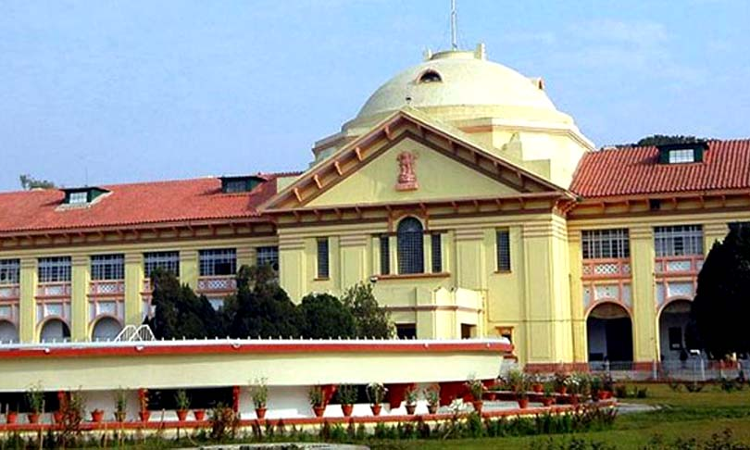
The Patna High Court has described Section 53A of the Code of Criminal Procedure as a “forgotten provision” and observed that the time has come to sensitise the police to ensure medical examination of the accused in sexual offence cases is conducted immediately after arrest, failing which vital gaps are left in the investigation.A Division Bench comprising Justice Bibek Chaudhuri and...
This is a premium content
Available exclusively to
Our subscribers
Subscribe Premium 
INR 1099+GST
Your support helps us to bring you more content at
an affordable subscription scheme !!!
All payment options available
The Patna High Court has described Section 53A of the Code of Criminal Procedure as a “forgotten provision” and observed that the time has come to sensitise the police to ensure medical examination of the accused in sexual offence cases is conducted immediately after arrest, failing which vital gaps are left in the investigation.
A Division Bench comprising Justice Bibek Chaudhuri and Justice Ansul was hearing a criminal appeal against a conviction under Section 376 IPC read with Section 6 of the POCSO Act, in which the appellant had been sentenced to life imprisonment.
The prosecution case, based on the fardbeyan lodged in 2016 by the father of the victim, was that the victim, aged about 13 years, was staying at Sultanganj at the house of one Guddun Ji. It was alleged that about five months prior to the lodging of the FIR, the accused Md. Pappu took the victim to Darbhanga on a motorcycle and forcibly established physical relations with her and dropped her back the next morning. About one month before the FIR, the informant noticed physical changes in the victim, and on the date of lodging the fardbeyan, the victim disclosed that she was pregnant and named the appellant.
The appellant contended that the victim was in an illicit relationship with one Chhotu Thakur, a barber by profession. It was argued that after the appellant assaulted Chhotu Thakur over the said relationship, the victim, in collusion with her father, falsely implicated the appellant due to personal grudge. The appellant relied upon the FIR itself to submit that Chhotu Thakur had also been named therein. It was further argued that immediately after the FIR, Chhotu Thakur fled from the locality and kept his shop locked. It was also contended that during trial, both the informant and the victim resiled from their earlier version and refused to implicate Chhotu Thakur, and the victim stated in evidence that only the appellant had committed the offence
Bottom of Form
The Patna High Court noted that under Section 118 of the Indian Evidence Act, it is the duty of the Trial Court to examine a child witness of tender age in order to ascertain whether the witness is capable of understanding the questions put to him or her and of giving rational answers. The Court emphasised that the deposition of a child witness must reflect the questions put by the Trial Judge to test the mental capacity, rationality and understanding of the witness. In the present case, the Court found that the learned Special Judge had not recorded any such questions or preliminary interrogation on the basis of which the competency of the victim to depose was assessed.
The High Court further observed that there were glaring discrepancies between the version in the FIR and the statement of the victim recorded under Section 164 CrPC. In view of these inconsistencies, the Court held that it was open to draw an adverse inference that the victim and the informant had not approached the Trial Court with a clear and consistent account of the incident, and therefore, their evidence could not be safely relied upon.
On the requirement of medical examination of the accused, the Court reiterated that medical examination of the accused in cases of sexual offences is obligatory under Section 53A of the CrPC. It observed that where proof through DNA profiling is required, it is the statutory duty of the Medical Officer under Section 53A to collect samples of the accused for DNA analysis. The Bench specifically recorded that, in the present case, the accused was not medically examined after his arrest under Section 53A of the CrPC.
Describing Section 53A as a “forgotten provision”, the Court noted that investigating officers in the State were routinely failing to invoke the provision, resulting in serious gaps in scientific and corroborative evidence in sexual offence cases. The Court held:
“It is needless to say that the provision contained in 53A is a forgotten provision in the State of Bihar because this Court had dealt with number of criminal appeals and found that not in a single appeal, the Investigating Officer took resort of Section 53A.”
The Court gave an illustrative example on the importance of Section 53A and noted:
“Let us give an example, if in a case of sexual atrocity, where the accused is not examined medically and during trial, takes a plea of impotence, the Court will have no other alternative but to accept such contention in the absence of any report under Section 53A. Moreover, when Section 53A has been specially provided in the statute during trial or in the course of appeal, if in such appeal plea is taken by the accused, the Court probably cannot direct fresh medical examination of the accused because in that case such action by the Court will be in the nature of fishing out of evidence. Time has come to sensitize the police department directing them to have medical examination of the accused immediately after arrest.”
The Patna High Court held that although the appellant had been arrested on the very same day on which the FIR was lodged, there was no explanation whatsoever as to why he was not medically examined under Section 53A of the CrPC. The Court observed that at least some independent medical or scientific evidence ought to have been brought on record to establish that the accused was capable of committing the alleged offence. It was emphasised that medical examination of the accused is the primary and most reliable means to assess such capability, particularly in cases involving allegations of sexual offences.
The High Court further took note of several serious discrepancies in the prosecution case, including: (i) neither the victim nor the informant disclosed even the approximate date or time when the alleged incident at Darbhanga had first taken place; (ii) the Investigating Officer did not visit the alleged place of occurrence at Darbhanga; (iii) the victim was found to be pregnant for about five months at the time of lodging of the FIR, and yet the prosecution failed to establish when the incident had occurred, by whom it had occurred, and at what place it had occurred; and (iv) there was no explanation as to why Chhotu Thakur, who was initially named, was subsequently absolved of criminal liability by the informant and the victim.
In view of the above infirmities, the Court held that the foundational facts necessary to establish the offence under the POCSO Act had not been proved.
Accordingly, the appeal was allowed and the judgment of conviction and sentence passed against the appellant was set aside.
Title: Md. Pappu @ Md. Saba Uddin v. State of Bihar
Case Number: Criminal Appeal (DB) No. 14 of 2019
Appearance: Mr. Madhav Raj, Mr. Vikash Kumar Jha, Mr. Abhinav Kumar and Mr. Kumar Ashish appeared for the Appellant. Mr. Abhimanyu Sharma appeared for the State
Bottom of Form
.
Tags


