



- Home
- /
- High Courts
- /
- Patna High Court
- /
- 'Suspicion Cannot Replace Proof':...
'Suspicion Cannot Replace Proof': Patna High Court Acquits Accused In Ara Court Blast Case, Sets Aside Death Sentence
Rushil Batra
27 March 2026 5:10 PM IST
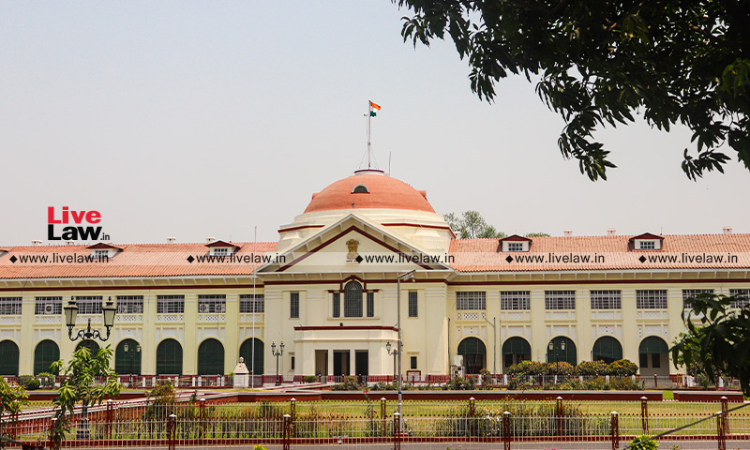
In a 176-page judgment, the Patna High Court set aside the conviction of multiple accused in the Ara Civil Court bomb blast case, holding that the prosecution failed to establish the chain of circumstances beyond reasonable doubt and reiterating that “suspicion, however strong, cannot take the place of proof.” A Division Bench comprising Chief Justice Sangam Kumar Sahoo and Justice...
This is a premium content
Available exclusively to
Our subscribers
Subscribe Premium 
INR 1099+GST
Your support helps us to bring you more content at
an affordable subscription scheme !!!
All payment options available
In a 176-page judgment, the Patna High Court set aside the conviction of multiple accused in the Ara Civil Court bomb blast case, holding that the prosecution failed to establish the chain of circumstances beyond reasonable doubt and reiterating that “suspicion, however strong, cannot take the place of proof.”
A Division Bench comprising Chief Justice Sangam Kumar Sahoo and Justice Rajeev Ranjan Prasad was dealing with a Death Reference under Section 366 Cr.P.C. (now Section 407 BNSS), along with connected criminal appeals, arising from a trial conducted by the Additional Sessions Judge, Bhojpur, Ara. The trial court had convicted several accused under various provisions of the IPC and the Explosive Substances Act, awarding life imprisonment to most and death sentence to one accused.
As per the prosecution case, on 23.01.2015, a bomb blast occurred in the Civil Court premises at Ara when prisoners were being escorted from a van to the court lock-up. The explosion resulted in the death of a constable and the woman who allegedly detonated the bomb, and caused injuries to several others. It was alleged that the blast was part of a conspiracy to facilitate the escape of two accused persons from judicial custody.
The appellants challenged the conviction on multiple grounds, including inconsistencies in witness testimonies, non-examination of crucial witnesses, inadmissibility of electronic evidence, and improper reliance on confessional statements. It was also argued that key incriminating circumstances were not put to the accused during their examination under Section 313 Cr.P.C., causing serious prejudice.
At the outset, the High Court noted that the occurrence of the bomb blast, including the time and place, was not in dispute. However, it emphasised that the case was entirely based on circumstantial evidence and therefore required strict adherence to the settled principles governing such cases. Relying on Sharad Birdhichand Sarda, the Court reiterated that the prosecution must establish a complete chain of circumstances.
On the alleged link between the deceased woman and the accused, the Court found that there was no reliable evidence to show any prior association. While the FIR suggested that the woman used to meet the accused earlier, this was not supported by witness testimony during trial. The Court held that such inconsistencies rendered the prosecution version unreliable.
On the prosecution's claim that the woman attempted to hand over a bag to the accused, the Court found the evidence unconvincing. It noted that there was no evidence of any gesture, signal, or interaction between the accused and the woman, nor any attempt by the accused to receive the bag. The Court also found it implausible that witnesses could infer such intent when the woman was stopped before reaching the accused. Importantly, the Court held that this alleged circumstance was not put to the accused during their examination under Section 313 Cr.P.C. and therefore could not be used against them. It observed that failure to confront the accused with such vital incriminating material caused serious prejudice and vitiated the reliance placed on it by the trial court.
On the issue of electronic evidence, the Court held that the call detail records and tower location data were inadmissible in the absence of a certificate under Section 65B(4) of the Evidence Act and examination of a competent official. It further noted that the alleged link between a mobile phone recovered from the spot and the deceased woman was not established, especially when key witnesses were withheld from examination.
The Court also rejected the reliance placed on confessional statements made by the accused before police officers, holding that such statements are inadmissible under Section 25 of the Evidence Act. It clarified that confessions of co-accused cannot be treated as substantive evidence and can only be used for limited corroborative purposes.
On the allegation of criminal conspiracy, the Court held that mere suspicion or parallel conduct is insufficient and that there must be clear evidence of agreement between the accused. In the absence of admissible evidence establishing such agreement, the finding of conspiracy recorded by the trial court could not be sustained. The Court further observed that mere absconding of the accused following the incident could not, by itself, establish their guilt for the bomb blast.
Accordingly, the Court acquitted several appellants of all charges, holding that the prosecution had failed to establish the case beyond reasonable doubt. The conviction of two appellants was set aside on all counts except for the offence under Section 224 IPC (escape from custody), for which the sentence was upheld. The death sentence awarded to one of the accused was also set aside.
Case Title: State of Bihar v. Lamboo Sharma @ Munna Sharma @ Sachidanand Sharma
Case No.: Death Reference No. 1 of 2024 (with tagged matters)
Appearance: Mr. Pratik Mishra, Mr. Ajay Kumar Thakur, Mr. Prabhat Kumar Singh, Mr. Ganesh Prasad Singh, Mr. Anirudh Kumar Singh, Mr. Ravindra Kumar, Mr. Binay Kumar, Md. Najmul Hodda and Mr. Sadanand Roy appeared for the accused appellants. Ms. Shashi Bala Verma and Mr. Ajay Mishra appeared for the State of Bihar.
Tags


