



'Similar Intention' Is Not 'Common Intention': Patna High Court Acquits Man Of Attempt To Murder Charge
LIVELAW NEWS NETWORK
15 Oct 2026 5:15 PM IST
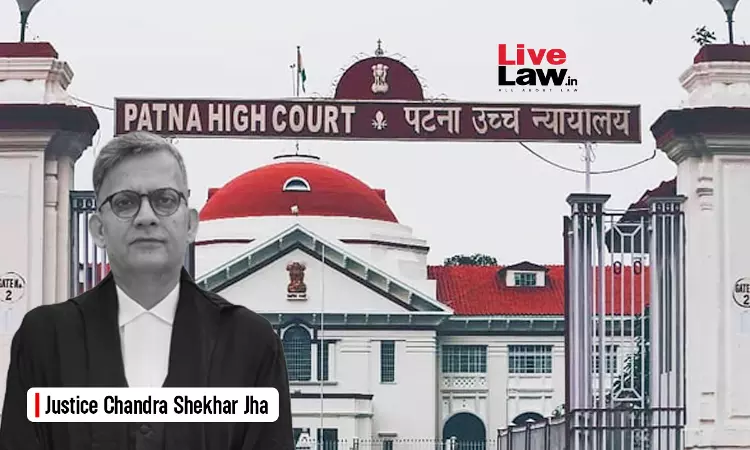
The Patna HC has held that the mere act of catching hold of a victim while a co-accused fires at him does not, by itself, establish that the accused shared the common intention to commit murder. The Court distinguished between “similar intention” and “common intention”, holding that the former does not attract constructive liability.
A Single Judge Bench of Justice Chandra Shekhar Jha was hearing an appeal filed by Nandu Thakur against his conviction for attempt to murder and wrongful restraint.
The appellant had challenged the judgment of conviction and order of sentence dated 06.11.2015 passed by the Additional Sessions Judge-2nd, Muzaffarpur in Sessions Trial No. 295 of 2002, arising out of Karja P.S. Case No. 48 of 2001. He had been sentenced to three years' rigorous imprisonment with a fine of Rs.3,000/- for attempt to murder with common intention and one month's rigorous imprisonment for wrongful restraint, with the sentences to run concurrently.


According to the prosecution, on 07.06.2001, the informant Shambhu Mahto was returning home after collecting articles from his kirana shop when the accused persons allegedly intercepted him and threatened to kill him. Co-accused Fanindra Thakur allegedly fired at the informant with a firearm, with the bullet striking his right thigh. The specific allegation against Nandu Thakur was that he caught hold of the informant from behind while Fanindra fired at him. Fanindra Thakur died during the pendency of the trial and the proceedings against him were dropped. Nandu Thakur alone faced trial and was convicted.
Before the High Court, the appellant argued that the specific allegation of firing was against Fanindra, while the only role attributed to him was that he caught hold of the informant from behind. It was therefore submitted that the prosecution had failed to establish that he shared the common intention to commit murder.
The Court noted that common intention may develop even at the spur of the moment and does not necessarily require proof of a prior meeting of minds or pre-arranged plan. However, the prosecution must establish that the criminal act was committed in furtherance of an intention shared by the accused.
The Court specifically held that the mere act of catching hold of a person from behind does not, in every case, automatically establish a common intention to commit murder. Its significance depends upon the surrounding circumstances, including whether the accused restrained the victim to facilitate the firing, whether an exhortation to kill is reliably proved, and whether his conduct demonstrates participation in the criminal act with the requisite intention.
The Bench further distinguished between proof that the victim sustained firearm injuries and proof that the appellant shared the intention to commit murder. While the medical evidence established the former, the latter had to be established through reliable evidence concerning the appellant's conduct and the circumstances in which the firing occurred. The Court ultimately held:
“In the present case, the evidence, at best, indicates a similar intention and does not establish the existence of a common intention to commit murder. The distinction between similar intention and common intention is material, as the former, by itself, does not attract the principle of constructive liability under Section 34 IPC.”
The Court accordingly found that the allegation that the appellant caught hold of the informant, without reliable evidence establishing that the act was done in furtherance of a common intention to commit the alleged offence, was insufficient to sustain his conviction.
The prosecution having failed to prove the charge beyond reasonable doubt, the Court extended the benefit of doubt to the appellant.
Accordingly, the High Court set aside the judgment of conviction and order of sentence dated 06.11.2015 and acquitted Nandu Thakur of the charges.
Appearance:
For the Appellant: Mr. Amit Anand, Advocate
For the Respondent: Mr. Abhay Kumar, APP


