



- Home
- /
- High Courts
- /
- Patna High Court
- /
- Bihar Reservation Act Does Not...
Bihar Reservation Act Does Not Govern Reservation For Mukhiya Elections; Panchayat Raj Act Applies: Patna High Court
LIVELAW NEWS NETWORK
24 Aug 2026 12:15 PM IST
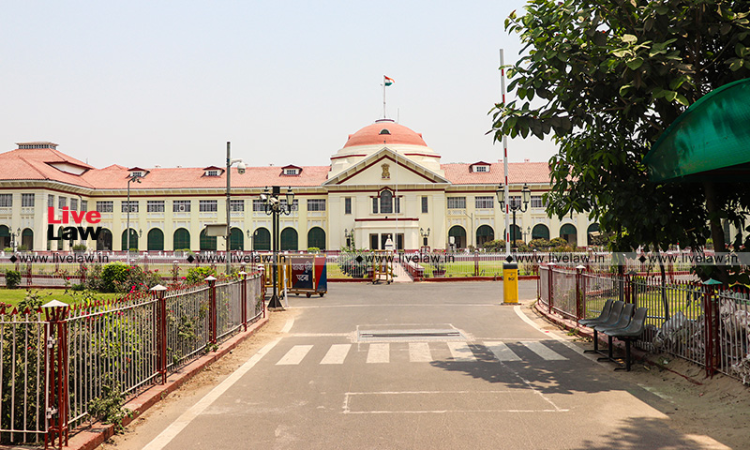
The Patna High Court has held that reservation in elections to the post of Mukhiya is governed by the Bihar Panchayat Raj Act, 2006 and not by the Bihar Reservation of Vacancies in Posts and Services (for Scheduled Castes, Scheduled Tribes and Other Backward Classes) Act, 1991.A Single Judge Bench of Justice Partha Sarathy set aside the Caste Scrutiny Committee's decision and a...
This is a premium content
Available exclusively to
Our subscribers
Subscribe Premium 
INR 1099+GST
Your support helps us to bring you more content at
an affordable subscription scheme !!!
All payment options available
The Patna High Court has held that reservation in elections to the post of Mukhiya is governed by the Bihar Panchayat Raj Act, 2006 and not by the Bihar Reservation of Vacancies in Posts and Services (for Scheduled Castes, Scheduled Tribes and Other Backward Classes) Act, 1991.
A Single Judge Bench of Justice Partha Sarathy set aside the Caste Scrutiny Committee's decision and a consequential State Election Commission (SEC) order removing an elected Mukhiya from office, holding that both authorities had erroneously applied the 1991 Act and its 2003 amendment to reservation in Panchayat elections.
The petitioner was elected Mukhiya of Gram Panchayat Raj Sahuria in the 2021 elections from a seat reserved for the Extremely Backward Class (EBC) category. A complaint was subsequently filed before the SEC seeking his disqualification on the allegation that he belonged to the Sheikh community but had fraudulently obtained an EBC caste certificate showing himself as belonging to the Teli (Muslim) caste.
A three-member Enquiry Committee constituted on the direction of the Criminal Investigation Department (Weaker Section) initially found that the petitioner belonged to the Teli (Muslim) caste. However, the Caste Scrutiny Committee subsequently relied upon the Bihar Reservation Act, 1991, as amended in 2003, which provides that candidates residing outside Bihar cannot claim reservation benefits under the Act. The SEC thereafter held that the petitioner was not a permanent resident of Bihar and was therefore not entitled to reservation, removed him from the post of Mukhiya and recommended action against the officials who had issued his caste certificate.
Examining the applicability of the 1991 Act, the High Court noted that the legislation was enacted to provide adequate representation to Scheduled Castes, Scheduled Tribes and Other Backward Classes in posts and services under the State of Bihar. The 2003 amendment added a proviso stating that candidates residing outside Bihar could not claim reservation benefits “under this Act.”
The Court, however, held that reservation for Mukhiya elections has a different statutory source. Section 15(5) of the Bihar Panchayat Raj Act, 2006 governs reservation of Mukhiya seats, while the connection with the 1991 Act is limited to identifying the castes falling within the Backward Classes category. The Court observed:
“Thus from the facts stated herein above, it is clearly seen that so far as the Act of 1991 is concerned, the same does not govern the reservation in the election to the post of Mukhiya but the said reservation is to be governed by the provisions contained in section 15(5) of the Panchayat Raj Act.”
The Court further noted:
“The connection between the two Acts is to the extent that so far as the list of Backward Classes within the meaning of Panchayat Raj Act is concerned, the same has been defined to mean the castes specified in Annexure 1 of the Act of 1991.”
The High Court therefore found that the Caste Scrutiny Committee had erred in applying the restriction introduced by the 2003 amendment to the petitioner's election. It further held that, even otherwise, the petitioner could not be treated as a person residing outside Bihar. Even according to the respondents, his ancestors had migrated from Jaunpur in Uttar Pradesh to Bihar around 125 years ago, and three to four generations of his family had lived in Bihar. The Court also noted that the statutory provision spoke of persons “residing out of the State of Bihar” and did not restrict reservation benefits only to “original residents”.
The Court also found it significant that the Caste Scrutiny Committee had neither cancelled the petitioner's caste certificate nor recommended its cancellation. Nor had it found that he belonged to a caste other than Teli (Muslim).
Accordingly, the High Court held that both the Caste Scrutiny Committee and the SEC committed an error in applying the 1991 Act and the 2003 Amendment Act to reservation for the post of Mukhiya. It set aside the Committee's proceedings as well as the SEC's order removing the petitioner from office.
Case Title: Md. Isa v. State of Bihar and Ors.
Case Number: Civil Writ Jurisdiction Case No.8890 of 2025
Appearance:
For the Petitioner: Mr. Amit Shrivastava, Senior Advocate; Mr. Ranjeet Choubey and Mr. Siddharth Shankar Singh, Advocates
For the State: Mrs. Pushpanjali Sharma, AC to SC-20
For Respondent No.9: Mr. S.B.K. Manglam, Mr. Awnish Kumar, Mr. Vikash Kumar Singh and Mr. Kumar Gaurav, Advocates
For the State Election Commission: Mr. Ravi Ranjan, Advocate
Tags


