



- Home
- /
- High Courts
- /
- Patna High Court
- /
- 'Blanket Approach Of Denying Public...
'Blanket Approach Of Denying Public Employment To Persons Named In FIR Is Contrary To Fairness': Patna High Court
Rushil Batra
1 April 2026 8:35 PM IST
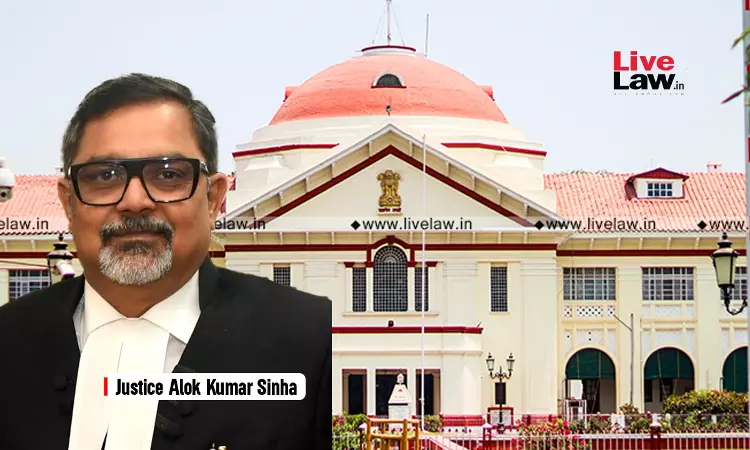
The Patna High Court has held that the sealed cover procedure cannot be invoked merely on the basis of pendency of an FIR, reiterating that denial of appointment on the basis of untested allegations violates settled constitutional principles under Articles 14 and 16.A Single Judge Bench of Justice Alok Kumar Sinha was hearing a writ petition filed by candidates who had applied pursuant...
This is a premium content
Available exclusively to
Our subscribers
Subscribe Premium 
INR 1099+GST
Your support helps us to bring you more content at
an affordable subscription scheme !!!
All payment options available
The Patna High Court has held that the sealed cover procedure cannot be invoked merely on the basis of pendency of an FIR, reiterating that denial of appointment on the basis of untested allegations violates settled constitutional principles under Articles 14 and 16.
A Single Judge Bench of Justice Alok Kumar Sinha was hearing a writ petition filed by candidates who had applied pursuant to Advertisement No. 22/2024 dated 07.02.2024 issued by the Bihar Public Service Commission (BPSC) for appointment of teachers in Elementary and Middle Schools.
The petitioners submitted that they had participated in the selection process, appeared in the re-examination conducted on 19.07.2024 and 20.07.2024, and had secured marks above the prescribed cut-off. Despite this, the Commission affixed a “star mark” against their names and withheld the effect of their result on account of their implication in Economic Offence P.S. Case No. 06/2024. It was argued that such action amounted to an unauthorized application of the sealed cover procedure and that mere pendency of a criminal case, particularly without any established wrongdoing, could not be a ground to deny appointment.
The Bihar Public Service Commission, on the other hand, contended that the marking of results in abeyance was an administrative measure taken in light of the petitioners' implication in the examination paper leak case. It was submitted that several candidates involved in the case had appeared in the re-examination, and upon legal advice, the Commission had decided to defer the result of such candidates to maintain the integrity of the recruitment process. It was further pointed out that the petitioners had since been charge-sheeted under serious offences, including Sections 420, 467, 468, 471, 120-B and 34 IPC, along with provisions of the Bihar Conduct of Examinations Act and the Information Technology Act.
At the outset, the Court examined the legality of invoking the sealed cover procedure. It reiterated that the doctrine is not to be applied mechanically and can be invoked only when a charge memo in departmental proceedings or a charge sheet in a criminal case has been formally issued. The Court noted that on the relevant date, i.e., 15.11.2024 when the result was published and withheld, no charge had been framed by a competent court, and the charge sheet was filed only subsequently on 18.02.2025. Emphasising the distinction between mere implication in an FIR and formal prosecution, the Court observed:
“The distinction between mere implication in an FIR or investigation on the one hand, and the formal initiation of prosecution through filing of a charge sheet and cognizance/framing of charge by a court on the other, is not merely procedural but goes to the root of the matter. The doctrine of sealed cover is premised on the existence of a stage where the allegations have crystallized into formal charges warranting adjudication. In the absence of such a stage, resorting to the said doctrine would amount to penalizing a candidate on the basis of untested allegations.”
The Court held that the action of the respondents in invoking the sealed cover doctrine in the absence of formally framed charges was legally unsustainable and arbitrary.
On the broader issue of denial of appointment due to pendency of criminal proceedings, the Court reiterated that a candidate who has successfully cleared the selection process acquires a legitimate expectation of appointment. It held that such expectation cannot be defeated merely on the basis of allegations that have not attained legal finality. Relying on Joginder Singh v. Union Territory of Chandigarh, the Court held that mere involvement in a criminal case, without adjudication of guilt, cannot operate as a disqualification. It further noted that the Commission had adopted a blanket approach by treating all candidates named in the FIR alike without any individualized assessment.
The Court observed:
“This Court is also conscious of the nature of allegations and the seriousness of the offence as projected by the Economic Offence Unit. However, seriousness of allegations cannot override settled legal principles. The employer is certainly entitled to take an appropriate view in cases where guilt stands established or where the conduct of the candidate is demonstrably such as to render him unsuitable for public employment. But such a conclusion must be based on objective material of a conclusive nature, and not on mere pendency of proceedings. In the present case, the action of the respondents reflects a blanket approach, whereby all candidates named in the FIR have been treated alike without any individualized assessment of their role or the stage of the criminal proceedings. Such an approach runs contrary to the requirement of fairness and reasonableness in public employment.”
In view of the above, the Court held that the impugned action of withholding the petitioners' results could not be sustained.
Accordingly, the Court directed the Bihar Public Service Commission to undertake a limited verification to ascertain whether the petitioners had successfully qualified the examination and secured marks above the prescribed cut-off. If found successful, the Commission was directed to declare their results and forward recommendations for appointment to the concerned authorities within four weeks.
Case Title: Monu Kumar and Ors v. State of Bihar and Ors.
Case No.: Civil Writ Jurisdiction Case No. 839 of 2025
Appearance: Mr. Awadhesh Kumar Mishra, Ms. Shivani Mishra, Ms. Pragati S., Mr. Shashank Shekhar and Ms. Vidhi Shree appeared for the Petitioners. Mr. Arvind Ujjwal, Mr. Vikash Kumar, Senior Advocate Mr. Vishwanath Prasad Sinha and Mr. Vijay Anand appeared for the Respondents.
Tags


