



- Home
- /
- High Courts
- /
- Patna High Court
- /
- Chief Justice Sangam Kumar Sahoo...
Chief Justice Sangam Kumar Sahoo Bids Farewell To Patna High Court, Reflects On Judicial Reforms, PILs, & Legal Aid
Rushil Batra
5 Jun 2026 4:45 PM IST
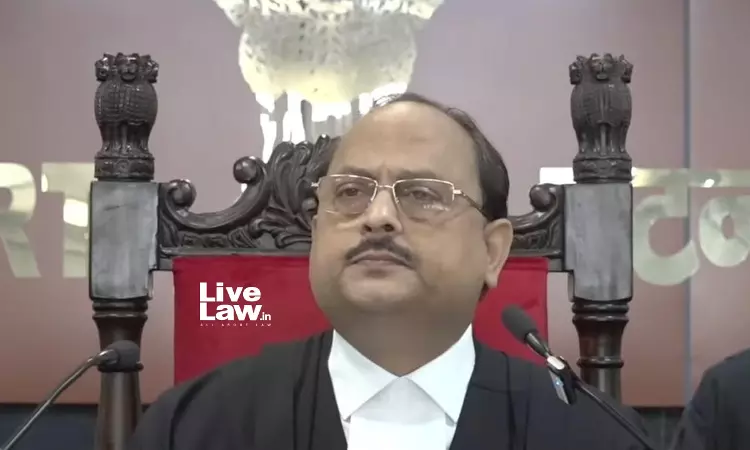
Chief Justice Sangam Kumar Sahoo, in his farewell address at the Patna High Court on June 4, reflected on his brief but eventful tenure in Bihar, describing the High Court not as an office, but as a temple where justice was the deity.He recalled that when he arrived in Patna on January 6 after his farewell from the Orissa High Court, he came with a sense of responsibility and a desire...
This is a premium content
Available exclusively to
Our subscribers
Subscribe Premium 
INR 1099+GST
Your support helps us to bring you more content at
an affordable subscription scheme !!!
All payment options available
Chief Justice Sangam Kumar Sahoo, in his farewell address at the Patna High Court on June 4, reflected on his brief but eventful tenure in Bihar, describing the High Court not as an office, but as a temple where justice was the deity.
He recalled that when he arrived in Patna on January 6 after his farewell from the Orissa High Court, he came with a sense of responsibility and a desire to contribute meaningfully during his short tenure. He said that whatever could be achieved in these five months was possible only because of the collective support of judges, lawyers, officers, staff and the State. Justice Sahoo acknowledged the affection he received from the Bench, Bar, Registry, staff and people of Bihar.
A substantial part of the address focused on public interest litigation and institutional reforms. He referred to the Court's intervention in mental health infrastructure after visiting BIMHAS, Koilwar, and emphasised that recovered mental health patients should not be kept in hospitals unnecessarily, as it would violate Article 21. He also mentioned the traffic challan Lok Adalat in the Rani Tiwari case, monitoring of NHAI roads and bridges, directions concerning mango orchard management for Bihar farmers, filling up librarian vacancies in universities, crop compensation for flood-affected farmers, biomedical waste, shortage of doctors in government hospitals, and hostel safety for women students.
Justice Sahoo also referred to the Jagarnath Thakur case concerning remission, where the Court noticed that 143 premature release applications had been pending for years. He said that such delays defeat reformative justice and that the State had been asked to sympathetically consider cases of convicts who had completed 14 years of sentence.
He spoke warmly about visits to Beur Jail, Gulzarbagh Old Age Home, Apna Ghar children's shelter, and Aasha Kiran Balika Grih on Mother's Day, saying these moments would remain with him forever. He also described spending time with acid attack survivors through BSLSA as one of the “most emotional experiences of his tenure”.
The speech also highlighted institutional initiatives such as the Mano Nyaya Clinic, making Vulnerable Witness Deposition Centres functional across all 38 judgeships, inauguration of new court buildings at Madhepura, Birpur and Nirmali, launch of the e-certified copy portal, a cloud-based website and digital newsletter for the Bihar Judicial Academy, extension of the Patna High Court Hospital, opening of a criminal filing counter, and a help desk for persons with disabilities at Gate No. 3.
Justice Sahoo also reflected on the nature of justice, stating that justice does not lie only in judgments, but also in the manner of hearing. Referring to the Lamboo Sharma case concerning the Ara Civil Court bomb blast, he said the Court ensured that appellants lodged in different jails could watch, hear and participate in the hearing virtually, because justice must not only be done but must also be seen to be done.
He expressed deep gratitude to the Bar, describing it as the first link in access to justice and, in a sense, the “judge of judges.” He urged young advocates to support each other, take up pro bono work, remain humble, use time well, and treat the profession as a responsibility towards society.
The farewell ended on a personal and poetic note. Justice Sahoo thanked his family, father, mother, wife and son, and acknowledged the contributions of his staff, law researchers, court officers, technical staff, drivers, security personnel and residential staff. He said that the Court had given him far more than he had given it.
Justice Sahoo broke down into tears towards the end of his farewell. Quoting Sahir Ludhianvi, he concluded with the sentiment that many poets came before him and left, some with sighs and some with songs; they were stories of a moment, and so was he. He ended with “Jai Hind” and “Jai Bihar.”


