



- Home
- /
- High Courts
- /
- Patna High Court
- /
- District Courts Have No Power To...
District Courts Have No Power To Direct CBI Investigation: Patna High Court
Rushil Batra
24 Jun 2026 8:10 PM IST
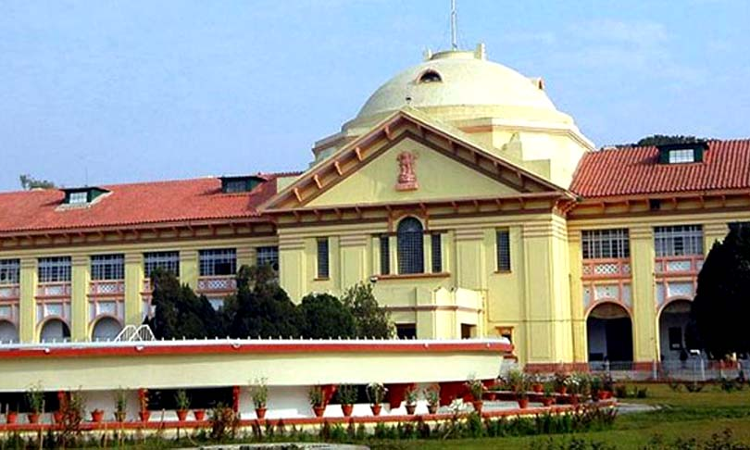
The Patna High Court has held that District Courts, including Sessions Courts and Magistrates, have no power to direct the Central Bureau of Investigation (CBI) to investigate a crime, reiterating that such power is reserved exclusively for Constitutional Courts exercising jurisdiction under Articles 32 and 226 of the Constitution. The Court further held that a Sessions Court cannot direct a...
This is a premium content
Available exclusively to
Our subscribers
Subscribe Premium 
INR 1099+GST
Your support helps us to bring you more content at
an affordable subscription scheme !!!
All payment options available
The Patna High Court has held that District Courts, including Sessions Courts and Magistrates, have no power to direct the Central Bureau of Investigation (CBI) to investigate a crime, reiterating that such power is reserved exclusively for Constitutional Courts exercising jurisdiction under Articles 32 and 226 of the Constitution. The Court further held that a Sessions Court cannot direct a CBI investigation while exercising bail jurisdiction.
A Single Judge Bench of Justice Jitendra Kumar was hearing a writ petition filed by the Central Bureau of Investigation seeking quashing of an order dated 26.09.2017 passed by the Sessions Judge, Kishanganj in an anticipatory bail proceeding, whereby the CBI was directed to conduct an independent investigation and submit a preliminary report before the Court.
The controversy arose from Kishanganj P.S. Case No. 257 of 2015, initially registered under Sections 341, 323, 504, 506 and 307 IPC on the complaint of one Amrendra Narayan. According to the FIR, the informant's son, Shyam Narayan @ Siku, had travelled to the BSF Camp at Kishanganj on 01.07.2015 to participate in a physical test for SSC GD recruitment. During the test, he allegedly fainted. Upon returning home, he reportedly informed his father that he had been severely beaten by police personnel. His condition deteriorated during treatment and he subsequently died, following which Section 302 IPC was added to the FIR.
During the pendency of the investigation, certain accused persons filed an anticipatory bail application before the Sessions Court. While hearing the bail plea, the Sessions Judge initially directed the Intelligence Bureau to investigate the matter. After the Intelligence Bureau informed the Court that it had no jurisdiction to conduct criminal investigations, the Sessions Judge modified the order and directed the CBI to undertake an independent investigation and submit a preliminary report.
Challenging the order, the CBI contended that neither a Sessions Court nor a Magistrate possesses authority to direct the CBI to investigate a criminal case. It was further argued that the impugned order had been passed while deciding a bail application and therefore travelled far beyond the scope of bail jurisdiction.
The State, however, defended the order, arguing that criminal courts also possessed authority to direct CBI investigations.
The principal question before the High Court was whether a Sessions Court could direct the CBI to investigate a crime registered within the State. Answering the question in the negative, the Court observed:
“The question is not res integra. There is a long line of judgments of Hon'ble Apex Court holding that the Constitutional Courts i.e. Supreme Court and High Courts, being guardians of the fundamental rights, have power to direct the investigation of cognizable offence by any Investigating Agency including the C.B.I... However, Courts other than the Constitutional Courts have no such power to direct the C.B.I. to investigate the crime.”
The Court explained that the issue involved both the federal structure of the Constitution and the statutory framework governing the CBI. Referring to Entry 2 of the State List and Section 6 of the Delhi Special Police Establishment Act, 1946, the Court noted that policing is a State subject and that the CBI cannot ordinarily exercise jurisdiction within a State without the State Government's consent. The Bench observed:
“District Courts, be it Sessions Court or Magisterial Court, who function within the four corners of the enabling statutes, cannot direct Central Bureau of Investigation (C.B.I.) to investigate any crime.”
The Court relied upon the Supreme Court's decision in CBI v. State of Rajasthan (2001) 3 SCC 333, which held that even a Judicial Magistrate cannot direct the CBI to investigate a case and that such power is available only to Constitutional Courts.
The Court also considered a contrary view taken by the Gujarat High Court in Ashok Devendra Goyal v. State of Gujarat, where it was held that a Magistrate could recommend a change in investigating agency while exercising powers under Section 156(3) CrPC.
Disagreeing with that view, the Court observed:
“I find that this order has been passed by Gujarat High Court without discussing the relevant statutory provisions and federal features of our Constitution.”
The Court further remarked that the Gujarat High Court's order was “cryptic and contrary to binding judicial precedents”, while noting that the issue was presently pending consideration before the Supreme Court in Special Leave Petitions.
Applying the settled legal position to the facts of the case, the Court held that the Sessions Court had acted in complete violation of binding precedents by directing the CBI to conduct an investigation. The Court observed:
“No District Court, be it Sessions Courts or Magisterial Court, has power to change Investigating Agency. It is for the State Government to entrust the investigation to any of the Investigating Agencies or it is only the Constitutional Courts i.e. Hon'ble Apex Court and High Courts, who can, under constitutional power, direct the change of the Investigating Agency.”
The Bench further held that the impugned order was unsustainable because it had been passed while exercising bail jurisdiction, which is confined to deciding whether an accused is entitled to be released on bail. Accordingly, the Court quashed the Sessions Court's order directing the CBI to conduct an independent investigation.
However, the Court clarified that the legal representatives of the deceased victim would remain at liberty to seek transfer of investigation, further investigation or reinvestigation before the competent forum in accordance with law.
Case Title: The Central Bureau of Investigation v. State of Bihar and Ors.
Case Number: Criminal Writ Jurisdiction Case No. 239 of 2018
Appearance: Mr. Satyabir Bharti, Senior Advocate, assisted by Mr. Shivaditya Dhari Sinha, Mr. Bipin Kumar Sinha and Mr. Sanjay Kumar for the CBI. Mr. Raghwanand and Mr. Sanjay Kumar Tiwari for the Respondents.


