



Non-Communication Of Written Grounds Of Arrest Does Not Vitiate Remand Without Demonstrable Prejudice: Patna High Court
LIVELAW NEWS NETWORK
4 Nov 2026 4:25 PM IST
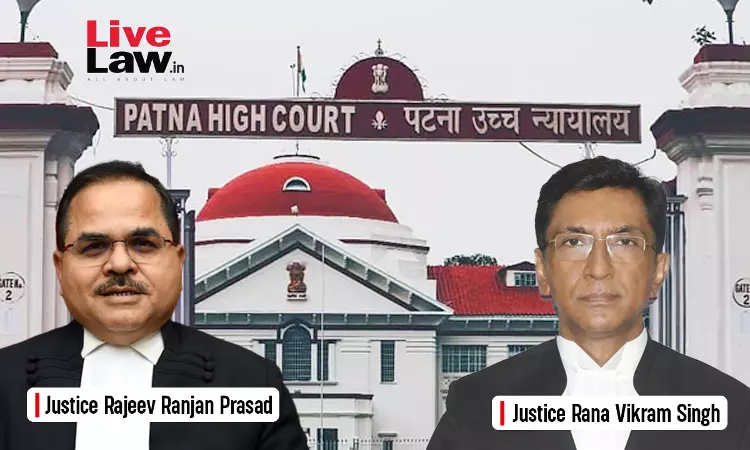
The Patna HC has held that while examining a challenge to detention based on the alleged non-communication of written grounds of arrest, a prejudice-oriented test must be applied. The Court rejected a habeas corpus petition challenging an accused's remand, noting that he was already aware of the allegations against him, had sought anticipatory bail and was represented by a lawyer who opposed his remand.
A Division Bench comprising Justice Rajeev Ranjan Prasad and Justice Rana Vikram Singh observed that the accused had not been taken by surprise at the time of his arrest and had sufficient information to oppose his remand.
The Court was hearing a habeas corpus petition filed by Shashi Bhushan Prasad Singh concerning the detention of his son, Divya Prakash, who was facing prosecution under Sections 108/3(5) of the Bharatiya Nyaya Sanhita, 2023, in an FIR registered at Chitragupt Nagar Police Station, Khagaria.


Divya Prakash was arrested on June 5, 2026, pursuant to a non-bailable warrant issued by a Magistrate, while his anticipatory bail application was pending before the High Court. He was subsequently produced before the jurisdictional Magistrate, who passed a remand order on June 6, 2026. His lawyer appeared through video conferencing and opposed the remand.
After his regular bail application was rejected by the Sessions Court, Divya Prakash approached the High Court for bail. On September 29, 2026, a Single Judge called for the case diary. The following day, his father filed the present habeas corpus petition. The petitioner challenged the remand on the ground that written grounds of arrest had not been served upon his son. He also contended that merely issuing a non-bailable warrant was insufficient unless it was shown that the warrant had been read out to the accused at the time of arrest.
Opposing the petition, the State submitted that Divya Prakash was a named accused in the FIR and was fully aware of the accusations against him. It pointed out that he had already applied for anticipatory bail and had also sought recall of the non-bailable warrant. The State further informed the Court that a chargesheet had been filed, cognizance had been taken and the matter had been committed to the Sessions Court.
Examining the submissions, the High Court noted that the accused's knowledge of the allegations was evident from his previous legal proceedings, including his anticipatory bail application and application seeking cancellation of the warrant. The Bench also rejected the allegations concerning the recording of the remand order, observing that it was a well-written order and that the accused's lawyer had admittedly appeared through video conferencing to oppose remand.
Applying the prejudice-oriented test, the Court observed:
“Having considered the facts of the present case in the light of the judgments of the Hon'ble Supreme Court, we are of the considered opinion that once the prejudice-oriented test is applied in the present case, this writ application is liable to fail. As has been noticed hereinabove, the petitioner's son was fully aware of the ground of his arrest and it is not one of those cases in which he was taken by surprise and that he was not in possession of any information/materials to oppose the remand. The fact is that his lawyer had appeared through video conferencing and opposed the remand order.”
The Court thus found that the accused's prior knowledge of the accusations and his opportunity to contest remand were material circumstances in assessing the alleged non-communication of written grounds of arrest.
Finding no ground to interfere with the remand on the basis of the alleged procedural defect, the High Court rejected the habeas corpus plea.
The Court also referred to its earlier order dated October 28, 2026, imposing costs of Rs.5,000 on the petitioner, directing that steps be taken for recovery in accordance with law if proof of deposit was not filed within the stipulated period.
Appearance:
For the Petitioner: Mr. Abhijit Anand, Advocate; Mr. Aditya Singh, Advocate
For the State: Mr. S.D. Sanjay, Advocate General; Mr. Sanjeev Kumar Mishra, GP-21; Mr. Shashwat Agrawal, AC to AG; Ms. Shravya Pathak, AC to AG
For the Informant: Mr. Vindhya Keshri Kumar, Senior Advocate; Mr. Ram Shankar Pathak, Advocate


