



'Domicile Acquired Through Marriage Does Not Automatically Confer Reservation Benefits': Patna High Court
LIVELAW NEWS NETWORK
9 Nov 2026 12:40 PM IST
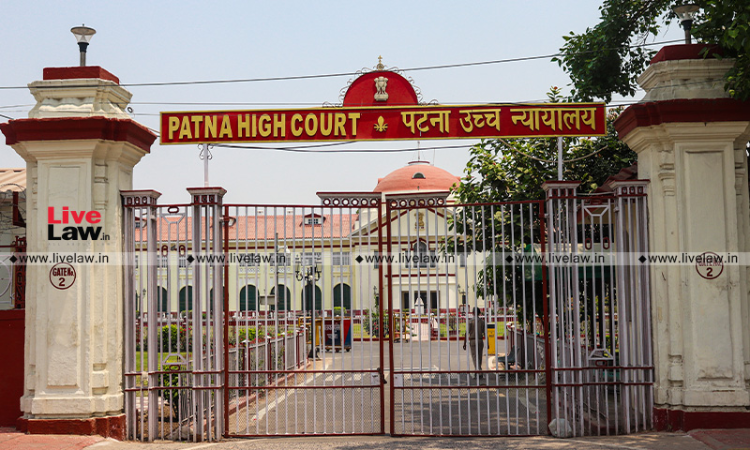
Image by: Siddharth Anand
The Patna HC has held that domicile acquired through marriage does not automatically confer reservation benefits under Article 16(4) of the Constitution. The Court rejected the plea of a woman seeking Scheduled Caste (SC) reservation in Bihar's recruitment process, who claimed to have been residing in the State for over 28 years following her marriage.
A Division Bench comprising Justice Prabhat Kumar Singh and Justice Rana Vikram Singh upheld the rejection of the appellant's candidature under the SC category for appointment as Assistant Prosecution Officer through the Bihar Public Service Commission (BPSC).
The appellant, Vidyawati Kiran, submitted that she belonged to the Dushadh caste, which was recognised as a Scheduled Caste in both Uttar Pradesh, her natal State, and Bihar, her marital State. She contended that she had married in Bihar on February 27, 1996, completed her education there and had been permanently residing in the State for over 28 years. Pursuant to BPSC Advertisement No. 01/2020, she applied for the post of Assistant Prosecution Officer under the SC category. She qualified in the preliminary examination, appeared in the mains examination and subsequently attended the interview.


However, when the final results were published on December 2, 2023, she was among eight candidates declared unsuccessful on the ground that her caste/domicile certificate was not issued on the basis of her father's permanent place of residence. Her father was a permanent resident of Uttar Pradesh.
After her representation and review application were rejected by BPSC, she approached the High Court. The Single Judge dismissed her writ petition on August 6, 2024, prompting the present appeal. Before the Division Bench, the appellant argued that under Sections 15 and 16 of the Indian Succession Act, 1925, a woman acquires her husband's domicile upon marriage. She therefore contended that her domicile was Bihar and that she was entitled to reservation benefits in the State.
Opposing the appeal, the State and BPSC submitted that the recruitment advertisement expressly restricted caste-based reservation benefits to permanent or original residents of Bihar. They maintained that the applicable eligibility conditions had been prescribed before the commencement of the selection process. Rejecting the appellant's contention, the High Court observed:
“The argument of learned counsel for the appellant based on Sections 15 and 16 of the Indian Succession Act, 1925 is wholly misplaced. Civil domicile acquired by operation of law upon marriage does not automatically confer constitutional reservation benefits under Article 16(4) of the Constitution of India. The fundamental objective behind restricting cross-state reservation benefits is to prevent candidates belonging to general or forward classes in their home State from claiming unearned benefits in another State by marriage or relocation. A person who is a member of a Scheduled Caste in State 'A' cannot carry that status to claim reservation benefits in State 'B' upon voluntary migration or marriage. Reservation rights are anchored to the origin and birth of the candidate in the state where the disadvantage was historically suffered...”
The Bench further noted that the BPSC had framed its recruitment conditions in accordance with the State policy before issuing the advertisement. These conditions were reflected in Columns 6(ii) and 6(iii)(A) of the advertisement and Clause 5(ii) of the interview letter.
The Court observed that the rules of the game had already been fixed before the examination process commenced and that the appellant was bound by those conditions. Referring to the Division Bench decision in Awinash Kumar and Others v. State of Bihar and Others, reported in 2026 (6) BLJ 249, the Court noted that recruitment conditions issued pursuant to rules or notifications bind candidates unless they are contrary to a rule or statute.
Finding that the BPSC's decision was in accordance with the applicable recruitment conditions, the High Court held that the appellant had failed to demonstrate any perversity or illegality in the Single Judge's judgment and declined to interfere.
Appearance:
For the Appellant: Mr. Ramakant Ram, Advocate
For the Respondents: Mr. Sanjay Kumar Ghosasvey, AC to AAG-3


