



Patna High Court Rejects Traders' Plea For Better Railway Siding Infrastructure, Says Mere Allegations Of Deficiency Insufficient
LIVELAW NEWS NETWORK
26 Oct 2026 11:55 AM IST
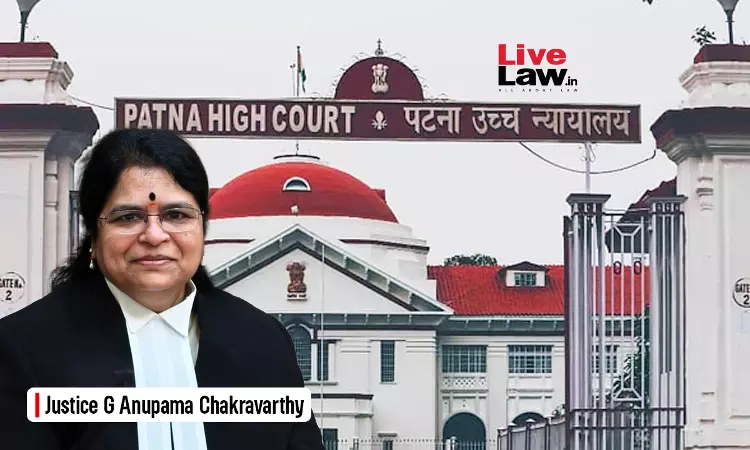
The Patna HC has held that general directions for improving infrastructure at railway sidings cannot be issued merely on the basis of allegations regarding inadequate facilities, particularly when no specific order or action of the railway authorities has been challenged.
A Single Judge Bench of Justice G. Anupama Chakravarthy was hearing a writ petition filed by wholesale food grain traders seeking directions to the Railways to construct sheds, improve platforms and provide better infrastructure at the Hasanpur Road railway siding under the Samastipur Division.
The petitioners, who primarily dealt in maize, used the railway sidings at Hasanpur and adjoining stations for loading and transporting consignments to different parts of the country. They alleged that the Hasanpur railway siding lacked basic infrastructure, including proper sheds, platforms, adequate lighting, godowns and security arrangements. According to them, these deficiencies created serious difficulties in loading and unloading goods, particularly during rainfall and at night.


The petitioners submitted that the absence of proper sheds and platforms affected the movement of vehicles and labourers carrying goods, made stacking of unloaded consignments difficult and increased the risk of injuries due to muddy and uneven surfaces. They further contended that these difficulties frequently resulted in detention of railway rakes beyond the permissible free time, exposing traders to demurrage and wharfage charges. The petitioners argued that despite failing to provide adequate infrastructure, the railway authorities continued to recover these charges without considering the difficulties faced by railway users or affording them an opportunity to explain the delays. They alleged that such recovery was arbitrary and affected their fundamental right to carry on trade under Article 19(1)(g) of the Constitution.
Opposing the petition, the Railways submitted that demurrage and wharfage charges were imposed in accordance with the applicable railway rules for detention beyond the permissible free time. It was argued that alleged deficiencies in infrastructure did not, by themselves, absolve the petitioners from paying the prescribed charges.
After considering the rival submissions, the High Court noted that the petition was essentially based on allegations regarding the existing condition of the Hasanpur railway siding and the difficulties faced by traders. The Court observed that the petitioners had not challenged any particular order or action of the railway authorities. Instead, they had sought general directions for the construction and improvement of infrastructure at the siding.
The Court held:
“No specific order or action of the respondents has been challenged in the present Writ petition. The reliefs sought are principally in the nature of general directions for providing and improving better facilities at the railway siding. Such reliefs, based merely on the assertions made by the petitioners regarding the existing condition of the siding, cannot be granted in exercise of the Writ jurisdiction in the present proceedings.”
The Bench further noted that the petitioners had not approached the Court by way of a Public Interest Litigation. Nor had they placed sufficient material on record to establish any infringement of fundamental rights warranting interference under writ jurisdiction.
The Court therefore found no ground to entertain the petition and dismissed it.
Appearance:
For the Petitioner/s : M/s Gautam Kejriwal, Priya Gupta, Advocates
For the Respondent/s : M/s R.K.Priyadarshi, Advocate


