



- Home
- /
- High Courts
- /
- Patna High Court
- /
- 'Mandatory Tender Conditions Cannot...
'Mandatory Tender Conditions Cannot Be Relaxed': Patna HC Sets Aside Technical Qualification Of Bidder For Non-Submission Of Required Document
Rushil Batra
9 April 2026 3:15 PM IST
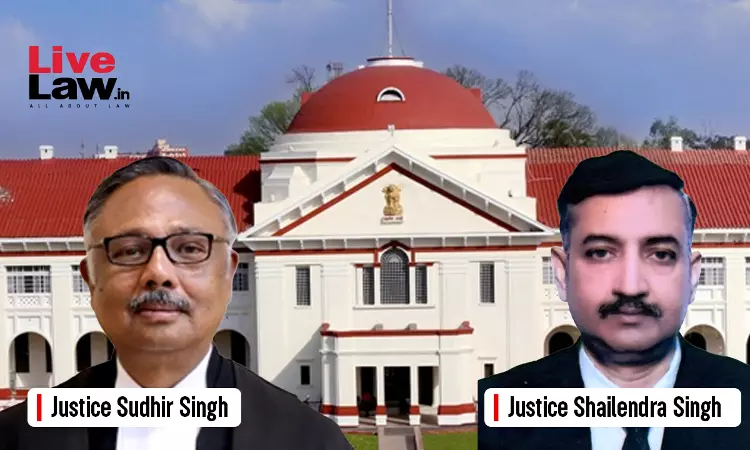
The Patna High Court has held that mandatory conditions stipulated in tender documents cannot be overlooked or relaxed by authorities while determining technical qualification of bidders, setting aside the technical qualification and L-1 declaration of a bidder who failed to furnish a mandatory payment certificate.A Division Bench of Justice Sudhir Singh and Justice Shailendra Singh was hearing...
This is a premium content
Available exclusively to
Our subscribers
Subscribe Premium 
INR 1099+GST
Your support helps us to bring you more content at
an affordable subscription scheme !!!
All payment options available
The Patna High Court has held that mandatory conditions stipulated in tender documents cannot be overlooked or relaxed by authorities while determining technical qualification of bidders, setting aside the technical qualification and L-1 declaration of a bidder who failed to furnish a mandatory payment certificate.
A Division Bench of Justice Sudhir Singh and Justice Shailendra Singh was hearing a writ petition challenging the revised technical bid decision of the Rural Works Department whereby respondent no. 8 was declared technically qualified in relation to NIT No. RRSMP-11/2025-26 (Package No. Madhepura/05).
The petitioner had participated in the tender process pursuant to the Notice Inviting Tender dated 26.07.2025 and was initially declared technically qualified along with other bidders, including the private respondent. The petitioner thereafter objected to the qualification of the private respondent on the ground that it had failed to fulfil the mandatory requirements under Clause 4.4A(a) of the Standard Bidding Document.
It was the petitioner's case that the amended Clause 4.4A(a), introduced on 14.07.2025 and applicable to the present tender, mandated submission of a payment certificate for the relevant financial year along with the bid documents. It was argued that respondent no. 8 had not submitted such certificate and therefore could not have been declared technically qualified. The respondents contended that the department had considered the objection and upheld the qualification of the private respondent after verification.
The Court framed the limited issue as whether a mandatory condition stipulated in the bid document can be overlooked or relaxed while determining technical qualification of a bidder. Answering the issue in the negative, the Court held that tender conditions constitute the foundational framework of the bidding process and are binding on both bidders and the issuing authority. The Court noted:
“It is well settled that the terms and conditions of a tender document constitute the foundational framework governing the bidding process and are binding on all the participants as well as the authority issuing the tender. The sanctity of such conditions, particularly those expressly characterized as mandatory, cannot be diluted or relaxed in a manner that would compromise fairness, transparency, and equality amongst competing bidders.”
The Court noted that the amended Clause 4.4A(a) clearly required submission of a payment certificate and that such requirement was integral to determination of eligibility and bid capacity.
Upon examining the record, the Court found that the private respondent had admittedly not submitted the requisite payment certificate and had only attached ATO sheets and Form 26AS documents. The Court further observed that Clauses 24.1 to 24.4 of the bidding document made it clear that responsiveness must be determined solely on the basis of the bid as submitted, and that a materially deficient bid cannot later be cured. It held:
“A reading of Clauses 24.1 to 24.4 of the CMBD make it explicitly clear that the determination of responsiveness must be based solely on the contents of the bid as submitted and that a bid which is not substantially responsive cannot be subsequently made responsive by curing a material omission. Clause 24.4, in particular, prohibits any post-submission rectification of a material deviation.”
The Court found that the authorities had illegally permitted post-bid supplementation of documents by allowing respondent no. 8 to furnish supporting documents after submission of the bid.
Holding such procedure to be impermissible, the Court observed that the omission was not a minor procedural lapse but a substantive defect affecting eligibility.
Accordingly, the Court held that the decision declaring respondent no. 8 technically qualified and thereafter as L-1 was arbitrary, contrary to tender conditions, and legally unsustainable. The impugned decisions were accordingly set aside.
Case Title: M/s Anirudh Sarswati Construction v. State of Bihar and Ors.
Case No.: Civil Writ Jurisdiction Case No. 883 of 2026.
Appearance: Ms. Shrishti Singh and Mr. Pranav Kumar appeared for the Petitioner. Mr. Amish Kumar, Mr. Anand Kumar Ojha and Mr. Sushil Kumar appeared for the Respondents.
Tags


