



- Home
- /
- High Courts
- /
- Patna High Court
- /
- Patna High Court Upholds 3-Year...
Patna High Court Upholds 3-Year Blacklisting Of DDU-GKY Agency Over Fabricated Placement Records
LIVELAW NEWS NETWORK
12 Aug 2026 7:15 PM IST
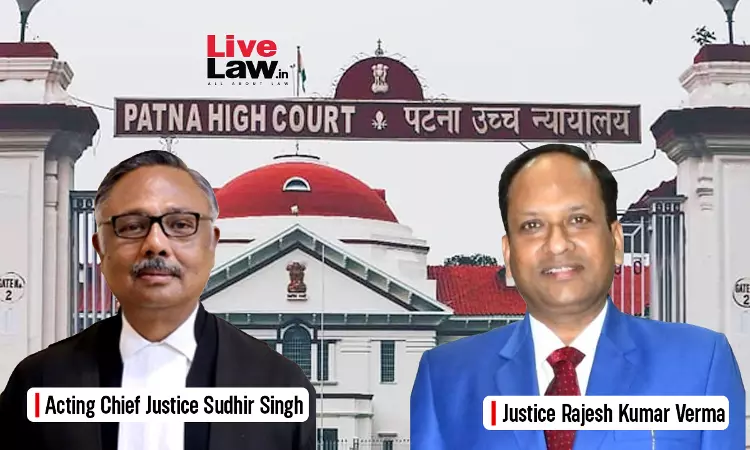
The Patna High Court has upheld the three-year blacklisting of an agency engaged to implement a placement-linked skill development programme under the Deen Dayal Upadhyaya Grameen Kaushalya Yojana (DDU-GKY), after verification found fabricated bank statements, discrepancies in employment records and beneficiaries denying that they had been placed.A Division Bench of Acting Chief Justice...
This is a premium content
Available exclusively to
Our subscribers
Subscribe Premium 
INR 1099+GST
Your support helps us to bring you more content at
an affordable subscription scheme !!!
All payment options available
The Patna High Court has upheld the three-year blacklisting of an agency engaged to implement a placement-linked skill development programme under the Deen Dayal Upadhyaya Grameen Kaushalya Yojana (DDU-GKY), after verification found fabricated bank statements, discrepancies in employment records and beneficiaries denying that they had been placed.
A Division Bench of Acting Chief Justice Sudhir Singh and Justice Rajesh Kumar Verma found no arbitrariness in the action taken against Pipal Tree Ventures Private Limited. The Court noted that the agency had been given several opportunities to explain the discrepancies before it was blacklisted.
The petitioner had entered into a Memorandum of Understanding with the Bihar Rural Livelihoods Promotion Society in 2014 for implementing the placement-linked skill development programme in Muzaffarpur, Sitamarhi and Madhubani. During the project, the Society raised questions over documents submitted by the petitioner to establish the placement of trained candidates.
These included alleged mismatches in bank account details and forged or fabricated records. Several show-cause notices followed. The petitioner submitted replies and also appeared at personal hearings. Eventually, by an order dated December 9, 2025, the Society blacklisted it for three years, terminated the project and directed recovery of the entire first instalment with 10% interest. It also directed initiation of certificate proceedings in case the amount was not repaid.
Before the High Court, the petitioner argued that its explanations had not been properly considered. It also claimed that the material relied upon against it was not supplied and that the procedure contemplated under the MoU had not been followed. The respondents maintained that the placement documents had been verified and were found to contain serious discrepancies. They argued that the petitioner had been given repeated opportunities to respond before action was taken.
The Court rejected the petitioner's plea that it had been denied a fair hearing. It noted that the impugned order traced the various show-cause notices, replies and personal hearings given to the petitioner. Its explanations had been considered and rejected with reasons.
The Bench then examined whether the allegations against the petitioner rested merely on suspicion. It found that they did not as the placement claims had been subjected to verification by ICICI Bank, while ECR records were also scrutinised. According to the Court, these exercises revealed fabricated bank statements, discrepancies in ECR records and instances where beneficiaries themselves denied having been placed. The Court said:
“The verification consistently disclosed fabricated bank statements, discrepancies in the ECR records and denial of placement by several beneficiaries during physical verification.”
It also noted that the petitioner had been repeatedly asked to explain these discrepancies but failed to produce satisfactory material to dislodge the verification findings.
The petitioner had sought to argue that placement documents were collected from candidates and that discrepancies in them could therefore not be attributed to the agency. The Court was not persuaded as it noted that under the MoU, the responsibility for maintaining records and furnishing genuine, authentic and verifiable documents rested with the Project Implementing Agency.
The authority had also found that submission of forged and fabricated documents amounted to a breach of Clause 1.9.1 of the MoU. The High Court found “no perversity or irrationality” in that reasoning.
On the proportionality of the punishment, the Bench noted that the authorities had considered the petitioner's previous performance, earlier warnings and a minor penalty imposed on it. It had also been given repeated opportunities to rectify the deficiencies before the three-year blacklisting was ordered.
The Court therefore found no procedural irregularity, mala fides or arbitrariness warranting interference with the decision. Accordingly, it dismissed the challenge to the blacklisting, holding that the authorities had acted in accordance with the MoU, the applicable Standard Operating Procedures and the DDU-GKY Guidelines.
Case Title: Pipal Tree Ventures Private Limited v. State of Bihar and Ors.
Case Number: Civil Writ Jurisdiction Case No. 670 of 2026
Appearance: Mr. Alok Kumar Jha for the Petitioner; Mr. Raghwanand, GA-11 with Mr. Pratik Kumar, AC to GA-11 for the State; Mr. Abhinav Shrivastava, Senior Advocate with Mr. Raushan and Ms. Shreyanshi Raj for the Respondent.
Tags


