



- Home
- /
- High Courts
- /
- Patna High Court
- /
- 'Decision As Per Tender Norms':...
'Decision As Per Tender Norms': Patna HC Upholds Approval Of Sand Ghat E-Auction Bid Submitted During Automatically Extended Bidding Window
Rushil Batra
29 May 2026 4:00 PM IST
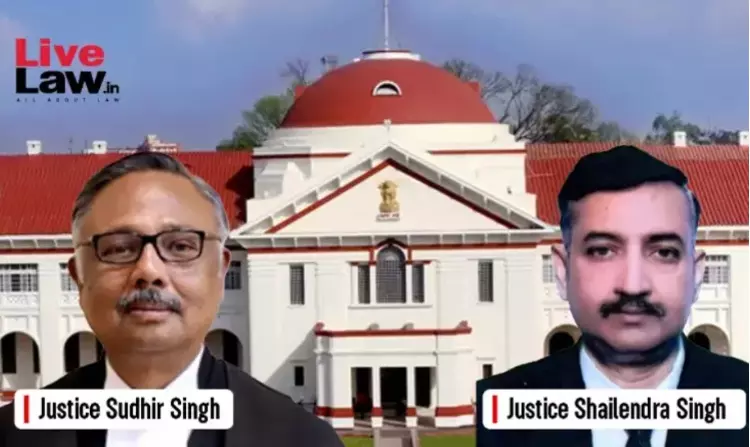
The Patna High Court has upheld the acceptance of a bid submitted during an automatically extended e-auction window for settlement of sand ghats, holding that the extension mechanism operated uniformly and through a system-driven process without any manual intervention. A Division Bench of Justice Sudhir Singh and Justice Shailendra Singh was hearing a writ petition challenging the validity of...
This is a premium content
Available exclusively to
Our subscribers
Subscribe Premium 
INR 1099+GST
Your support helps us to bring you more content at
an affordable subscription scheme !!!
All payment options available
The Patna High Court has upheld the acceptance of a bid submitted during an automatically extended e-auction window for settlement of sand ghats, holding that the extension mechanism operated uniformly and through a system-driven process without any manual intervention.
A Division Bench of Justice Sudhir Singh and Justice Shailendra Singh was hearing a writ petition challenging the validity of an e-auction conducted for settlement of two sand ghats in the Budhi Gandak and Bagmati River Group No. 4. The petitioner sought quashing of Letter No. 4832 dated 25.09.2023, whereby the authorities directed further action in relation to the auction after finding no irregularity in the process.
"In view of the discussions made hereinabove, once it stands established that (i) the auction effectively commenced at 11:05 A.M., (ii) the original closing time consequently shifted to 01:05 P.M., (iii) extension of the bidding period till 02:05 P.M. occurred automatically in terms of Clause 12 of the tender conditions, and (iv) the bid submitted by respondent No. 7 at 02:00:30 P.M. was within the extended period and was the highest bid, the action of the respondents in accepting the said bid and declaring respondent No. 7 as the successful bidder cannot be said to suffer from any illegality or arbitrariness. The decision appears to be in consonance with the tender conditions and supported by a fair and transparent process, and thus does not warrant interference".
According to the petitioner, an e-auction notice was published on 16.12.2022 in the Hindi daily Hindustan, scheduling the auction for 26.12.2022 between 11:00 A.M. and 1:00 P.M. The tender conditions provided that if any bid was made within the last five minutes of the auction period, the bidding window would automatically extend by one hour.
The petitioner contended that after a bid was placed at 12:59:56 P.M., the auction stood extended till 2:00 P.M., during which the petitioner allegedly submitted the highest bid of Rs. 1,37,21,400/- at 1:47:56 P.M. It was further alleged that Respondent No. 7 submitted a bid of Rs. 1,56,27,150/- at 2:00:30 P.M., i.e., 30 seconds after closure of the auction, and therefore such bid could not legally have been accepted.
The petitioner argued that acceptance of the bid beyond the prescribed closing time violated the terms and conditions governing the e-auction and rendered the process arbitrary. The petitioner also alleged that despite immediate objections being raised, the authorities validated the auction in favour of Respondent No. 7 without proper enquiry or opportunity of hearing.
Opposing the petition, the State submitted that upon receiving objections, the authorities constituted a scrutiny committee comprising technical and administrative officials to examine the entire e-auction process, including system-generated logs and bidding timelines. The respondents further submitted that although the auction was scheduled to commence at 11:00 A.M., it actually commenced at 11:05 A.M. due to technical reasons. Consequently, the bidding window stood shifted from 11:05 A.M. to 1:05 P.M.
Since a bid was made within the last five minutes of the revised closing time, Clause 12 of the tender conditions automatically extended the bidding period by one hour, i.e., till 2:05 P.M. Therefore, the bid submitted by Respondent No. 7 at 2:00:30 P.M. was within time. The Court framed the issue as:
“Whether, in the facts and circumstances of the case, the bid submitted by Respondent No. 7 at 2:00:30 P.M. was within the permissible time in terms of Clause 12 of the notice inviting e-auction…”
Upon examining the record, the Court found that the scrutiny committee had examined the system-generated auction synopsis report and bidding logs before concluding that no irregularity had occurred. The Court noted that the Auction Synopsis Report clearly reflected the auction start time as “Dec 26, 2022 11:05:00 A.M.” and that the extension mechanism was entirely automated. The Bench observed:
“The aforesaid report is based on the Auction Synopsis Report…which clearly indicates the start time of the auction as 'Dec 26, 2022 11:05:00 A.M.'. Therefore, the extension of 5 minutes was valid and genuine.”
The Court further observed:
“In the present case, the extension of time was neither discretionary nor selectively applied, rather the same operated automatically under Clause 12 through the system itself and uniformly applied to all the participating bidders.”
The Court held that the record did not disclose any material suggesting manual intervention, favouritism, or manipulation in the auction process. The Bench also reiterated that findings of expert or technical committees ordinarily deserve due weight and should not lightly be interfered with by courts.
Holding that the bid submitted by Respondent No. 7 at 2:00:30 P.M. was within the validly extended bidding period and constituted the highest bid, the Court upheld the auction process and dismissed the writ petition.
Case Title: Plas Radha Int Udyog Village v. State of Bihar and Ors.
Case No.: Civil Writ Jurisdiction Case No. 16757 of 2023
Appearance: Mr. S.B.K. Manglam for the Petitioner. Mr. Naresh Dixit for the Mines and Geology Department. Mr. Arvind Kumar for the State.


