



- Home
- /
- High Courts
- /
- Patna High Court
- /
- Work Order Can't Be Cancelled...
Work Order Can't Be Cancelled Without Hearing Successful Bidder After Contract Is Awarded: Patna High Court
LIVELAW NEWS NETWORK
8 Aug 2026 1:00 PM IST
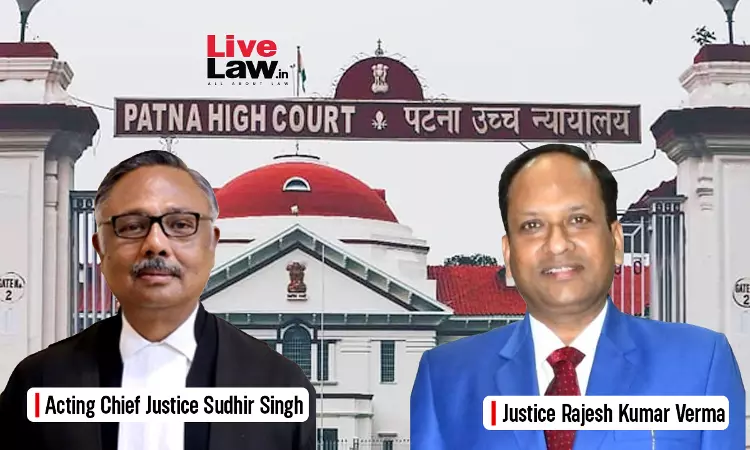
The Patna High Court has held that once a tender culminates in a concluded contract through issuance of a Letter of Acceptance, execution of a work order and signing of an agreement, the successful bidder cannot be deprived of those contractual rights without being given an opportunity of hearing.A Division Bench of Acting Chief Justice Sudhir Singh and Justice Rajesh Kumar Verma observed that...
This is a premium content
Available exclusively to
Our subscribers
Subscribe Premium 
INR 1099+GST
Your support helps us to bring you more content at
an affordable subscription scheme !!!
All payment options available
The Patna High Court has held that once a tender culminates in a concluded contract through issuance of a Letter of Acceptance, execution of a work order and signing of an agreement, the successful bidder cannot be deprived of those contractual rights without being given an opportunity of hearing.
A Division Bench of Acting Chief Justice Sudhir Singh and Justice Rajesh Kumar Verma observed that an order cancelling a work order and directing re-tendering has serious civil consequences and cannot be passed behind the back of the successful bidder.
The case arose out of a tender floated by the Rural Works Department for construction and five years' maintenance of a rural bridge under the Mukhyamantri Gramin Setu Yojana (MGSY). The petitioner participated in the bidding process. After the Technical Bid Evaluation Committee disqualified another bidder, the petitioner emerged as the lowest responsive bidder (L-1). A Letter of Acceptance and work order were issued on July 28 2025, an agreement was executed the same day and the petitioner started executing the work.
The dispute arose after the disqualified bidder challenged his blacklisting before the Additional Chief Secretary. While allowing that appeal, the authority not only set aside the blacklisting order but also cancelled the petitioner's work order and directed that the tender process be undertaken afresh.
Before the High Court, the petitioner argued that this order had been passed without any notice or opportunity of hearing, despite the fact that a concluded contract had already come into existence. The State fairly conceded that there was nothing on record to show that any notice had been issued to the petitioner before the impugned order was passed.
The Bench noted that by the time the appellate authority intervened, the petitioner had already acquired contractual rights through the Letter of Acceptance, execution of the agreement and commencement of work. The Court observed:
“The petitioner was not a stranger to the proceedings. By the date of the impugned order, he had already acquired valuable civil and contractual rights by virtue of the issuance of the Letter of Acceptance, execution of the Work Order and the agreement.”
Relying on the Supreme Court's decision in Canara Bank v. Debasis Das, the Bench reiterated that the rule of audi alteram partem ordinarily applies wherever an administrative or quasi-judicial order results in adverse civil consequences. Since cancellation of the work order directly affected the petitioner's vested rights, an effective opportunity of hearing was mandatory.
The Court also rejected the State's reliance on Clause 33 of the tender document. It observed that the clause only permitted cancellation of the bidding process before the contract was awarded. In the present case, the contract had already been awarded, the work order had been issued and a formal agreement had been executed.
“Once the contract stood awarded and had culminated into a concluded agreement, the authority could not invoke Clause 33 to cancel the tender process,” the Bench held.
Holding that the impugned order suffered from a fundamental procedural defect, the High Court set aside the directions cancelling the petitioner's work order and ordering a fresh tender. It remitted the matter to the competent authority to pass a fresh order after giving the petitioner and all other affected parties an opportunity of hearing.
Case Title: Shivmay Construction Equipments Private Limited v. State of Bihar and Ors.
Case Number: Civil Writ Jurisdiction Case No. 16389 of 2025
Appearance: Mr. Ashish Kumar Jha for the Petitioner; Government Advocate-5 for the Respondents.
Tags


