



- Home
- /
- High Courts
- /
- Punjab and Haryana High Court
- /
- Mere Demand For Loan Repayment...
Mere Demand For Loan Repayment Without Overt Act Of Instigation Not Abetment To Suicide: P&H High Court
Aiman J. Chishti
30 July 2026 7:40 PM IST
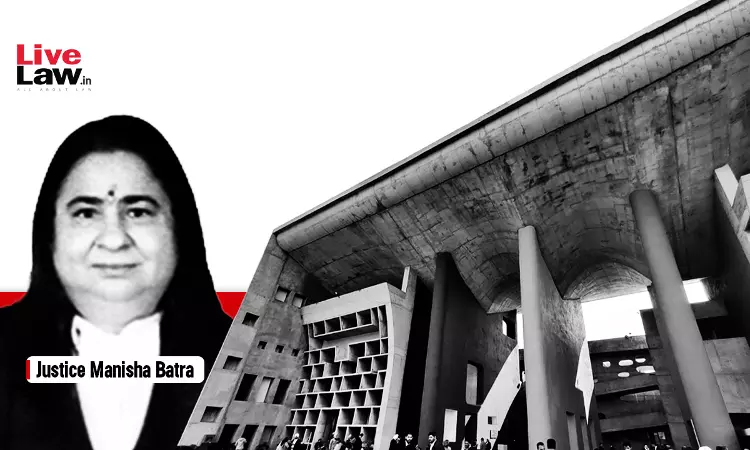
The Punjab and Haryana High Court has quashed proceedings under Section 306 IPC against two accused named in a suicide note left behind by a family of four, holding that persistent demands for repayment of a loan, even accompanied by allegations of harassment, do not by themselves satisfy the ingredients of abetment of suicide in the absence of any overt act of instigation proximate to...
This is a premium content
Available exclusively to
Our subscribers
Subscribe Premium 
INR 1099+GST
Your support helps us to bring you more content at
an affordable subscription scheme !!!
All payment options available
The Punjab and Haryana High Court has quashed proceedings under Section 306 IPC against two accused named in a suicide note left behind by a family of four, holding that persistent demands for repayment of a loan, even accompanied by allegations of harassment, do not by themselves satisfy the ingredients of abetment of suicide in the absence of any overt act of instigation proximate to the occurrence. [2026 LiveLaw (PH) 247]
Justice Manisha Batra said, "Mere allegations of persistent demands for repayment of money or harassment in connection with financial transactions, without anything more, do not by themselves satisfy the ingredients of "abetment" as contemplated under Sections 107 and 306 of the IPC. As regards the suicide note, which is a document of one page, all that can be said is that it is an anguish expressed by the principal victim. The suicide note and the FIR do not impress at all and cannot be depicted as expressing anything intentional on the part of the accused that the deceased might commit suicide."
FIR was registered, on the statement of the complainant, whose brother, Anil Aggarwal, who had left the scrap business and remained unemployed, was found dead along with his wife, Rajni Aggarwal, and their two children, after the family committed suicide at their home. A one-page suicide note recovered from the spot named eight persons, including the petitioners, Kulvir Singh @ Kulbir Singh and Rajvir Kaur, alleging that the deceased had borrowed money from them, had already repaid more than the principal amount with interest, but that the accused had nonetheless continued to demand more money and harass and threaten the family daily, including threats to take away the deceased's wife and daughter, ultimately compelling the family to take the extreme step.
A Special Investigation Team, comprising senior police officers of Jalandhar (Rural), was constituted to examine the allegations. During the SIT's inquiry, the complainant herself stated that she was unaware of the exact reason for the deaths, that she had been under mental stress when the FIR was registered, and that she was no longer interested in pursuing the case. The SIT ultimately found no evidence that the accused had compelled or abetted the suicides over non-payment of money, and recommended that five of the eight named accused be declared innocent.
However, before the SIT's report was finalised, the Station House Officer had already filed a report under Section 173 Cr.P.C. against petitioner Rajvir Kaur and a co-accused, since the statutory period for filing the challan was about to expire. On completion of investigation, the police accepted the SIT's findings only as to the five accused it had cleared, but did not exonerate the petitioners, ultimately filing a supplementary report under Section 173(8) Cr.P.C. against them along with another co-accused, finding sufficient material to proceed under Section 306 IPC. The petitioners, granted bail, challenged the FIR and all consequential proceedings before the High Court.
Senior counsel for the petitioners argued that they ran a tiffin service from their residence and were not in the business of finance or money-lending, and questioned the genuineness of the suicide note itself, pointing out that it appeared to have been written and signed by a single person despite four deaths having occurred, raising the possibility of fabrication or interpolation.
It was highlighted that the complainant had herself expressed disinterest in pursuing the case before the SIT, which had found no evidence of abetment and recommended cancellation of proceedings against several accused, yet the police had inexplicably proceeded against the petitioners despite similarly placed co-accused being cleared. It was further argued that even taking the allegations at face value, they disclosed nothing beyond financial dealings and demands for repayment, without any instigation, intentional aid, or conspiracy attributable to the petitioners, falling short of the ingredients of abetment under Sections 107 and 306 IPC.
The State opposed the petition, submitting that the suicide note specifically named all eight accused along with their mobile numbers, and recorded that despite repayment of more than the principal amount with interest, the accused had continued to harass and threaten the family, including threatening to take away the deceased's wife and daughter. It was submitted that while five co-accused had been cleared, the police found sufficient material against the petitioners after investigation, and that the genuineness and evidentiary value of the suicide note were matters for trial, not for adjudication under Section 482 Cr.P.C. No representation was made on behalf of the complainant, even at the stage the matter was reserved for judgment.
Setting out the well-established parameters for exercise of inherent jurisdiction under Section 482 Cr.P.C. (corresponding to Section 528 BNSS) from State of Haryana v. Bhajan Lal, (1992) Supp 1 SCC 335, and its subsequent application in Paramjeet Batra v. State of Uttarakhand, (2013) 11 SCC 673, Randheer Singh v. State of Uttar Pradesh, (2021) 14 SCC 626, Gian Singh v. State of Punjab, (2012) 10 SCC 303, Narinder Singh v. State of Punjab, (2014) 6 SCC 466, and Dhruvaram Murlidhar Sonar v. State of Maharashtra, (2019) 18 SCC 191, the Court explained the ingredients required to sustain a charge under Sections 107 and 306 IPC.
Reiterating that abetment requires proof of instigation, intentional aid, or conspiracy — with a discernible mens rea and, critically, a positive and proximate act driving the deceased to suicide — the Court relied on Gangula Mohan Reddy v. State of Andhra Pradesh, (2010) 1 SCC 750, and Chitresh Kumar Chopra v. State (Govt. of NCT of Delhi), 2009 (4) RCR (Criminal) 196, on the meaning of "instigation" and "goading."
It further invoked State of West Bengal v. Orilal Jaiswal, (1994) 1 SCC 73, and S.S. Cheema v. Vijay Kumar Mahajan, (2010) 12 SCC 190, for the principle that ordinary domestic discord or hypersensitivity on the part of a victim cannot be elevated to abetment of suicide, and that courts must exercise great caution before doing so.
The Court relied on the recent Supreme Court ruling in Dhirubhai Nanjibhai Patel Lotwala v. State of Gujarat, 2026 LiveLaw (SC) 270, which held that a creditor's repeated phone calls or persistent demands for repayment amount to no more than the assertion of a lawful right, and do not by themselves constitute abetment of suicide absent cogent material on the nature, time and place of any alleged threats, or any overt act of instigation.
Applying this, the Court found that beyond the general allegations of harassment and threats in the FIR and suicide note, there was no material showing any overt act, direct instigation, intentional aid, or conduct proximate to the occurrence that could be said to have left the deceased and his family with no option but to take their lives. The suicide note itself, the Court observed, was no more than an expression of anguish by the principal victim, and did not reflect anything intentional on the part of the accused.
Holding that continuation of the criminal proceedings would amount to an abuse of the process of law, and that the case fell squarely within the categories illustrated in Bhajan Lal, the Court allowed the petition and quashed the FIR and all consequential proceedings arising therefrom, qua the petitioners.
Title: Kulvir Singh @ Kulbir Singh and another v. State of Punjab and another
Counsel for the Petitioners: Mr. Bipan Ghai, Senior Advocate, with Mr. Nikhil Ghai and Ms. Akshita Kansal, Advocates
Counsel for the State: Ms. Ruchika Sabherwal, Senior DAG, Punjab
Aiman J. Chishti
Aiman J. Chishti is a Principal Correspondent with LiveLaw, covering Punjab And Haryana High Court

