



- Home
- /
- High Courts
- /
- Punjab and Haryana High Court
- /
- 'Violates Article 21': High Court...
'Violates Article 21': High Court Quashes Haryana's Blanket Ban On Govt Employees' Foreign Travel
Aiman J. Chishti
31 Aug 2026 5:22 PM IST
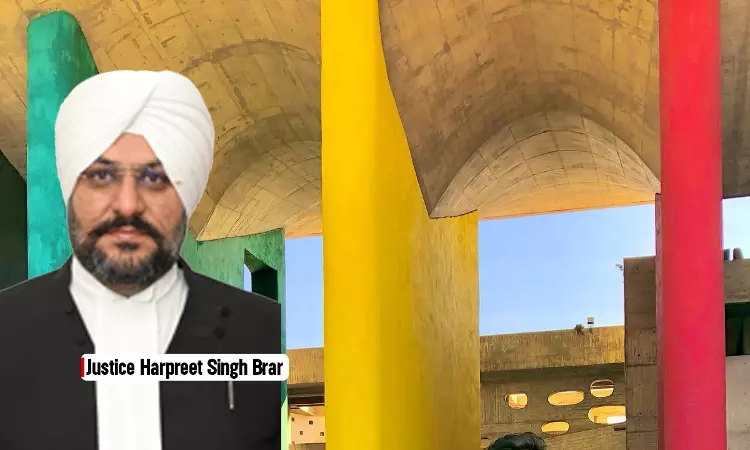
The Punjab and Haryana High Court has struck down a Haryana Government instruction imposing a blanket ban on foreign travel, official or personal, by government employees, holding that such an indiscriminate prohibition, applied without regard to individual circumstances, violates Articles 14 and 21 of the Constitution.Justice Harpreet Singh Brar said, "a blanket prohibition on an entire class...
This is a premium content
Available exclusively to
Our subscribers
Subscribe Premium 
INR 1099+GST
Your support helps us to bring you more content at
an affordable subscription scheme !!!
All payment options available
The Punjab and Haryana High Court has struck down a Haryana Government instruction imposing a blanket ban on foreign travel, official or personal, by government employees, holding that such an indiscriminate prohibition, applied without regard to individual circumstances, violates Articles 14 and 21 of the Constitution.
Justice Harpreet Singh Brar said, "a blanket prohibition on an entire class of citizens merely because they are in government service is manifestly arbitrary. The State has failed to demonstrate any rational nexus between the objective sought to be achieved by the impugned Instructions...i.e., addressing the impact of the global crisis on fuel and resources, and the complete prohibition imposed on private foreign travel. Further still, preventing a Nursing Officer from travelling to Australia for a professional examination does not only trample upon her right to travel abroad but is also thwarting her from receiving higher education. The right to education is a fundamental right traceable to Part III of the Constitution of India and as such, linked to the right to life and personal liberty under Article 21 of the Constitution of India."
The Court was hearing a writ petition filed by a Nursing Officer at PGIMS, Rohtak, challenging Instructions dated June 10, 2026 issued by the Haryana Human Resource Department, insofar as they barred government employees from foreign travel up to September 2026, except for medical treatment, and seeking a direction permitting her to avail earned leave to travel to Australia for a professional examination.
The petitioner had obtained a No Objection Certificate from the competent authority in January 2026 to appear for the Objective Structured Clinical Examination conducted by the Australian Health Practitioner Regulation Agency, for the purpose of gaining higher professional qualification. She had since completed the requisite registration formalities and secured an Australian visa. However, when she applied for earned leave to attend the examination scheduled for September 29, 2026, the department declined to process her application, citing the impugned Instructions, which imposed a complete travel ban on government employees as an austerity and fuel-conservation measure prompted by the global fuel and resource crisis arising from the Russia-Ukraine conflict and the West Asian situation.
The petitioner argued that the right to travel abroad is a recognised facet of the right to life and personal liberty under Article 21, relying on Satwant Singh Sawhney v. D. Ramarathnam, (1967), and Maneka Gandhi v. Union of India, (1978). It was contended that the Instructions, being purely executive in nature and unsupported by any legislative foundation, could not constitute "procedure established by law" so as to justify curtailment of this right, and that a blanket, one-size-fits-all prohibition — with no regard to destination, purpose, duration or nature of duties, failed the tests of reasonableness and non-arbitrariness under Article 14.
The State defended the Instructions as a temporary austerity measure necessitated by the global fuel and supply-chain crisis, submitted in the larger public interest to conserve resources and curtail expenditure.
Tracing the evolution of the right to travel abroad through Satwant Singh Sawhney, Maneka Gandhi, and Satish Chandra Verma v. Union of India, (2019), the Court reaffirmed that this right is an integral facet of personal liberty under Article 21, and any restriction upon it must be fair, just and reasonable, not arbitrary or oppressive.
Applying the twin-test framework for reasonable classification under Article 14, as reiterated by the Supreme Court, the Court held that the State had failed to establish any rational nexus between the object of fuel and resource conservation and a complete prohibition on private foreign travel by its employees. It observed that the Instructions were mechanically applied across the board, without any scope for accommodating individual circumstances.
The Court further held that denying the petitioner permission to travel for a professional examination did not merely infringe her right to travel abroad, but also impinged upon her right to education, itself traceable to Article 21, as recognised in Mohini Jain v. State of Karnataka, (1992), and Avinash Mehrotra v. Union of India, (2009).
Finding no rational connection between denying a Nursing Officer's foreign travel for upskilling and the goal of fuel conservation, the Court described the impugned action as "a sledgehammer being used to crack a nut," calling it grossly disproportionate to its stated objective.
The Court set aside the impugned Instructions to the extent they imposed a complete ban on foreign travel by government employees, and directed the competent authority to pass appropriate orders permitting the petitioner to travel abroad on or before August 31, 2026, with the petitioner to rejoin duty on expiry of her sanctioned leave.
Counsel for Petitioner: Mr. Brijender Kaushik and Mr. Sandeep Kr. Bhardwaj, Advocates Counsel for State: Mr. Akshit Pathania, AAG, Haryana Counsel for Respondents No. 3 & 4: Mr. Aditya Gautam, Advocate
Tags
Aiman J. Chishti
Aiman J. Chishti is a Principal Correspondent with LiveLaw, covering Punjab And Haryana High Court

