S.348 BNSS | Power To Recall Witness Can't Be Used To Improve Or Reconstruct Defence After Closure Of Evidence: P&H High Court
Aiman J. Chishti
6 Oct 2026 1:35 PM IST
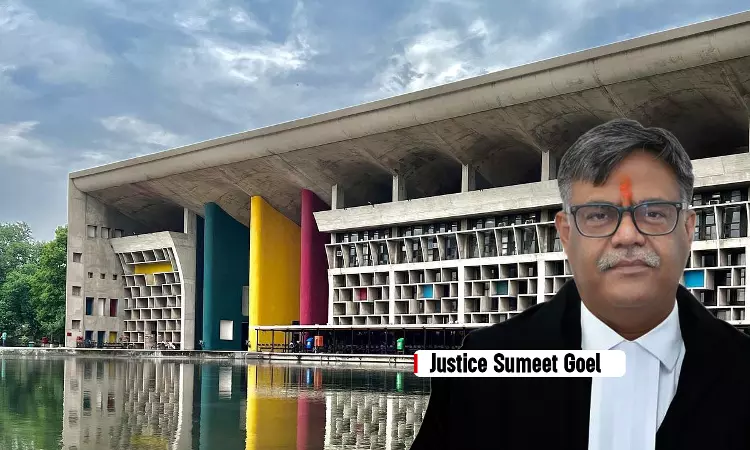
The Punjab and Haryana High Court has held that the power to recall witnesses and summon evidence under Section 348 of the BNSS (erstwhile Section 311 CrPC), though wide, cannot be invoked merely because an accused wants to bolster his defence after his evidence has been closed.
Justice Sumeet Goel, dismissing a petition by the accused in a cheque dishonour case, observed that the power must be exercised where the evidence sought is necessary for a just decision of the case, "and not merely because a party wishes to improve, supplement or reconstruct its case after the closure of evidence."
The respondent firm filed a complaint under Section 138 of the Negotiable Instruments Act alleging that the petitioner had borrowed Rs 10.30 lakh in three instalments between December 2019 and June 2020, and issued a cheque for that amount dated August 27, 2021, which was dishonoured for insufficient funds.
In his statement under Section 313 CrPC, the petitioner denied taking any loan. His defence was that the cheque was a security cheque, and that the money was actually owed to him for crops he sold in 2018-19 and 2019-20, which had been routed through other firms connected with the complainant. He relied on J-Forms, auction registers and other market records.


The petitioner cross-examined the complainant's representative at length on these transactions, including after recalling him, and examined a Market Committee official as DW-1, who produced the auction register and related records. On May 18, 2026, another defence witness appeared but said he did not wish to depose. The trial court recorded that it was the last opportunity for defence witnesses, closed the defence evidence and fixed the matter for arguments.
The petitioner then moved an application seeking to reopen his defence, recall DW-1, summon J-Forms and account books of another firm, and examine a handwriting expert to compare certain writings. The Judicial Magistrate First Class, Malerkotla, dismissed the application on September 8, 2026, holding it was belated and would delay the trial.
Counsel for the petitioner argued that the evidence went to the root of the case, as it would show whether the cheque was issued against a legally enforceable debt. It was submitted that recalling DW-1 for a limited purpose would cause no prejudice, that the petitioner sought only one effective opportunity, and that a party should not be deprived of material evidence merely because its defence had been closed.
The complainant contended that the petitioner had been given sufficient opportunity, was aware of his defence from the beginning, and was attempting to fill gaps in his case and delay a trial that had substantially progressed.
Referring to its earlier decision in Karamjit Singh v. State of Punjab, which set out the principles governing Section 311 CrPC, the Court framed the question as whether the impugned orders suffered from any illegality or perversity warranting interference.
The Court found that the petitioner's defence on the crop transactions and J-Forms had already been put to the complainant's witness, who was extensively cross-examined on those very aspects, and that the Market Committee official had been examined in defence. It held that "it cannot be said that the petitioner was denied an opportunity to establish his defence."
The Court noted that the petitioner had not challenged the May 18 order closing his evidence at the time, and moved the application much later. It held that the plea about crop sales and connected firms was not a new one that emerged after closure of evidence, observing:
"The mere fact that a document may have some relevance to the defence cannot, by itself, be a ground for reopening the entire defence evidence."
The Court also declined to interfere with the trial court's finding that the handwriting comparison was not necessary for a just decision at that stage. Noting that it would not substitute its own view under Section 528 BNSS merely because another view was possible, the Court held that the application "appears to be an afterthought and lacks bona fide."
Finding no illegality or perversity in the impugned orders, the Court dismissed the petition, clarifying that its observations would not affect the merits of the case.
Case Title: Avtar Singh v. M/s Des Raj & Co.
Appearance: Mr. S.K. Singla, Advocate for the petitioner. Mr. Jai Bhagwan, Advocate for the respondent.