



- Home
- /
- High Courts
- /
- Punjab and Haryana High Court
- /
- Disclosure Statement Must Pass...
Disclosure Statement Must Pass 6-Fold Test To Qualify U/S 27 Evidence Act: P&H High Court Acquits Four In Minor Sisters' Rape-Murder Case
Aiman J. Chishti
31 Aug 2026 8:45 PM IST
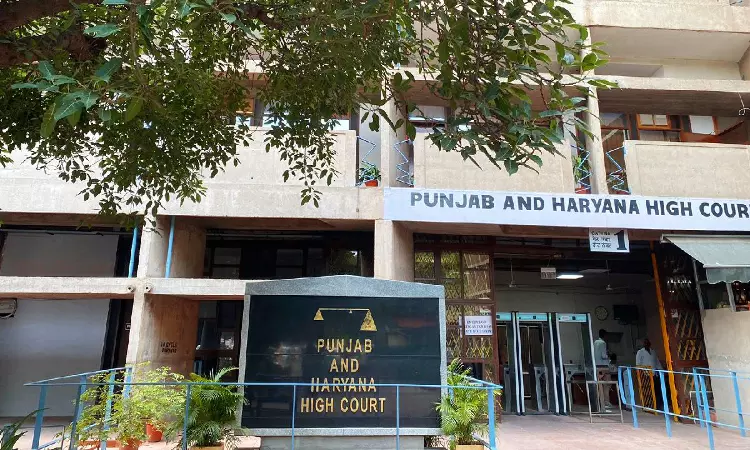
The Punjab and Haryana High Court has acquitted four men who had been sentenced to death for the rape and murder of two minor sisters, holding that none of the disclosure statements relied upon by the prosecution to justify recovery of physical evidence met the requirements for admissibility under Section 27 of the Indian Evidence Act, 1872.The Division Bench of Justice Anoop Chitkara and...
This is a premium content
Available exclusively to
Our subscribers
Subscribe Premium 
INR 1099+GST
Your support helps us to bring you more content at
an affordable subscription scheme !!!
All payment options available
The Punjab and Haryana High Court has acquitted four men who had been sentenced to death for the rape and murder of two minor sisters, holding that none of the disclosure statements relied upon by the prosecution to justify recovery of physical evidence met the requirements for admissibility under Section 27 of the Indian Evidence Act, 1872.
The Division Bench of Justice Anoop Chitkara and Justice Ramesh Chander Dimri formulated what it termed a "sextipartite test":
"1) Disclosure of information must be made by the person already arraigned as an accused for the commission of the said offence.
2) Such an accused must be in custody for that offence when making the disclosure.
3) The accused must have disclosed voluntarily, without compulsion, coercion, threats, inducement or deception.
4) Such information must disclose a fact relevant to the crime.
5) The information must have been distinctly connected with the fact discovered.
6) The fact that was discovered pursuant to the disclosure must not have already been discovered."
Applying the test, the Court held: "there is no iota of doubt that the discovery has not been shown to have been made at the instance of any of the accused persons, and their disclosure statements do not fall under the exceptions to §27 of the Indian Evidence Act, 1872."
The prosecution case was that two minor sisters, referred to by the Court, out of evident affection, as "Laado" (aged 13) and "Laadli" (aged 12) died after being brought to a Delhi hospital in the early hours of 06.08.2021. Their mother initially told doctors and, later that evening, the police, that both girls had been bitten by a snake.
Autopsies conducted the next day found no snakebite marks on either body, but did find injuries which the forensic pathologist opined were consistent with sexual assault, along with dark brown stomach fluid later found on toxicology to contain Pendimethalin, a herbicide. Three days after the deaths, the mother lodged a fresh complaint naming four neighbours, tenants in the same building, as having entered the room at night, raped both girls, forcibly administered poison, and threatened the family into silence. An FIR was registered on that basis, and all four were arrested the next day.
At trial, the four were convicted under Section 6 of the POCSO Act, Section 376-DA IPC (gang rape of a woman under sixteen), Section 302 read with 34 IPC, and other provisions, and sentenced to death on the rape and murder charges by orders dated 18.11.2023 and 24.11.2023. The reference for confirmation of the death sentences, along with the convicts' appeal, came up before the High Court.
The Collapse Of The Ocular Case
The Court found that the mother , the sole surviving eyewitness to the alleged intrusion, had given at least three materially inconsistent accounts: her earliest statement (snakebite, no accused named), her written complaint three days later (naming all four accused with specific roles), and her statement under Section 164 CrPC the very next day, in which she stated she did not know the names of any of the four except one "Sattu", a name that did not correspond to any of the accused, though it was the father's name of one of them.
At trial, she resiled from all of it, was declared hostile, denied making either the complaint or the Section 164 statement despite a fingerprint expert confirming her thumb impressions on both, and stated on oath that none of the four persons shown to her had committed any wrong against her daughters. The Court noted that neither the scribe of her original complaint nor of her Section 164 statement was ever identified or examined, and that handwriting on the two documents appeared different.
The Court held it would be "perilous" to selectively credit her second, accusatory statement while discarding both her earliest account and her sworn trial testimony, particularly since a First Information Report, being merely the earliest information, "is not, by itself a substantive piece of evidence" and can only corroborate or contradict its own maker, not other witnesses.
The victims' two adult brothers, aged 22 and 18, were also declared hostile after refusing to implicate any of the accused despite leading questions from the prosecutor.
No Scientific Evidence Linking The Accused
The DNA profiles of all four accused could not be matched to the biological material recovered from either victim's vaginal swabs or from a parna (cloth) recovered from the scene, which was alleged to bear semen stains. A shawl recovered from the scene yielded only a female DNA profile.
The medical examination of all four accused, conducted six days after the incident, found no fresh injuries, only old scars. The trial court had read these as injuries "suffered as a result of resistance put up by the victims," a finding the High Court held factually incorrect: the examining doctor's own endorsement and testimony stated in terms that no fresh injury marks were seen and there was no sign of use of force. The Court cited standard forensic-medicine texts on the definition of a "scar" to underscore that a scar, by definition, is the permanent healed mark of an old wound — not evidence of a recent struggle.
The Fabricated Disclosure Statements
The Court found the timeline of the alleged disclosures internally contradictory. The crime-scene report, prepared on 11.08.2021 by the FSL team, recorded that a metallic container of poisonous liquid had already been taken into police possession before the team's visit — yet the disclosure statements, purportedly made by the accused the following day, described them leading police to a plastic bottle they claimed to have concealed. The Court held that once an object is already in police custody, there can be no subsequent "discovery" of it at an accused's instance, rendering the disclosure statements — and the recoveries said to flow from them — inadmissible under Section 27.
A similar problem attended recovery of the incriminating cloth: only two of the four accused's disclosure statements mentioned it, yet the eventual recovery memo recorded all four jointly pointing it out — and from a location different from where the statements said it had been hidden.
Analysing the entire record, the Court held that the prosecution had "failed to establish any legally admissible evidence connecting any of the four accused to the commission of any offence beyond a reasonable doubt." While the commission of rape and the deaths by poisoning were themselves established by the medical and forensic evidence, nothing reliably connected these four men to those crimes.
The Court also noted, without drawing a firm conclusion, the incongruity of grieving parents and adult brothers persistently declining to implicate the men accused of killing their daughters and sisters, a circumstance it found could not simply be disregarded.
The convictions and death sentences of all four appellants were set aside, and they were acquitted of all charges. The murder reference was dismissed as a consequence. The Court directed their immediate release on personal bonds, with no requirement of sureties.
On Juvenility
One of the four, Ram Suhag, had claimed before the trial court to have been a juvenile, 13 years old, at the time of the offence, relying on his Aadhaar card, school-leaving certificate and date-of-birth certificate, all indicating a birth date of 01.01.2008. This was rejected by the trial court in view of a radiologist's bone-age estimate. His revision petition against that rejection, filed in 2022, remained pending before the High Court and was directed to be disposed of separately.
In the light of the above the Court concluded that, "An analysis of the entire evidence not only creates doubt about the involvement of any of the accused but also indicates the absence of scientific evidence against them. Given the above, although the prosecution is able to establish the commission of the offence of rape against both the victims, but it has failed to connect any of the accused as the perpetrator of rape."
Case Title: State of Haryana v. Arun and others (MRC-9-2023 & CRA-D-1522-2023)
Appearances: Mr. Rahul Mohan, Addl. A.G., Haryana with Mr. Yuvraj Shandilya, A.A.G., Mr. Karan Sharma and Mr. Shiva Khurmi, D.A.Gs. for the State; Mr. Vinod Ghai, Senior Advocate with Mr. Arnav Ghai, Advocate for the appellants; Mr. J.S. Mehndiratta, Senior Advocate (Amicus Curiae) with Ms. Tanveen Kaur, Advocate.
Tags
Aiman J. Chishti
Aiman J. Chishti is a Principal Correspondent with LiveLaw, covering Punjab And Haryana High Court

