



- Home
- /
- High Courts
- /
- Punjab and Haryana High Court
- /
- Review Can't Be Invoked After...
Review Can't Be Invoked After Inordinate Delay: Punjab & Haryana High Court Sets Aside Police Officer's Punishment, Quashes ACR Downgrading
LIVELAW NEWS NETWORK
12 Feb 2026 8:55 PM IST
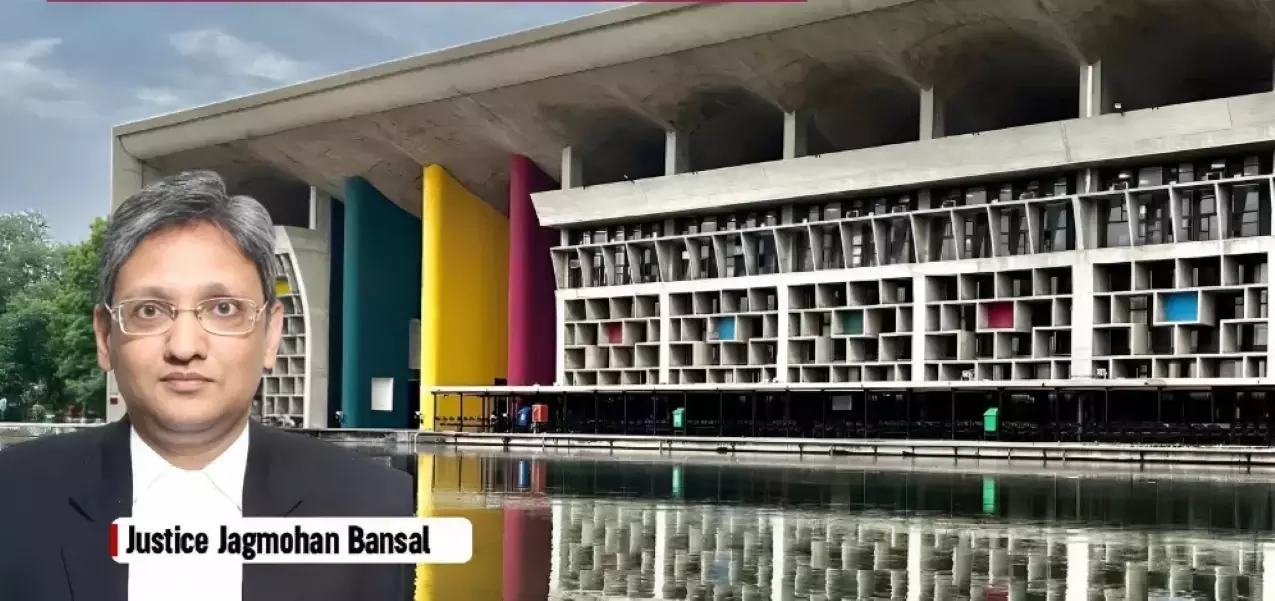
The Punjab and Haryana High Court has set aside the punishment of stoppage of three annual increments with permanent effect imposed on a Haryana Police officer, holding that review powers under Rule 16.28 of the Punjab Police Rules (PPR) must be exercised within a reasonable period and cannot be invoked mechanically after inordinate delay.Justice Jagmohan Bansal said, "The impugned order...
This is a premium content
Available exclusively to
Our subscribers
Subscribe Premium 
INR 1099+GST
Your support helps us to bring you more content at
an affordable subscription scheme !!!
All payment options available
The Punjab and Haryana High Court has set aside the punishment of stoppage of three annual increments with permanent effect imposed on a Haryana Police officer, holding that review powers under Rule 16.28 of the Punjab Police Rules (PPR) must be exercised within a reasonable period and cannot be invoked mechanically after inordinate delay.
Justice Jagmohan Bansal said, "The impugned order is further bad on account of violation of principle of reasonable period of limitation. The respondent has downgraded petitioner's ACR on the basis of Government instruction dated 22.10.2001 As per aforesaid instructions, Disciplinary Authority may downgrade ACR either at the time of awarding punishment or subsequently."
The Court also quashed adverse remarks recorded in the officer's Annual Confidential Report (ACR) after 11 years, terming the action unsustainable in law.
The petitioner, Satbir Singh, joined the Haryana Police as a Constable in 1989 and was promoted from time to time. In 2006, while posted as Reader to the District Inspector of Police, Narnaul, a departmental inquiry was initiated against him in connection with allegations of forged seals and signatures used in vehicle registration files.
An FIR was registered in 2006 under various IPC provisions. The petitioner was not named in the FIR. He was found innocent in both the preliminary and regular departmental inquiries. The Superintendent of Police accepted the Inquiry Officer's report and dropped proceedings on October 13, 2008.
However, nearly 2.5 years later, on April 15, 2011, the Inspector General of Police (IGP), Rewari, invoked Rule 16.28 PPR (power of review) and issued a show cause notice proposing punishment. Eventually, by order dated October 4, 2011, the IGP imposed the penalty of stoppage of three increments with permanent effect. The appeal was dismissed by the Director General of Police (DGP).
Separately, in 2019, the petitioner's ACR for 2006-07 was downgraded on the direction of the Additional Director General of Police (ADGP), based on the punishment order.
Justice Bansal held that although Rule 16.28 PPR does not prescribe a limitation period, review powers must be exercised within a reasonable time.
The Court observed that the Disciplinary Authority had accepted the Inquiry Officer's report exonerating the petitioner and the IGP invoked review powers after 2½ years without recording any new material justifying interference.
The Court held that the power of review is not “unbridled or unguided” and cannot be exercised whimsically. In the absence of new material, reopening the matter after substantial delay was contrary to settled principles governing reasonable limitation.
It further noted that the petitioner was undergoing training during the relevant period and was not holding charge as Reader at the time of the alleged offence—an aspect not controverted by the State.
The Court also rejected the State's justification that punishment had been imposed on another officer (the Investigating Officer), observing that the petitioner could not be penalised merely because action was taken against someone else.
Holding that there was no judicious application of mind by the reviewing and appellate authorities, the Court set aside the punishment order.
11-Year Delay In Downgrading ACR Held Arbitrary
On the issue of adverse ACR remarks, the Court referred to the Full Bench judgment dated August 14, 2024 (CWP-20171-2010), which clarified the legal principles governing recording of adverse remarks, particularly those doubting integrity.
While reiterating that courts ordinarily do not interfere with bona fide ACR assessments, the Court emphasised recording of adverse remarks must be based on objective assessment and relevant material and powers must be exercised within a reasonable period.
Recording of adverse remarks must be based on objective assessment and relevant material and powers must be exercised within a reasonable period, .
Administrative actions taken at the behest of a higher authority, where statutory remedies exist, are legally suspect.
In the present case, the ACR was downgraded in 2019 for the period 2006-07—after 11 years. The Court held that such delay could not, “by no stretch of imagination,” be termed reasonable.
Further, since the adverse remarks were founded upon the punishment order (which stood set aside), the ACR downgrading could not survive.
In the light of the above, the plea was allowed.
Title: Satbir Singh v. State of Haryana and others


