



- Home
- /
- High Courts
- /
- Punjab and Haryana High Court
- /
- NI Act | 20% Deposit Is Rule In...
NI Act | 20% Deposit Is Rule In Cheque Bounce Cases, Waiver Only In Exceptional Circumstances: Punjab & Haryana High Court
Aiman J. Chishti
18 Feb 2026 8:45 PM IST
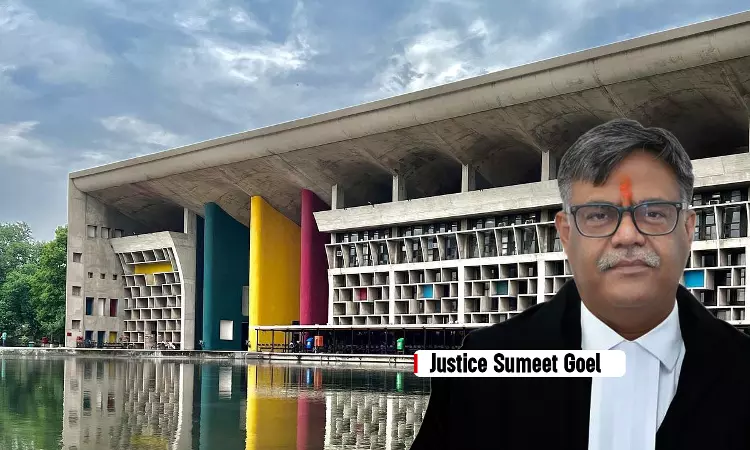
Observing that that the burden lies on a convict to demonstrate special or compelling circumstances to seek waiver of the statutory deposit under Section 148 of the Negotiable Instruments Act, the Punjab & Haryana High Court held that direction to deposit a minimum of 20% of the compensation amount is the general rule at the appellate stage.Justice Sumeet Goel said, "The convict bears...
This is a premium content
Available exclusively to
Our subscribers
Subscribe Premium 
INR 1099+GST
Your support helps us to bring you more content at
an affordable subscription scheme !!!
All payment options available
Observing that that the burden lies on a convict to demonstrate special or compelling circumstances to seek waiver of the statutory deposit under Section 148 of the Negotiable Instruments Act, the Punjab & Haryana High Court held that direction to deposit a minimum of 20% of the compensation amount is the general rule at the appellate stage.
Justice Sumeet Goel said, "The convict bears the onus of demonstrating special, exceptional or compelling circumstances to persuade the appellate Court to waive or relax the statutory requirement of deposit under Section 148 of the Negotiable Instruments Act. In the absence of such exceptional circumstances, the legislative mandate ordinarily prevails. Considering the legislative intent behind the provision—namely, to expedite the recovery process and to mitigate the hardship caused to the complainant due to protracted appellate proceedings—it is both reasonable and in consonance with statutory purpose for the appellate Court to impose the condition of deposit when an appeal is preferred against a conviction under Section 138 of the NI Act."
The Court added that, the provision was enacted to remedy the mischief of undue delay in cheque dishonour cases and to ensure that the successful complainant is not left remediless during the pendency of appeal.
Justice Goel opined that, such a requirement ensures that the complainant is not unjustly deprived of the compensation awarded by the trial Court, while at the same time preserving the accused's statutory right of appeal. It further acts as a deterrent against frivolous, vexatious or dilatory appeals preferred merely to stall execution of the sentence or compensation order.
Structured Discretion, Not Absolute
The Court clarified that although Section 148 uses the expression “may,” the discretion conferred on the appellate court is structured and guided by the statutory minimum of 20%. Departure from this norm can only be justified if exceptional circumstances are demonstrated by the appellant-convict.
Reliance was placed on the Supreme Court's decisions in, Jamboo Bhandari vs. M.P. State Industrial Development Corporation Ltd. and Muskan Enterprises & Anr. vs. State of Punjab.
The apex court had held that while deposit is the general rule, appellate courts may waive or modify the condition in exceptional cases, provided reasons are specifically recorded.
In the present case, the petitioner had been convicted under Section 138 of the NI Act and sentenced to 10 months' simple imprisonment along with ₹80 lakh compensation.
While suspending the sentence in appeal, the Additional Sessions Judge, Nuh directed the petitioner to deposit 20% of the compensation amount as a pre-condition.
Challenging this condition, the petitioner approached the High Court under Section 528 of the Bharatiya Nagarik Suraksha Sanhita, 2023, contending that, he is around 69 years old, he suffers from serious medical ailments and he is financially incapable of depositing the amount. The appellate court imposed the condition without recording reasons.
The High Court found that the petitioner had placed medical material on record, the impugned order directing deposit of 20% was bereft of reasoning and exceptional circumstances had been pleaded and supported.
In these facts, the Court modified the appellate court's order and set aside the condition requiring deposit of 20% of the compensation amount. It also directed expeditious disposal of the pending appeal.
Mr. Vishal Sharda, Advocate for the petitioner.
Mr. Yashvardhan Goyal, Advocate for respondent No.1.
Mr. Gurmeet Singh, AAG Haryana.
Title: Arjun Walia v. Tarun Batra and another
Aiman J. Chishti
Aiman J. Chishti is a Principal Correspondent with LiveLaw, covering Punjab And Haryana High Court

