



- Home
- /
- High Courts
- /
- Punjab and Haryana High Court
- /
- Statutory Presumption Of Severe...
Statutory Presumption Of Severe Stress Unrebutted: P&H High Court Quashes FIR Against Man Who Shot Himself In Attempt To Commit Suicide
Aiman J. Chishti
6 Oct 2026 3:48 PM IST
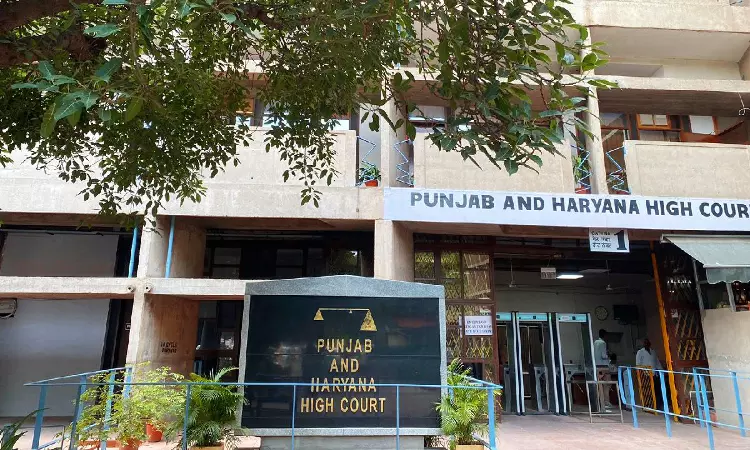
The Punjab and Haryana High Court has quashed criminal proceedings under Section 309 IPC against a man who allegedly attempted to take his own life, holding that the statutory presumption of severe stress under Section 115 of the Mental Healthcare Act, 2017, remained unrebutted. The Court also quashed the accompanying charges under Section 109 IPC and the Arms Act, finding that their...
This is a premium content
Available exclusively to
Our subscribers
Subscribe Premium 
INR 1099+GST
Your support helps us to bring you more content at
an affordable subscription scheme !!!
All payment options available
The Punjab and Haryana High Court has quashed criminal proceedings under Section 309 IPC against a man who allegedly attempted to take his own life, holding that the statutory presumption of severe stress under Section 115 of the Mental Healthcare Act, 2017, remained unrebutted.
The Court also quashed the accompanying charges under Section 109 IPC and the Arms Act, finding that their essential ingredients were not disclosed.
Justice Neerja K. Kalson observed that the legislative scheme of the 2017 Act "unmistakably reflects a shift from penalisation to a therapeutic and rehabilitative approach, thereby displacing the punitive consequences that would otherwise follow under Section 309 IPC."
An FIR was registered in March 2024 at Police Station Talwandi Sabo, District Bathinda, under Sections 309 and 109 IPC and Sections 27 and 30 of the Arms Act, alleging that the petitioner, who was under stress due to household circumstances, had sustained a firearm injury in an attempt to take his own life, using a licensed revolver belonging to a co-accused. After investigation, a final report was filed in September 2024.
Counsel for the petitioner argued that the FIR itself showed the act was committed under severe mental stress, that no material displaced the presumption under Section 115(1), and that the Arms Act allegations did not disclose the statutory ingredients of the offences.
The State opposed the petition, contending that the challan had been filed, that sufficient material existed, and that the protection under Section 115 could not be mechanically extended to separate offences under the Arms Act.
Section 309 IPC: presumption unrebutted
Section 115(1) provides that, notwithstanding Section 309 IPC, a person who attempts suicide shall be presumed, unless proved otherwise, to have severe stress and shall not be tried and punished under the IPC. The Court read it with Section 120, which gives the Act overriding effect over inconsistent laws, and held that the protection embodied in Section 115 cannot be defeated by any inconsistent provision.
Noting that Gian Kaur v. State of Punjab had upheld the validity of Section 309 IPC, the Court held that Section 115 represented a material change in the legislative approach. It referred to Common Cause v. Union of India and Ravinder Kumar Dhariwal v. Union of India, where the Supreme Court recognised the Act's emphasis on care, treatment and rehabilitation within a rights-based framework.
In the present case, the Court found the presumption unrebutted. The prosecution's own case was an attempt by the petitioner on his own life, and his father had attributed it to stress arising from personal and family circumstances. With nothing on record to displace the presumption, continuation of the prosecution under Section 309 IPC could not be sustained.
Section 109 IPC: no abetment
Holding that the protection under Section 115 "does not conclude the matter," the Court examined the remaining charges independently. It held that Section 109 IPC presupposes instigation, conspiracy or intentional aid under Section 107 IPC. Since there was no allegation that the petitioner abetted any offence by another person, the mere fact that the revolver belonged to the co-accused could not sustain the charge.
Arms Act: specific contravention required
Relying on the Supreme Court's decision in Surinder Singh v. State (UT of Chandigarh), the Court held that the amended Section 27 of the Arms Act does not penalise use of a firearm in the abstract, but only use in contravention of Section 5 or Section 7. Use of a licensed weapon would not, by itself, attract Section 27.
There was no allegation that the weapon or ammunition was prohibited, so as to attract Section 7, nor had the prosecution identified any requirement of Section 5 that was breached. The Court held that the fact that the licence stood in another person's name could not substitute for the requirement of disclosing the specific contravention:
"If the prosecution seeks to rely upon the possession or use of a firearm by a person other than the licence holder, it must at least disclose the statutory or licensing requirement which is alleged to have been violated by such possession or use."
Similarly, relying on Tarlochan Singh @ Rana v. State of Punjab, the Court held that Section 30 requires a specific violation of a licence condition, provision of the Act or rule, and neither the FIR nor the material identified any such breach by the petitioner.
Challan no bar to quashing
Applying State of Haryana v. Bhajan Lal, the Court held that the allegations, even taken at face value, did not constitute the offences alleged, and the conclusion followed from the statutory provisions without any appreciation of evidence. Rejecting the State's reliance on the filing of the challan, it observed:
"Completion of investigation and filing of a police report do not cure the absence of the essential ingredients of an offence."
Allowing the petition, the Court quashed the FIR, the challan and all consequential proceedings insofar as they relate to the petitioner.
Appearance: Mr. Vipul Babuta, Advocate for the petitioner. Mr. Gorav Kathuria, DAG, Punjab.
Tags
Aiman J. Chishti
Aiman J. Chishti is a Principal Correspondent with LiveLaw, covering Punjab And Haryana High Court

