



- Home
- /
- High Courts
- /
- Punjab and Haryana High Court
- /
- Passenger's Accidental Fall From...
Passenger's Accidental Fall From Train Entitles Family To Compensation: P&H High Court Awards ₹8 Lakh
Aiman J. Chishti
2 Nov 2026 11:00 AM IST
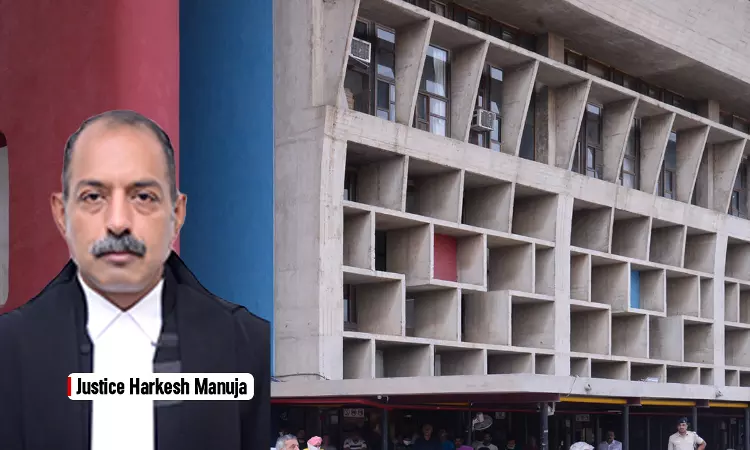
The Punjab and Haryana High Court has awarded Rs. 8 lakh in compensation, with interest at 9% per annum, to the family of a man who died after falling from the Barmer Express in July 2019. The Railway Claims Tribunal had dismissed their claim.Justice Harkesh Manuja allowed the family's appeal and directed, “The claim application is allowed and the appellants are held entitled to compensation...
This is a premium content
Available exclusively to
Our subscribers
Subscribe Premium 
INR 1099+GST
Your support helps us to bring you more content at
an affordable subscription scheme !!!
All payment options available
The Punjab and Haryana High Court has awarded Rs. 8 lakh in compensation, with interest at 9% per annum, to the family of a man who died after falling from the Barmer Express in July 2019. The Railway Claims Tribunal had dismissed their claim.
Justice Harkesh Manuja allowed the family's appeal and directed, “The claim application is allowed and the appellants are held entitled to compensation of Rs.8,00,000/- along with interest @ 9% per annum from the date of filing of the claim application till realisation. The respondent shall deposit/pay the aforesaid amount within two months from the date of receipt of a certified copy of this judgment.”
Since the accident occurred on July 3, 2019, the Court applied Rule 3 of the Railway Accidents and Untoward Incidents (Compensation) Rules, 1990, read with the Schedule as amended with effect from January 1, 2017. Under that Schedule, “the compensation payable in the event of death is Rs.8,00,000/-.”
On interest, the Court relied on Union of India v. Rina Devi (2019) and observed: “The aforesaid principle makes it clear that interest is payable from the stage when the liability of the Railway Administration arises and continues till payment.”
The Court further held that if the Railways fail to pay in time, “they shall be liable to pay interest @ 12% per annum”.
The deceased's two married daughters were not given a share. The Court said: “In the absence of any material establishing that the married daughters were dependent upon the deceased, no part of the compensation is being apportioned in their favour.”
It directed that the compensation be distributed “amongst the widow, son and parents of the deceased in the ratio of 50:30:10:10.”
One appellant died while the appeal was pending. The Court directed that the amount payable to that appellant “shall be released in favour of the mother of the deceased, being the successor entitled thereto, subject to her entitlement being established in accordance with the applicable law of succession.”
According to the claimants, Deepak Kumar was returning from the Neelkanth Mahadev temple near Rishikesh with three companions. He bought a joint ticket from Rishikesh to Ambala Cantt for himself and two of them, and handed it to one of them, Manpreet Singh. The fourth companion, a saint named Baba Ishwar Giri, did not buy a ticket.
Because of the heavy rush, the group boarded different coaches. The claimants' case was that Deepak fell from the train between Kesri and Barara stations “due to a sudden jerk and the movement of passengers”. His body was found beside the track the next morning. His companions identified the body and handed the ticket over to the Government Railway Police (GRP).
The Tribunal dismissed the claim. It held that the deceased was not a bona fide passenger, because no ticket was found on him and the ticket covered only three persons. It also held that he had been run over by a train rather than having fallen from one.
Bona Fide Passenger
Relying on Rina Devi, the Court noted that “non-recovery of a railway ticket from the body of the deceased would not, by itself, be sufficient to deny the claim on the ground that the deceased was not a bona fide passenger.”
The Court found that the ticket had been produced before the GRP on July 4, 2019, and seized the same day. It held, “The contemporaneous record, therefore, lends substantial support to the appellants' version and rules out the possibility of the ticket having been introduced as an afterthought.”
On the Tribunal's view that four companions would not board separate coaches, the Court said, “The observation of the learned Tribunal that it did not appeal to reason that four persons travelling together would board different compartments is based on a mere conjecture. In a crowded train, passengers travelling together may well board different compartments owing to lack of space.”
Justice Manuja pointed, “The mere circumstance that one of the companions did not possess a ticket cannot be used to deny the claim of the deceased without establishing that the deceased himself was not a bona fide passenger.”
The Court noted that liability under Section 124-A of the Railways Act, 1989 “is in the nature of no-fault liability” and that the provision, “being beneficial in nature, has to be interpreted in a manner that advances its object.”
It rejected the Tribunal's finding that the deceased had been run over. The Medical Officer had not ruled out a railway accident, and the Tribunal “could not have substituted its own opinion for that of the Medical Officer.”
The Court observed, “The expression 'accidental falling' does not contemplate a fall resulting only in minor or simple injuries. A person falling from a moving train may sustain grievous or crush injuries, particularly if the person comes into contact with the wheels or the railway track.”
The Court also noted that the Railways had not identified the train by which the deceased was allegedly run over, and had not examined any loco pilot, guard or other railway official. The guard's statement in the Divisional Railway Manager's (DRM) inquiry report, that he saw no one fall, was “at best, indicative of the fact that the guard had no knowledge of the occurrence. It does not establish that the incident did not take place.”
The Tribunal had also drawn an adverse inference from the fact that the deceased lived in Kesri, near where his body was found. The Court called this reasoning “untenable”, noting that the DRM report itself described the spot as “neither a trespass-prone nor a residential area.”
It added that the Tribunal's reasoning that railway staff would have noticed the body at night was “equally speculative”. If the deceased had been run over, “the same reasoning would apply to the crew of that train as well.”
The Court concluded that the Tribunal's findings were “based on conjectures and surmises and cannot be sustained”. It held that the death “occurred in an untoward incident within the meaning of Section 123(c)(2) read with Section 124-A of the 1989 Act.”
Mr. Atul Bhatia, Advocate for the appellants.
Mr. S.K. Sharma, Sr. Panel Counsel for the respondent.
Aiman J. Chishti
Aiman J. Chishti is a Principal Correspondent with LiveLaw, covering Punjab And Haryana High Court

