



- Home
- /
- High Courts
- /
- Punjab and Haryana High Court
- /
- Passport Also Means Of...
Passport Also Means Of Identification, Bail Condition To Deposit It Can't Be Imposed Routinely: Punjab & Haryana High Court
LIVELAW NEWS NETWORK
22 Dec 2025 5:15 PM IST
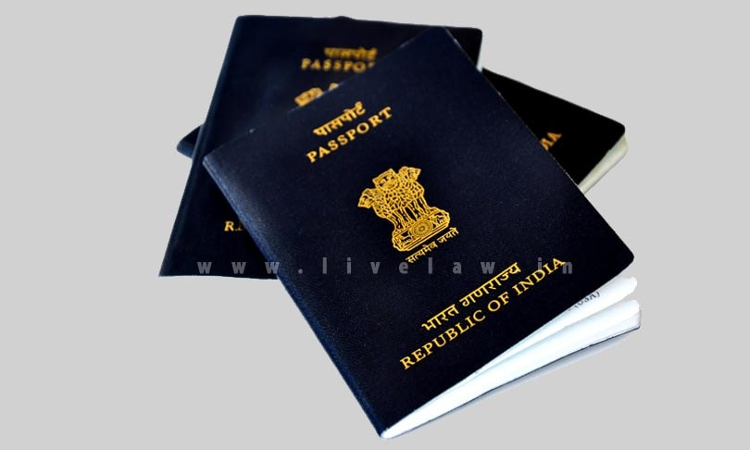
The Punjab and Haryana High Court has held that courts may not impose a condition requiring deposit of passport while granting bail in routine manner, observing that "the passport, is not only required as a travel document, but is also required for other purposes especially as means of identification."Allowing a petition challenging a bail condition, the Court quashed the requirement...
This is a premium content
Available exclusively to
Our subscribers
Subscribe Premium 
INR 1099+GST
Your support helps us to bring you more content at
an affordable subscription scheme !!!
All payment options available
The Punjab and Haryana High Court has held that courts may not impose a condition requiring deposit of passport while granting bail in routine manner, observing that "the passport, is not only required as a travel document, but is also required for other purposes especially as means of identification."
Allowing a petition challenging a bail condition, the Court quashed the requirement directing the petitioners to deposit their passports, while simultaneously mandating that they seek prior permission from the trial court before travelling abroad.
Justice Sumeet Goel elucidated, "the judicial imposition of a requirement to 'deposit a passport' constitutes a regulatory measure inherently distinguishable from the statutory power of 'impounding a passport'. The latter is exclusively governed by Section 10(3) of the Passport Act, 1967, and vested solely in the designated Passport Authority. The Court's directive to 'deposit a passport' does not, in law, tantamount to the seizure or impounding of the passport under the Passport Act, 1967."
"This discretionary power of ordering for 'deposit of passport' ought not to be exercised in a rote or routine manner. The passport functions as an indispensable document of nationality and identity, the condition for its deposit must be predicated upon a considered assessment of objective parameters indicating a clear and imminent threat of flight risk or obstruction of justice, thereby ensuring that such condition adheres strictly to the doctrine of proportionality", it added.
The petition arose from an order dated 22 November 2019 passed by the Additional Sessions Judge, Jalandhar, granting anticipatory bail to the petitioners in a private criminal complaint but subject to the condition of surrendering their passports.
The complaint alleged offences under Sections 307, 323, 452, 499, 500, 506, 511, 148 and 149 IPC, stemming from an alleged incident in which the accused persons forcibly demolished a religious structure and later threatened and assaulted the complainant. The Magistrate eventually summoned the accused only for offences under Sections 323, 452, 500, 506, 511 and 149 IPC.
The petitioners challenged only the passport deposit condition, contending that it was arbitrary, disproportionate, and unsupported by any material suggesting flight risk.
The petitioners argued that they were summoned for comparatively less serious offences, They had complied with bail conditions since 2019 without misuse of liberty and there was no apprehension of absconding. A passport is an essential identity document, and its deposit causes undue hardship, he added.
The State submitted that since the case arose from a private complaint, no police investigation was pending. Counsel for the complainant argued that the condition was justified to prevent flight and that the petitioners could always seek temporary release of passports if required.
The Court undertook an extensive examination of the scope of judicial discretion to impose conditions while granting bail, including the condition of passport deposit.
Relying on Hazari Lal Gupta v. Rameshwar Prasad (1972), the Court reiterated that courts possess wide discretion to impose conditions to prevent an accused from absconding.
The Court also clarified the distinction drawn in Suresh Nanda v. CBI (2008) between: Impounding of passport, which is exclusively within the domain of the Passport Authority under Section 10(3) of the Passports Act, 1967; and Deposit of passport as a bail condition, which does not amount to impounding or seizure.
The Court emphasized that Bail conditions must conform to the doctrine of proportionality and Conditions should not be harsh, oppressive, or such as to render the grant of bail illusory.
"Having said so, the authority vested in a Criminal Court to impose condition of 'deposit of passport', ought not to be exercised in a rote or automatic manner and rather must stem from a deliberative assessment of peculiar factual matrix of each individual case. It must be acknowledged that the passport is not merely a travel document, but is often used, inter alia, as a proof of nationality and identity. Ergo, an order for 'deposit of passport', as a pre-condition for bail, is justifiable only on the basis of objective factors indicating a clear and imminent threat to the administration of justice, and must not be employed as punitive measure against an under- trial accused, who is presumed innocent until proven guilty," said the judge.
It further observed that while the Bharatiya Nagarik Suraksha Sanhita, 2023 (erstwhile CrPC) empowers courts to impose “any condition” while granting bail, such discretion is not unfettered and must balance societal interest with the accused's fundamental right to personal liberty.
While noting that, the petitioners had enjoyed anticipatory bail since 2019 without misuse and no material indicating flight risk was placed on record, the offences were not of such gravity as to automatically justify passport deposit and a passport also serves as an important proof of identity, the Court allowed the plea.
Title: Ram Lubhaya and others v. State of Punjab and another
Mr. Sandeep Arora, Advocate for the petitioners.
Mr. Adhiraj Singh Thind, AAG Punjab.
Mr. Dheerja, Advocate for respondent No.2.


