



- Home
- /
- High Courts
- /
- Punjab and Haryana High Court
- /
- Defects In Handwriting Expert's...
Defects In Handwriting Expert's Opinion Affect Evidentiary Weight, Don't Automatically Warrant Fresh Examination: P&H High Court
Aiman J. Chishti
20 Nov 2026 1:15 PM IST
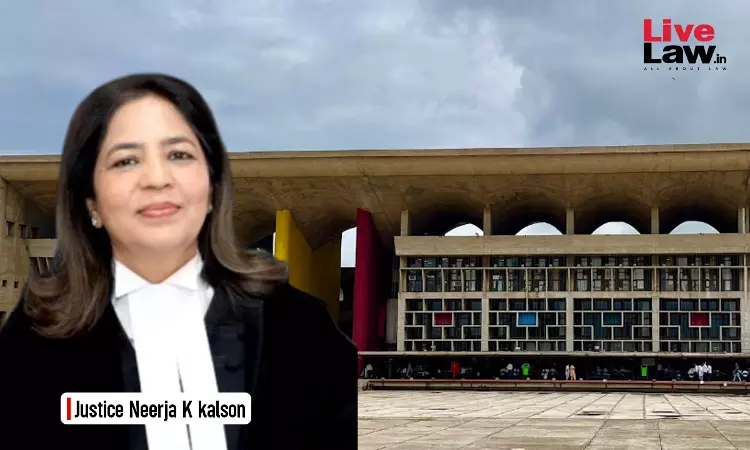
The Punjab and Haryana High Court has held that a defect in a handwriting expert's opinion, such as the comparison having been made on a photocopy, affects how much weight the opinion carries. On its own, it does not require the court to order a fresh expert examination under Section 311 CrPC (Section 348 BNSS).Justice Neerja K. Kalson observed, “Undoubtedly, the nature and quality of...
This is a premium content
Available exclusively to
Our subscribers
Subscribe Premium 
INR 1099+GST
Your support helps us to bring you more content at
an affordable subscription scheme !!!
All payment options available
The Punjab and Haryana High Court has held that a defect in a handwriting expert's opinion, such as the comparison having been made on a photocopy, affects how much weight the opinion carries. On its own, it does not require the court to order a fresh expert examination under Section 311 CrPC (Section 348 BNSS).
Justice Neerja K. Kalson observed, “Undoubtedly, the nature and quality of the material supplied to a handwriting expert have a bearing upon the reliability of the resulting opinion... However, an infirmity affecting the probative worth of an existing expert opinion does not, ipso facto, establish the necessity of directing another expert examination. The former pertains to appreciation of evidence, whereas the latter is governed by the statutory requirement of essentiality.”
The Court dismissed a petition by a complainant in a cheque bounce case under Section 138 of the Negotiable Instruments Act. The complainant had challenged the trial court's refusal to let it compare the disputed signatures on the cheque with the accused's signatures on the judicial order sheets.
The accused denied his signatures on the cheque and claimed it was a forgery. With the trial court's permission, he examined two witnesses, DW-1, the Registry Clerk of Tehsil Ratia, who produced the original record of a document registered on 20.12.2017; and DW-2, a handwriting expert, who compared the signatures on the cheque with those on the registered document.
The complainant then moved an application under Section 311 CrPC. It sought to have the disputed signatures compared with the accused's signatures on the judicial order sheets of the case, and to examine its own handwriting expert as additional evidence. It argued that DW-2 had worked from a photocopy of the registered document and had not considered the signatures the accused later made on the judicial record.
The Sub-Divisional Judicial Magistrate, dismissed the application and said the registered document came from official records and predated the cheque, so it was a proper standard for comparison. The Magistrate also said the objection about the photocopy could be considered when assessing the evidentiary worth of the expert's opinion.
Section 311: Relevant Is Not Enough, Evidence Must Be Essential
Relying on Rajaram Prasad Yadav v. State of Bihar (2013) and K.P. Tamilmaran v. State (2025 INSC 576), the Court said Section 311 has two limbs. The first gives the court discretion to summon or recall a witness. The second makes it mandatory where the evidence is essential for a just decision. The Court held:
“The governing principle, therefore, is not merely whether the proposed evidence may be relevant, useful or capable of lending further support to a party's case, but whether its reception is essential for a just adjudication.”
It added that the provision does not “confer an unqualified entitlement upon a litigating party to seek successive evidentiary opportunities.”
Signatures Made After The Dispute Arose
The Court compared the two sets of signatures. It noted that the registered document came from an identifiable official record and that its signatures predated both the cheque and the dispute.
It said, “While such anteriority does not confer any conclusive superiority upon those signatures, it constitutes a relevant circumstance in assessing their suitability as standards for comparison.”
On the signatures in the order sheets, it held, “Conversely, the signatures appearing on the judicial order sheets were appended during the pendency of the proceedings, after the dispute had arisen. Such signatures are neither inherently inadmissible nor unsuitable for comparison merely on account of their subsequent execution. Nevertheless, their presence on the judicial record does not, without more, establish their superior reliability or render their examination indispensable.”
Expert Opinion Not Binding; Complainant Can Still Challenge It
Referring to Murari Lal v. State of Madhya Pradesh (1980) the Court reiterated that “the expert does not adjudicate the controversy; the ultimate determination remains within the province of the Court.” It said DW-2's opinion does not become conclusive simply because it is on record.
“The petitioner remains at liberty to question its evidentiary worth on all grounds permissible in law, including the nature of the material employed for comparison, the methodology adopted by the expert and the reasons supporting his conclusions... The refusal to direct further examination, therefore, does not foreclose the petitioner's right to challenge the reliability of the existing expert opinion.”
The Court held that “the mere availability of an additional standard of comparison, without any demonstrated necessity for its examination, does not render the existing evidentiary material inadequate.” It found that the trial court's reasons bore a rational nexus to the question before it.
Rejection Does Not Mean Forgery Is Accepted
The Court clarified that dismissing the application does not mean the accused's defence of forgery has been accepted,
“Their genuineness remains a matter for adjudication upon appreciation of the entire evidence. Neither the opinion of DW-2 nor the observations recorded in the impugned order can be regarded as conclusive of that issue. The learned Trial Court shall independently evaluate the evidence, the applicable statutory presumptions, the defence raised by the respondent and the evidentiary worth of the expert opinion, strictly in accordance with law.”
In the light of the above, the petition was dismissed.
Tags

Aiman J. Chishti
Aiman J. Chishti is a Principal Correspondent with LiveLaw, covering Punjab And Haryana High Court

