



- Home
- /
- High Courts
- /
- Punjab and Haryana High Court
- /
- Fix Responsibility On Heads Of...
Fix Responsibility On Heads Of Office For Delayed Retiral Benefits: High Court Directs Punjab, Haryana And Chandigarh
Aiman J. Chishti
20 Aug 2026 6:50 PM IST
The Punjab and Haryana High Court has directed the Chief Secretaries of Punjab, Haryana and Chandigarh to issue circulars fixing responsibility on erring Heads of Office wherever they fail to follow the procedure prescribed for timely processing of pension and gratuity papers.The Court was dealing with a case where a retired Junior Engineer was denied interest on retiral dues paid more than...
This is a premium content
Available exclusively to
Our subscribers
Subscribe Premium 
INR 1099+GST
Your support helps us to bring you more content at
an affordable subscription scheme !!!
All payment options available
The Punjab and Haryana High Court has directed the Chief Secretaries of Punjab, Haryana and Chandigarh to issue circulars fixing responsibility on erring Heads of Office wherever they fail to follow the procedure prescribed for timely processing of pension and gratuity papers.
The Court was dealing with a case where a retired Junior Engineer was denied interest on retiral dues paid more than a year after his retirement.
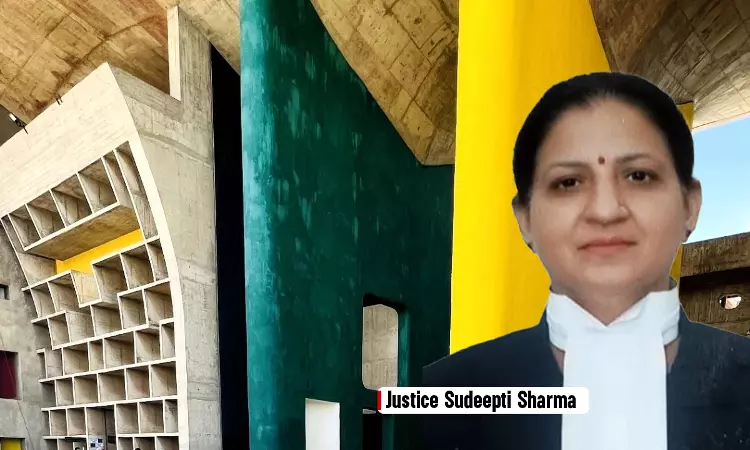
Justice Sudeepti Sharma directed, "Chief Secretary of Punjab, Haryana and Chandigarh are directed to issue circular/instructions to Head of Office and fix the responsibility upon the erring Head of Office for not following Chapter IX ('Determination and Authorisation of the Amounts of Pension and Gratuity') in Punjab Civil Services Rules Vol. II, 1953, Chapter IX ('Procedure relating to Pensions Applications for Grant of Pensions') in Punjab Civil Services Rules Vol. II, 1953 (as applicable to Haryana) and Chapter VIII ('Determination and Authorisation of the Amounts of Pension and Gratuity') in Central Civil Services (Pension) Rules, 1972, which are in existence since long."
The Registrar General was directed to supply a copy of the judgment to the three Chief Secretaries for compliance.
The Court recorded that it felt "at pain" to observe that despite dedicated chapters governing pension processing having existed since 1953 for Punjab and Haryana and since 1972 for the Centre, employees continue to be forced to litigate for release of retiral benefits and interest on delayed payment. It noted that a number of such cases remain pending before it for this reason alone.
Since the three sets of rules, governing Punjab, Haryana and the Centre respectively, are substantially the same, the Court observed that if Heads of Office simply followed the procedure already laid down, "the litigation for retiral benefits would come to an end." It held that for such lapses, ignorance or lethargy, the Head of Office ought to be penalised, and that the employee should not suffer for the employer's failure to follow rules of long standing.
The petitioner retired as a Government employee on 30.06.2016. His claim for interest on delayed payment of gratuity, leave encashment and provident fund was rejected by order dated 19.07.2019, on the ground that the delay was attributable to him for having submitted his pension papers on 03.08.2016, two months after retirement, rather than eight months before it, as required.
The impugned order set out at length the department's version of events: gratuity (DCRG) was finally paid only on 14.10.2017, leave encashment on 16.11.2017, and provident fund on 14.11.2017, each held up at various stages by objections, fresh sanctions required across financial years, and bills returned by the Treasury for lapse of budgetary funds at year-end.
Why The Delay Could Not Be Attributed To The Employee
The Court examined Chapter IX of the Punjab Civil Services Rules, Volume II, 1953 in detail. Rule 9.1 requires the Head of Department to prepare, every quarter, a list of employees due to retire within the next 24 to 30 months. Rule 9.2 requires the Head of Office to write to the Accounts Officer (Rents) at least two years before the anticipated retirement date of an allottee employee for a 'No Demand Certificate'.
Rule 9.3 requires preparation of pension papers to begin two years before retirement. Rule 9.4 divides that two-year preparatory period into three stages, verification of service, making good omissions in the service book from the employee, all of which "shall" be completed eight months prior to retirement.
The Court held that the word "shall" makes these obligations mandatory upon the Head of Office, and that the object of the framers was plainly to ensure disbursal of pensionary benefits immediately upon retirement so that pensioners do not suffer for their livelihood.
Observing that it is "not the case of respondents" that any intimation was sent to the petitioner in terms of these rules calling for his papers in advance, the Court held that the department could not rely on provisions it had itself never followed. The delay could not be attributed to the employee "unless and until it is shown by the respondents (employer) that as per the requirement of the above referred to Chapter IX... they called for the papers and tried to obtain the papers from the employee but the employee did not deliver the papers on time." No such material existed on record.
Relying on Supreme Court authorities, the Court held the delay attributable to the respondents and awarded interest at 9% per annum on the delayed payment of gratuity, leave encashment and provident fund.
The writ petition was allowed accordingly.
Title: Jasbir Singh v. State of Punjab and others
Appearances: Mr. P.K.S. Gill, Advocate for the petitioner;
Ms. Arundhati Kulshreshtha, AAG, Punjab.
Aiman J. Chishti
Aiman J. Chishti is a Principal Correspondent with LiveLaw, covering Punjab And Haryana High Court

