



- Home
- /
- High Courts
- /
- Punjab and Haryana High Court
- /
- Punjab & Haryana High Court...
Punjab & Haryana High Court Dismisses Civil Judge Aspirant's Plea Seeking Re-Evaluation Of Her Answer Sheet
LIVELAW NEWS NETWORK
13 Jan 2026 3:01 PM IST
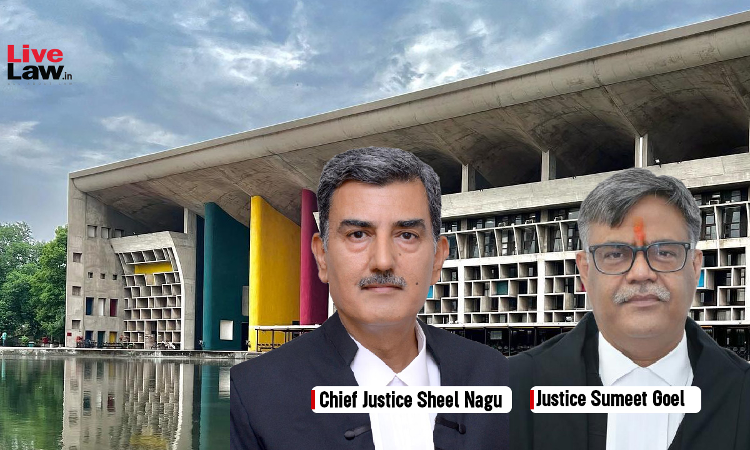
While dismissing a review application filed by a Civil Judge (Junior Division) aspirant seeking re-evaluation of her answer sheet, the Punjab & Haryana High Court has reiterated that the power of review is extremely limited and cannot be invoked as a substitute for an appeal or for re-arguing a matter on merits.Chief Justice Sheel Nagu and Justice Sumeet Goel said, "it is indubitable that...
This is a premium content
Available exclusively to
Our subscribers
Subscribe Premium 
INR 1099+GST
Your support helps us to bring you more content at
an affordable subscription scheme !!!
All payment options available
While dismissing a review application filed by a Civil Judge (Junior Division) aspirant seeking re-evaluation of her answer sheet, the Punjab & Haryana High Court has reiterated that the power of review is extremely limited and cannot be invoked as a substitute for an appeal or for re-arguing a matter on merits.
Chief Justice Sheel Nagu and Justice Sumeet Goel said, "it is indubitable that the power of review is not intended to re-litigate a cause that has been thoroughly argued and decided. Instead, its primary purpose is to correct manifest errors apparent on the face of the record, such as a clear mistake or error committed by the court, discovery of new and important matter or new evidence, or any other sufficient reason analogous to the preceding grounds."
Speaking for the bench Justice Sumeet Goel said, It is a remedial power, designed to ensure that justice is not thwarted by inadvertence, oversight, or patent error, rather than to provide a second opportunity for a party to re-argue points that have already been considered and decided by the Court.
The Court was hearing Review Application along with an application seeking condonation of 260 days' delay.
The petitioner had earlier approached the High Court challenging Clause 33 of the recruitment advertisement for Civil Judge (Junior Division) Examination 2023-24 and sought directions for production and re-evaluation of her answer to Question No. 2(x) of English Paper-IV. She further prayed that marks be awarded to her so as to declare her successful in the final selection.
However, by judgment dated 28.02.2025, the High Court dismissed the writ petition, holding that re-evaluation was expressly barred under Clause 33 and that the Court could not act as a “super-evaluator” over the decision of the examiner.
Aggrieved, the petitioner filed the present review application contending that in similar circumstances the Court had earlier permitted re-evaluation in another case, and that denial of re-evaluation violated Articles 14 and 21 of the Constitution.
The petitioner argued that the Court had failed to consider earlier precedents where re-evaluation had been permitted and that, in the interest of justice, her answer deserved reconsideration. It was further contended that the respondents were duty-bound to ensure a fair and transparent evaluation process.
Opposing the plea, counsel for the respondents- HPSC submitted that the review application was nothing but an attempt to recall the final judgment and re-litigate the matter, which was impermissible under the settled principles governing review jurisdiction under the Civil Procedure Code, 1908.
Scope Of Review Jurisdiction Explained
After examining Section 114 and Order XLVII Rule 1 of the CPC, and relying upon Supreme Court judgements including Sajjan Singh v. State of Rajasthan, S. Nagaraj v. State of Karnataka and S. Murali Sundaram v. Joihibai Kannan, the High Court reiterated that review is not an appeal in disguise.
"The prerogative of review, therefore, must be wielded with utmost circumspection, ever mindful that its exercise does not transmute into an appeal masquerading in different garb. This judicial vigilance is crucial to uphold the finality of judgments and prevent an endless cycle of litigation," said the Court.
The bench further explained that, as the adage goes, “Interest reipublicae ut sit finis litium” - it is in the public interest that there be an end to litigation. The Court is imperatively obligated to remain cognizant that the invocation of this power must eschew any re- examination of an issue on its substantive merits.
It was highlighted that to embark upon such a course would be to offend the settled judicial maxim, “Res judicata pro veritate accipitur”-a decided matter is taken for truth, thereby undermining the foundational principle that once a matter has been adjudicated upon its merits and attained finality, it ought not to be reopened to vex the tranquility of judgment.
These principles, though enunciated in realm of C.P.C. jurisdiction, would apply to writ jurisdiction as well, the Court added.
On facts, the Court noted that in the original judgment it had already examined the disputed answer and categorically held that the evaluation could not be termed as palpably incorrect or egregious. The prohibition contained in Clause 33 against re-evaluation was also specifically considered.
The Bench held that the grounds raised in the review application were “mis-founded and misconceived” and merely sought a fresh adjudication on merits, which falls outside the narrow scope of review.
The Court further took note of the inordinate delay of 260 days in filing the review application and found that no cogent or satisfactory explanation had been furnished. It observed that such unexplained delay indicated an attempt to prolong the litigation.
Holding that neither any error apparent on the face of the record nor any sufficient reason was made out, the Court dismissed both the review application as well as the delay condonation application.
Mr. Birinder Pal, Advocate for the review-applicant/petitioner.
Mr. Balvinder Sangwan, Advocate
for non-applicant-respondent No.2-HPSC
Title: Diksha Kalson v. State of Haryana and others
Tags


