Domestic Violence Case Can't Be Transferred To Family Court Merely Because Maintenance Plea Is Pending There: P&H High Court
Aiman J. Chishti
13 Nov 2026 7:09 PM IST
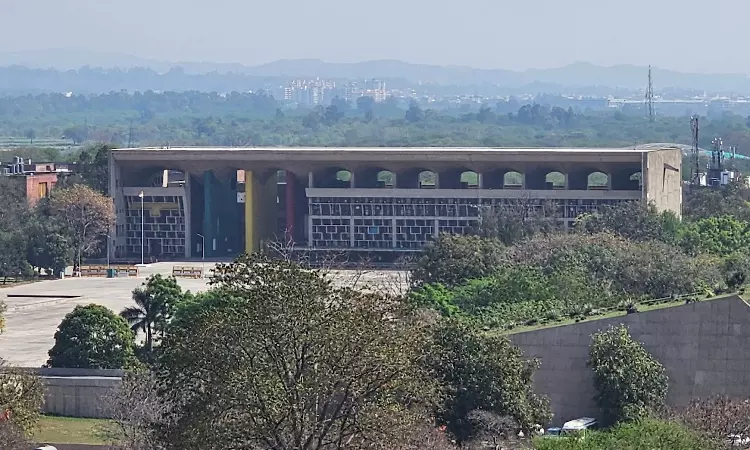
The Punjab and Haryana High Court has held that an independent application under Section 12 of the Protection of Women from Domestic Violence Act, 2005 cannot be transferred from a Judicial Magistrate to a Family Court merely because a maintenance petition between the same parties is pending before the Family Court.
Justice Mandeep Pannu dismissed a husband's transfer application and held, “...mere pendency of a maintenance petition between the parties before the Family Court does not confer upon that Court the jurisdiction to entertain and adjudicate an independent proceeding instituted under Section 12 of the DV Act. The proposed transfer, if allowed, would amount to placing the said proceeding before a forum which has not been vested with the requisite original jurisdiction under the statutory scheme.”
The wife's domestic violence case was pending before a Judicial Magistrate First Class in Gurugram. A maintenance petition under Section 125 CrPC (Section 144 BNSS) between the same parties was pending before the Family Court, Gurugram.
The husband sought transfer of the DV case to the Family Court under Section 24 CPC and Section 7 of the Family Courts Act, 1984. He made the following arguments:
The allegations and evidence in the two cases substantially overlapped. Two courts hearing them separately would lead to multiplicity of litigation and could produce conflicting findings. Under Section 26 of the DV Act, the Family Court can grant reliefs under Sections 18 to 22 of the Act.


Senior Advocate Kshitij Sharma argued for the wife that the Act specifically designates the Magistrate's court as the forum for a Section 12 application. She contended that Section 26 “has a limited scope and cannot be construed as conferring concurrent jurisdiction upon the Family Court”, and that a transfer would deprive her of the procedure and the appellate remedy provided under the Act.
The Court noted that Section 27 of the Act names the Judicial Magistrate First Class or Metropolitan Magistrate as the competent court for a Section 12 application. Section 28 provides that such proceedings are governed by the CrPC. Turning to Section 26, the Court held:
“The provision, therefore, enables the aggrieved person to seek the specified reliefs under the DV Act in proceedings which are otherwise pending before the courts mentioned therein. However, the question whether such provision also confers jurisdiction upon a Family Court to entertain an independent application under Section 12 of the DV Act is entirely different. The power to grant certain reliefs under the Act in an already pending proceeding cannot automatically be equated with the jurisdiction to entertain and adjudicate an independent application instituted under Section 12 thereof.”
It followed the Kerala High Court Division Bench in Vineet Ganesh v. Priyanka Vasan (2023) and the Delhi High Court in Aseem Khanna and noted that the Delhi High Court had considered both the Bombay and the Kerala views before declining to follow Rohan Shah.
The Court said the Supreme Court in Shaurabh Kumar Tripathi was primarily concerned with whether the High Court can quash DV proceedings using its inherent powers, not with transfer. Even so, it held that the Supreme Court's reading of Sections 26 and 27 “is of considerable relevance to the controversy involved in the present case”. It added:
“The fact that the proceedings under the DV Act are predominantly civil in nature does not, by itself, alter the forum specifically designated by the legislature for entertaining an independent application under Section 12. The nature of the reliefs sought and the nature of the forum having jurisdiction to entertain the original application are separate considerations.”
Family Courts Act No Help
The Court rejected the reliance on Section 7 of the Family Courts Act. It said Section 7(2)(a) confers only the Magistrate's jurisdiction under Chapter IX CrPC, which deals with maintenance. Having that jurisdiction “does not mean that it thereby acquires jurisdiction to entertain every other proceeding between them, particularly one for which a separate forum has been prescribed under a special enactment.”
Convenience Cannot Override Jurisdiction
On the risk of overlapping evidence and conflicting findings, the Court held that these concerns “cannot override the statutory scheme governing the jurisdiction of the respective courts”. It pointed out that the legislature had itself addressed multiplicity through Section 26, which allows DV reliefs to be sought in proceedings already pending before the Family Court. It added:
“Convenience of the parties, though a relevant consideration in deciding a transfer application, cannot be the sole consideration where the proposed transfer would result in the proceeding being placed before a court lacking jurisdiction to entertain the same. The jurisdiction of a court is conferred by statute and cannot be assumed merely on the basis of convenience or consent of the parties.”
The transfer application was dismissed, and the parties were directed to appear before the Magistrate on the date already fixed.
Mr. Karan Kaushal, Advocate and Mr. Nitesh Dalal, Advocate for the applicant.
Mr. Kshitij Sharma, Senior Advocate with Ms. Tamanna Banwala, Advocate for the respondent.