



- Home
- /
- High Courts
- /
- Punjab and Haryana High Court
- /
- Nearly 50% Punjab Jail Inmates...
Nearly 50% Punjab Jail Inmates Drug-Dependent, 'Serious Challenge' Requiring Highest Priority: High Court
LIVELAW NEWS NETWORK
3 Sept 2026 3:15 PM IST
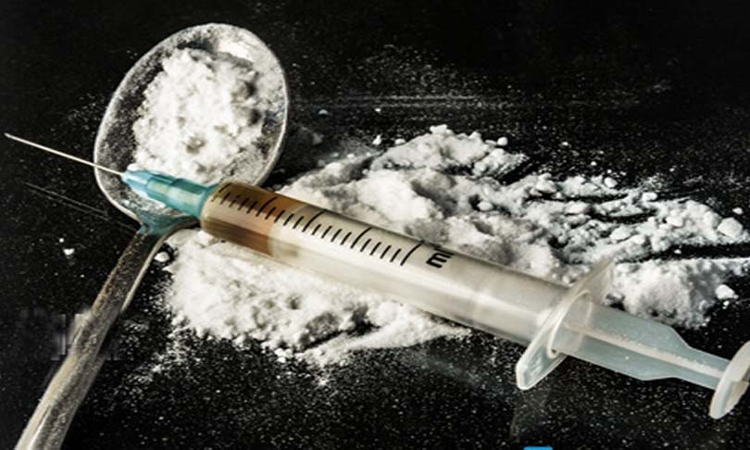
The Punjab and Haryana High Court, in a suo motu PIL triggered by a district judiciary report on high rates of opioid substitution treatment among jail inmates, has substantially expanded the scope of the proceedings after Punjab's status report revealed that nearly half of all inmates lodged in its jails are drug-dependent. It directed that the Health Departments of Punjab, Haryana and the...
This is a premium content
Available exclusively to
Our subscribers
Subscribe Premium 
INR 1099+GST
Your support helps us to bring you more content at
an affordable subscription scheme !!!
All payment options available
The Punjab and Haryana High Court, in a suo motu PIL triggered by a district judiciary report on high rates of opioid substitution treatment among jail inmates, has substantially expanded the scope of the proceedings after Punjab's status report revealed that nearly half of all inmates lodged in its jails are drug-dependent. It directed that the Health Departments of Punjab, Haryana and the Union Government, the UT of Chandigarh, and PGIMER, Chandigarh be impleaded as respondents.
Acting Chief Justice Ashwani Kumar Mishra and and Justice Rajesh Gaur noted, "status report indicates that almost 50% of the jail inmates lodged in different jails across the State are drug-dependent. Out of a total of 35,449 jail inmates lodged in different jails, 15,768 are dependent on drugs. The age-wise composition has also been furnished in paragraph 5 of the status report, which indicates that most of these drug- dependent inmates are in the prime of their youth. This clearly reflects a serious challenge for the State, which must be accorded the highest priority."
The Court added that, "we implead the Ministry of Health and Family Welfare, Government of India through its Secretary, Union Territory, Chandigarh, Postgraduate Institute of Medical Education and Research, Chandigarh through its Director and Department of Health and Family Welfare through its Secretary, Government of Haryana, as respondents No.5, 6, 7 and 8 respectively in the instant writ petition. The Registry is directed to do the needful."
The PIL was registered by the High Court on its own motion based on a report submitted by the Administrative Judge, Mansa Sessions Division, flagging that a large number of jail inmates — being drug addicts , were being administered Buprenorphine-Naloxone combination tablets, with dosages ranging from one to four tablets depending on medical condition.
The report revealed that out of 767 inmates in the relevant jail, 530 (about 69%) were registered with the jail's Out-Patient Opioid Assisted Treatment (OOAT) Clinic. The Administrative Judge flagged three core concerns: de-addiction and post-release follow-up of such inmates, whether they were actually being reintegrated into normal life after treatment, and whether adequate counselling and psychiatric support was being provided — and specifically called for data on how many inmates had successfully reached the "discontinuation phase" of treatment, and on the availability of qualified psychiatrists, nurses and psychosocial support in jails and private clinics offering such treatment.
Considering the gravity of the issue, the Court on August 20, impleaded the Chief Secretary, Home Secretary and ADGP (Prisons), Punjab as respondents, and appointed Ms. Tanu Bedi, Advocate, as Amicus Curiae to assist in exploring ameliorative steps.
The Court directed the State to file an affidavit of the ADGP (Prisons) disclosing: the total number of inmates in each jail and how many were registered with OOAT Clinics; the age profile of such inmates; the SOPs governing OOAT registration; how the State proposed to normalize and taper inmates off drugs; whether any rehabilitation or de-addiction centre existed for such inmates; how post-release support would be extended to prevent relapse; and how many drug-dependent inmates were not using these tablets prior to being lodged in jail — within 10 days.
Pursuant to the earlier order, Punjab filed its status report, which the Court found revealed a considerably graver picture than the original report: of 35,449 total jail inmates across the State, 15,768 — almost 50% — were found to be drug-dependent, with the age-wise data showing that most of these inmates were in the "prime of their youth."
On the Senior DAG, Punjab's suggestion that the Department of Health, Government of Punjab would be better placed to assist the Court, the Department of Health, Punjab (through its Secretary) was impleaded as respondent No.4.
The Court further, on its own motion, impleaded the Ministry of Health and Family Welfare, Government of India (respondent No.5), UT Chandigarh (respondent No.6), PGIMER, Chandigarh through its Director (respondent No.7), and the Department of Health and Family Welfare, Government of Haryana (respondent No.8). Notice was issued to all newly impleaded respondents, with the Additional Solicitor General of India, counsel for UT Chandigarh, and the Additional AG, Haryana accepting notice on behalf of respondents No.5, 6 and 8 respectively.
Significantly, the Court directed that the earlier directions issued to Punjab (regarding data on jail-wise inmate numbers, OOAT registration, SOPs, rehabilitation facilities and post-release support) would now also apply to the State of Haryana and the UT of Chandigarh, with both required to file similar affidavits before the next hearing.
The matter, listed on urgent list, has been adjourned to 08.09.2026 for further consideration.
Case Title: Court on its own motion v. State of Punjab and others
Ms. Tanu Bedi, Advocate, (Amicus Curiae) Mr. Akshat Sharma, Advocate and Mr. Gaurav Mishra, Advocate, Mr. Salil Sabhlok, Senior DAG, Punjab.
Mr. Abhinav Sood, Advocate and Ms. Ekakshra Mahajan Mandhar, Advocate for the respondent-UT, Chandigarh.
Mr. Satya Pal Jain, Additional Solicitor General of India with Mr. Prajwal Chauhan, Central Government Counsel for the respondents-Union of India.
Mr. Deepak Balyan, Addl. AG, Haryana.
Tags


