



- Home
- /
- High Courts
- /
- Punjab and Haryana High Court
- /
- Transfer Benefit For Haryana...
Transfer Benefit For Haryana Employees With Spouses Posted In Delhi, Chandigarh But Not UP, Rajasthan, Punjab Not Discriminatory: P&H High Court
Aiman J. Chishti
22 Sept 2026 2:20 PM IST
The Punjab and Haryana High Court has upheld the Model Online Transfer Policy dated 25.06.2026 issued by the Government of Haryana, rejecting a challenge that it discriminates against employees whose spouses are posted outside Delhi, Haryana or Chandigarh.The policy grants 10 marks under a "couple case" clause to employees whose spouses are posted in Delhi, Haryana or Chandigarh. It does...
This is a premium content
Available exclusively to
Our subscribers
Subscribe Premium 
INR 1099+GST
Your support helps us to bring you more content at
an affordable subscription scheme !!!
All payment options available
The Punjab and Haryana High Court has upheld the Model Online Transfer Policy dated 25.06.2026 issued by the Government of Haryana, rejecting a challenge that it discriminates against employees whose spouses are posted outside Delhi, Haryana or Chandigarh.
The policy grants 10 marks under a "couple case" clause to employees whose spouses are posted in Delhi, Haryana or Chandigarh. It does not extend the same benefit to employees whose spouses are posted in Punjab, Uttar Pradesh or Rajasthan, though all three States also border Haryana.
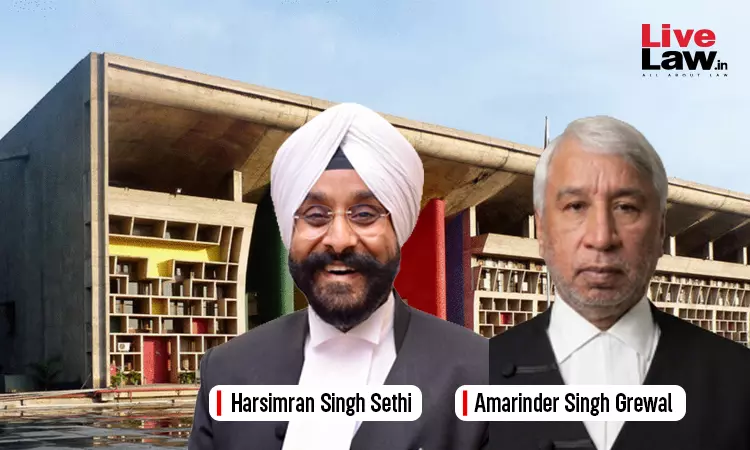
Justice Harsimran Singh Sethi and Justice Amarinder Singh Grewal said,
"Further, it has been argued on behalf of the petitioners that 10 marks have been extended under transfer policy for considering the couple case where spouses are posted in Delhi, Haryana and U.T. Chandigarh, whereas such benefit is not granted to the employees whose spouses are posted in Punjab, Rajasthan or U.P. though they are the boundary States of the State of Haryana. It may be noticed that the respondents have already clarified the intention behind the same that there are offices of Government of Haryana in Delhi and Chandigarh and in such States, spouses could be posted whereas the employees whose spouses are posted in U.P., Rajasthan or in Punjab, there are no such offices of State of Haryana, thus there would be no postings."
The Court emphasised that, "there is a reasonable nexus with the objective sought to be achieved and it cannot be said that grant of such marks in such cases is arbitrary or discriminating."
The Court further noted that, "the final argument which has been raised qua grant of benefit of 10 marks to the male employees while considering the couple case and the same must only be extended to in view of Article 15 of the Constitution of India. It may be noticed that such argument raised is unsustainable in law."
It cannot be said that a benefit can be denied or granted on the basis of gender of an employee concerned. Hence, every employee is to be considered for grant of benefit irrespective of the gender concerning such employee. Thus, it cannot be said that the grant of 10 marks to male employees whose spouses are posted at other Stations is unjust or arbitrary, it observed.
The two writ petitions also challenged the policy's exclusion of parents from the definition of family for the benefit given where a family member has a debilitating disease, and its definition of "blocked posts" under Clause 3(i).
Senior counsel for the petitioner argued that confining the 10-mark benefit to spouses posted in Delhi, Haryana or Chandigarh, while excluding those posted in the bordering States of Punjab, UP or Rajasthan, was unjust and arbitrary. He further argued that excluding parents from the disease-related benefit caused prejudice, and that the "blocked posts" clause was liable to be set aside.
The State, in reply, said the 10-mark benefit was confined to Delhi, Haryana and Chandigarh because Government of Haryana has offices there, unlike in UP, Rajasthan or Punjab. On parents, it said a large number of employees have parents of old age, and the State had therefore confined the benefit to the immediate family, meaning spouse, son and daughter.
On blocked posts, the State argued that a mere possibility of misuse, without any instance of actual misuse, cannot be a ground to strike down a policy clause. It also argued that a transfer policy is not justiciable, being guidelines rather than an enforceable right.
Counsel for the petitioner further argued that the 10-mark couple-case benefit, being extended to male employees, was violative of Article 15 of the Constitution.
After hearing the submissions, the Bench held that a transfer policy is only a guideline framed by the State to facilitate transfers and confers no enforceable right. It relied on the Supreme Court's decision in S.K. Nausad Rahaman v. Union of India (Civil Appeal No. 1243 of 2022, decided on 10.03.2022), which held that transfer is an incident of service and an employee has no fundamental or vested right to a transfer or posting of choice, and that policies on posting spouses together are subject to administrative exigencies.
It also referred Bank of India v. Jagjit Singh Mehta, which held that while spouses should ordinarily be posted together as far as practicable, this does not confer a right to a posting of choice.
The Bench also relied on its Division Bench judgment in Mool Chand Tewatia v. Union of India (2016) and the Supreme Court's decision in Pubi Lombi v. State of Arunachal Pradesh (2024), which held that judicial review of transfer orders is not permissible absent pleadings of mala fide, non-joinder of the person alleged to be responsible, violation of a statutory provision, or detriment to an employee holding a transferable post.
The Bench also referred to its own earlier order in Dr. Kirandeep Kaur v. State of Punjab (CWP No. 501 of 2026), where a teacher's transfer grievance had been redressed by adjusting her posting closer to her original station, and the Court had held that individual convenience must yield to administrative exigency.
In the light of the above, the Court said, "On the 10-mark benefit, the State's clarification that it maintains offices only in Delhi, Haryana and Chandigarh, and not in Punjab, UP or Rajasthan, showed a reasonable nexus with the object of the clause. It could not be said to be arbitrary or discriminatory."
On "blocked posts," the possibility of misuse of a policy provision cannot render it constitutionally fragile, especially since the policy was yet to be implemented and any apprehension of misuse remained a matter of speculation, not fact.
On the Article 15 argument, the Bench held that a benefit cannot be denied or granted based on an employee's gender, and every employee is to be considered irrespective of gender. It followed that granting 10 marks to male employees whose spouses are posted elsewhere could not, on that ground, be called unjust or arbitrary.
The Court found no ground to hold the transfer policy violative of Articles 14 or 16 of the Constitution. Both petitions were dismissed on 19.08.2026.
Case Title: Jyoti v. State of Haryana and Others; Subhash Chander and Others v. State of Haryana and Others
Tags
Aiman J. Chishti
Aiman J. Chishti is a Principal Correspondent with LiveLaw, covering Punjab And Haryana High Court

