



- Home
- /
- High Courts
- /
- Punjab and Haryana High Court
- /
- S. 16(2)(c) CGST Act Valid, But...
S. 16(2)(c) CGST Act Valid, But Cannot Be Invoked Mechanically Against Buyers: Punjab & Haryana High Court Lays Down Guidelines
Aiman J. Chishti
3 Oct 2026 2:46 PM IST
The Punjab and Haryana High Court has upheld the constitutional validity of Section 16(2)(c) of the CGST Act, 2017, which conditions a purchaser's Input Tax Credit (ITC) on the supplier actually paying the tax to the Government. However, it held that the provision cannot be applied as a standalone provision to mechanically reverse a purchasing dealer's ITC merely because the supplier defaulted...
This is a premium content
Available exclusively to
Our subscribers
Subscribe Premium 
INR 1099+GST
Your support helps us to bring you more content at
an affordable subscription scheme !!!
All payment options available
The Punjab and Haryana High Court has upheld the constitutional validity of Section 16(2)(c) of the CGST Act, 2017, which conditions a purchaser's Input Tax Credit (ITC) on the supplier actually paying the tax to the Government.
However, it held that the provision cannot be applied as a standalone provision to mechanically reverse a purchasing dealer's ITC merely because the supplier defaulted or its registration was later cancelled.
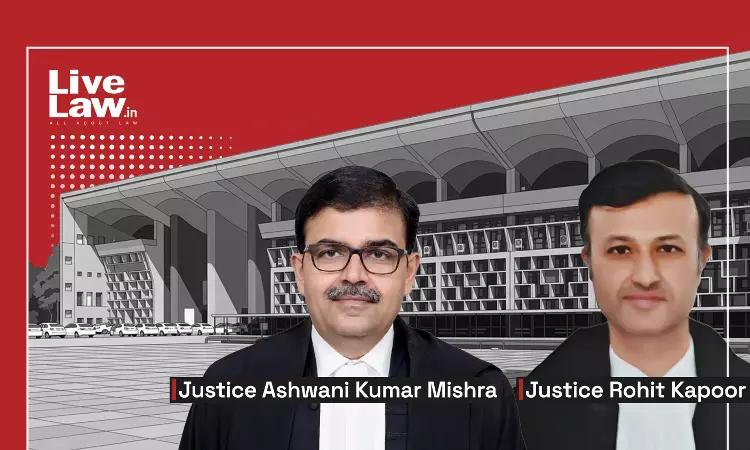
A Division Bench of Chief Justice Ashwani Kumar Mishra and Justice Rohit Kapoor, deciding a batch of 424 writ petitions led by Shaurya Alloys Pvt. Ltd. v. State of Punjab, laid down 14 guidelines for proper officers of the Centre, Punjab, Haryana and the Union Territory of Chandigarh. The Court observed:
"The vice complained of, namely, that the purchasing dealer is called upon to perform an impossible act, does not inhere in the text of Section 16(2)(c). It arises when the provision is torn out of the statutory scheme of which it is an integral part and is applied in a routine and mechanical manner."
The question before the Court was what obligation Section 16(2)(c) places on a purchasing dealer who has already paid tax to the supplier, when it has no means to check whether the supplier deposited that tax with the Government.
The petitioners challenged the provision as violating Articles 14, 19(1)(g), 21, 265 and 300A of the Constitution and the maxim lex non cogit ad impossibilia (the law does not compel the impossible). In the alternative, they sought that it be read down to apply only in cases of fraud, collusion or non-existent suppliers.
Senior Advocate Sandeep Goyal argued that the matching and reconciliation mechanism originally built into the Act was never implemented, making compliance with Section 16(2)(c) impossible. Through an illustration of a supply chain running from a kabadiwala to a retail customer, he showed how a default or retrospective cancellation several links up the chain could deny ITC to a genuine purchaser holding all requisite documents. Counsel also relied on Commissioner, Central Excise v. Larsen & Toubro to argue that a substantive provision cannot operate without statutory machinery, and on Section 76, under which the supplier who collects tax is liable to deposit it.
The Revenue contended that ITC is a statutory concession, not a vested right, and that investigations had revealed fake transactions, circular trading and payments routed through different accounts or withdrawn in cash. It relied on the Gujarat High Court's ruling in Maruti Enterprises v. Union of India, affirmed by the Supreme Court in Bhandari Scrap Traders v. Union of India on July 24, 2026, and argued that writ petitions filed at the show cause notice stage were premature.
Scheme never fully implemented
The Bench noted that the original scheme under Sections 37 to 42 provided for matching of returns, communication of discrepancies to both parties, and reclaim of credit once the supplier rectified the default. It was this mechanism that enabled the purchasing dealer to know of a supplier's default in a time-bound manner, and it was in that context that Section 155 placed the burden of proof on the person claiming ITC.
However, it was undisputed that this mechanism was never implemented due to technical glitches. Section 42 was eventually omitted and Section 41 substituted with effect from October 1, 2022, while Rule 37A, providing for reversal and re-availment of ITC where the supplier fails to file returns, was inserted only from December 26, 2022. The Court noted that before Rule 37A, there was no mechanism for a purchaser to re-avail reversed credit even if the supplier later paid the tax.
The Bench observed that Section 16(2)(c), if treated as a standalone provision without any statutory mechanism to verify or secure the supplier's deposit, would attract the lex non cogit maxim and expose the provision to challenge under Articles 14 and 19. It also held that Section 76, which specifically deals with tax collected but not paid, "cannot be rendered otiose in the GST scheme on account of indiscriminate invocation of Section 16(2)(c)."
"The buyers cannot be held endlessly liable to trace out the whereabouts of suppliers from whom purchases were made years ago," the Court said.
It recorded that in a large number of cases before it, Section 16(2)(c) had been invoked routinely only because the supplier's registration was cancelled, reflecting "a lack of clarity on part of the GST officials of the true import" of the provision. In many cases, the purchasing dealer's own registration had been retrospectively cancelled without even a notice under Section 74.
Validity upheld, reading down declined
Despite these findings, the Bench held that the provision does not suffer from any constitutional infirmity. It noted that actual payment of tax "constitutes its very foundation" of ITC, that the vires challenge was "at best, feeble," and that the real grievance was against the manner of invocation. The possibility of improper application in individual cases, it said, is no ground to strike down a provision.
Citing Maruti Enterprises and the Supreme Court's affirmation in Bhandari Scrap Traders, the Court held that judicial discipline counselled against reading down the provision on the lines of Gheru Lal Bal Chand v. State of Haryana and the Delhi High Court's On Quest Merchandising ruling to confine it only to fraud or collusion.
However, the Bench held that upholding validity "does not conclude the matter." It noted that Maruti Enterprises itself sustained the provision on the premise that the purchaser is not left remediless, and that premise holds only if Section 16(2)(c) is invoked with due regard to the remedies against the defaulting supplier. Clarifying that its guidelines "do not dilute or add to the conditions contained in Section 16(2)," the Court said they only ensure that those conditions are enforced as the statute contemplates.
The guidelines
Under the guidelines, cancellation of the supplier's registration (including retrospective cancellation), a nil or short return by the supplier, or an alert or complaint may be a legitimate starting point for inquiry, but cannot by themselves justify denial or reversal of ITC. Before issuing a show cause notice, the proper officer must record satisfaction on the particulars of the supplier and invoices, the precise nature of the default, the circumstances of the supplier's failure to pay, and the status of any recovery proceedings against the supplier, including under Sections 73, 74, 75(12) read with 79, and 76. The investigation must establish some direct link between the purchaser and the supplier.
The notice must disclose the material relied on, and documents such as alert notices, inspection reports, statements and e-way bill, toll and banking data must be supplied to the noticee, subject to lawful privilege. Where Section 74 is invoked, the notice must itself contain the foundational facts for the inference of fraud, wilful misstatement or suppression; a bare recital will not do, and the gap cannot be filled by a counter affidavit. Relying on the Supreme Court's rulings in G.R. Infra Projects and Tata Steel v. Union of India, the Court held that the supplier's fraud cannot be attributed to the purchaser unless the notice discloses facts connecting the two.
The burden under Section 155 remains on the purchasing dealer, who may discharge it through tax invoices, e-way bills, transport receipts, weighbridge slips and stock records, which the officer must consider and deal with in the order. Where denial rests on retrospective cancellation, the officer must examine the grounds and effective date of cancellation and their bearing on the particular supply.
The officer must also ascertain the status of proceedings against the supplier, coordinate with the jurisdictional authority where the supplier falls elsewhere, and ensure the same tax is not realised twice, with re-availment allowed to the extent permissible under the proviso to Section 41(2) and Rule 37A, subject to Section 17(5)(i). The law as it stood in the relevant tax period must be applied, with later amendments not applied retrospectively and the absence of a re-availment mechanism before December 26, 2022, kept in mind.
The guidelines further bar cancellation of a purchaser's registration merely because its supplier's registration was cancelled, without independent satisfaction under Section 29(2). Personal hearing must be granted under Section 75(4), requests to cross-examine third parties whose statements are relied on must be decided by reasoned order, and the final order must record specific findings on each disputed condition of Section 16(2). A deposit made during investigation, including through Form GST DRC-03, will not dispense with the requirement of disclosing foundational facts. The guidelines apply to all pending and future proceedings.
Policy suggestions and directions
The Court also commended several suggestions for consideration by the Government and GST Council, including portal alerts when supplier cancellation proceedings begin, real-time invoice-wise verification of supplier tax payment, biometric and PAN/Aadhaar authentication at registration, and bringing scrap supplies from the unorganised sector under reverse charge. It declined, however, to issue any mandamus on these policy matters.
Declining to examine individual facts, the Bench noted that many impugned notices and orders appeared founded solely on the supplier's default or retrospective cancellation, while the Revenue's assertion that several transactions were not genuine also required factual examination.
It directed that petitioners at the show cause notice stage may file replies within eight weeks, to be decided by reasoned orders applying the guidelines. Where orders had already been passed, the proper officer must revisit them and pass fresh orders after hearing, though the impugned orders themselves were not set aside and will abide by the fresh decisions. Amounts deposited or recovered, including through ITC reversal, will likewise abide by the fresh decision and be adjusted or refunded with admissible interest where warranted. No fresh coercive action will be taken until then, all pleas on merits were left open, and the Department remains free to proceed against defaulting suppliers.
Mr. Sandeep Goyal, Senior Advocate with Ms. Aakriti, Advocate for the petitioner(s) in CWP Nos.4072, 4217, 12996, and other petitions.
Mr. Saurabh Kapoor, Additional Advocate General, Punjab Ms. Samdisha Kaur, AAG, Punjab.
Mr. Sourabh Goel, Additional Standing Counsel for the respondent(s)-UT, Chandigarh.
Mr. Sourabh Goel, Additional AG, Haryana.

Aiman J. Chishti
Aiman J. Chishti is a Principal Correspondent with LiveLaw, covering Punjab And Haryana High Court

