



- Home
- /
- High Courts
- /
- Punjab and Haryana High Court
- /
- BCI Rules Can't Restrict Writ...
BCI Rules Can't Restrict Writ Powers In Medical Emergencies: P&H High Court Lets Injured Law Student Sit For Exams Despite Attendance Shortage
Aiman J. Chishti
17 Nov 2026 2:51 PM IST
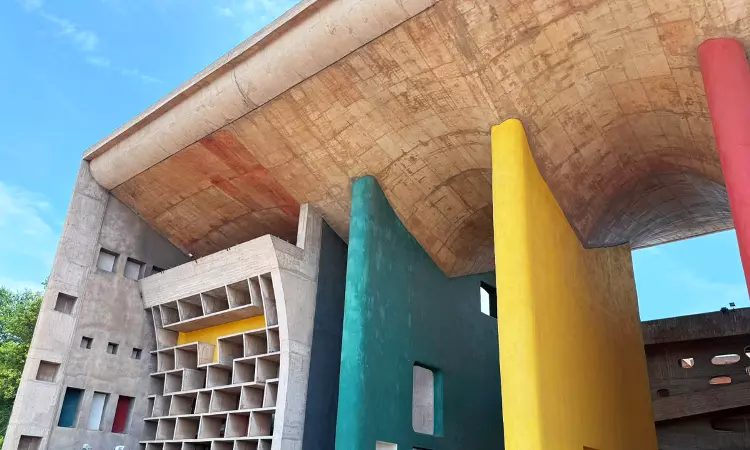
The Punjab and Haryana High Court has held that Rule 12 of the Bar Council of India's Rules of Legal Education, 2008, which requires 70% minimum attendance, does not bar a constitutional court from granting relief under Article 226 when a student faces an extraordinary medical emergency.The Bench, comprising Justice Suvir Sehgal and Justice Rajesh Gaur, dismissed an appeal by SVKM's Narsee...
This is a premium content
Available exclusively to
Our subscribers
Subscribe Premium 
INR 1099+GST
Your support helps us to bring you more content at
an affordable subscription scheme !!!
All payment options available
The Punjab and Haryana High Court has held that Rule 12 of the Bar Council of India's Rules of Legal Education, 2008, which requires 70% minimum attendance, does not bar a constitutional court from granting relief under Article 226 when a student faces an extraordinary medical emergency.
The Bench, comprising Justice Suvir Sehgal and Justice Rajesh Gaur, dismissed an appeal by SVKM's Narsee Monjee Institute of Management Studies (NMIMS). The university had challenged a Single Judge's interim order allowing a BBA LLB student to provisionally sit his fifth-semester examinations, even though his attendance had fallen 23% short after a serious road accident.
The Bench said, “Rule 12, ibid, prescribes the general academic standard of 70% minimum attendance. It restricts relaxation by the university to allow a student to take the examination, if the student concerned has attended 65% of the classes. This provision cannot be construed as a bar on the extraordinary equitable jurisdiction of a Constitutional Court under Article 226 of the Constitution, when it is confronted with an extraordinary medical emergency, as is the situation in the present case.”
The student, enrolled in the five-year BBA LLB programme, had cleared his first four semesters. On July 23, 2026, he was in a severe road accident. He suffered injuries to his right thigh, damage to an implant plate already in his right femur, and a hip fracture with broken screws, and needed immediate surgery.
After discharge, he was advised complete bed rest and then physiotherapy. Doctors told him to avoid sitting for long periods and not to put weight on his right leg. He informed the university, but his attendance fell sharply and he was not allowed to sit the semester examinations. He then filed a writ petition.
On November 11, 2026, the Single Judge directed the university to provisionally allow him to appear in the fifth-semester examinations scheduled for November 2026, subject to the final outcome of the petition.
The university, represented by Senior Advocate Lokesh Sinhal, argued that Rule 12 makes 70% attendance mandatory, and that the competent authority can condone a shortfall of at most 5%. Since the student's shortfall was 23%, it said, the rule could not be ignored.
The Bench found that the Single Judge had considered the student's past record before granting relief.
“It has been specifically noted that in the first four semesters, respondent No.1 consistently maintained an attendance ranging between 75% to 87% across all subjects. The shortfall in the 5th semester is on account of a severe unavoidable medical condition arising out of a major road accident and subsequent surgical intervention as well as recovery.”
The Bench noted, that whether Rule 12 applies “goes to the root of the main controversy”, which the Single Judge had yet to decide. It also stressed that the order was only interim, and that the university's rights had been protected by making the permission provisional and subject to the final decision. It held:
“Denying respondent No.1 an opportunity to take the examination would inflict an irreparable injury on respondent No.1, resulting in the loss of an entire academic year. In view of the afore-going discussion, we do not find any illegality, perversity or jurisdictional error in the discretionary interim order passed by the learned Single Judge.”
The appeal was dismissed with costs of ₹25,000, payable to the High Court Lawyers Welfare Fund within four weeks. The Bench clarified that its observations would not bind the Single Judge, and that the university remains free to raise all its pleas when the writ petition is finally decided.
Mr. Lokesh Sinhal, Senior Advocate with Mr. Sukhandeep Singh, Advocate,
Mr. Madhav Sinhal, Advocate, Mr. Kanu Aggarwal, Advocate, Mr. Gaurav Vats, Advocate,
Mr. Brijesh Kumar, Advocate and Mr. Ramlal Yadav, Advocate for the appellant.
Mr. Shivam Joshi, Advocate for respondent No.2.
Tags
Aiman J. Chishti
Aiman J. Chishti is a Principal Correspondent with LiveLaw, covering Punjab And Haryana High Court

