



- Home
- /
- High Courts
- /
- Punjab and Haryana High Court
- /
- Punjab & Haryana High Court Orders...
Punjab & Haryana High Court Orders Regularisation Of Sewer Helper, Says Withdrawal Of Policy Cannot Defeat Accrued Rights
LIVELAW NEWS NETWORK
12 Dec 2025 10:05 PM IST
The Punjab and Haryana High Court has directed the Haryana Government to regularise the services of a woman Sewer Helper who had been engaged on daily-wage basis since 1997, holding that her right under the 2003–2004 Regularisation Policies had crystallised long before the State withdrew those schemes.Observing that "This Court cannot remain impervious to the prolonged hardship, indignity,...
This is a premium content
Available exclusively to
Our subscribers
Subscribe Premium 
INR 1099+GST
Your support helps us to bring you more content at
an affordable subscription scheme !!!
All payment options available
The Punjab and Haryana High Court has directed the Haryana Government to regularise the services of a woman Sewer Helper who had been engaged on daily-wage basis since 1997, holding that her right under the 2003–2004 Regularisation Policies had crystallised long before the State withdrew those schemes.
Observing that "This Court cannot remain impervious to the prolonged hardship, indignity, and uncertainty endured by this vulnerable segment of the workforce. Though no measure can truly compensate for the years lost, justice demands at least a meaningful redress", it directed the authorities to confer regular status within one month, along with all consequential benefits and arrears with 6% interest.
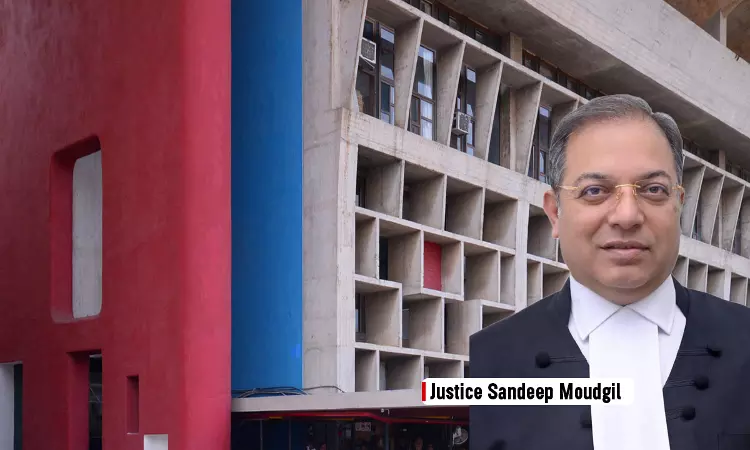
Justice Sandeep Moudgil said, "the Model Employer Doctrine obligates the State to act fairly, consistently and with a sense of responsibility towards employees who have served it for long years. To deny consideration under an operative policy by citing Uma Devi, while simultaneously granting the very same benefit to others, would defeat this standard of conduct expected of the State. It is imperative for government departments to lead by example in providing fair and stable employment. By ensuring fair employment practices, government institutions can reduce the burden of unnecessary litigation, promote job security, and uphold the principles of justice and fairness that they are meant to embody."
Background
The petitioner was engaged on 07.01.1997 as a Sewer Helper (Group-D) in the Sonepat Division on daily-wage basis. Her services were terminated on 01.03.2011, which the Labour Court later held to be illegal. By an award dated 07.04.2016, the Labour Court ordered reinstatement with continuity of service and 50% back wages. The State's challenge was dismissed on 03.04.2017. Following this, the petitioner was reinstated on 01.08.2017.
The petitioner sought regularisation under the Regularisation Policies dated 01.10.2003 and 10.02.2004, asserting that she had already completed the required service and that several similarly placed employees, including juniors, had been regularised in 2014.
The State opposed the plea citing the withdrawal of the policies in 2007, the bar under Uma Devi, and the allegation that the petitioner had worked only as a part-time sweeper for 3 hours a day.
The Court held that the Labour Court award—affirmed in writ proceedings—had conclusively granted continuity of service. Any attempt by the State to now argue that the petitioner was a part-time sweeper was “a collateral attack” on a judicial determination.
Relying on Deepali Gundu Surwase v. Kranti Junior Adhyapak Mahavidyalaya (2013) 10 SCC 324, the Court observed, “Continuity is not a symbolic relief; it restores the legal status of uninterrupted service.”
Thus, for purposes of regularisation, the petitioner was deemed to have served continuously since 1997 and the Court held that the petitioner had already completed more than six years of service before 30.09.2003, the Court noted.
The judge pointed that she fulfilled all conditions of the 2003–2004 policies, including the 240-days requirement and her illegal termination, later annulled, could not defeat her accrued right, as breaks not attributable to an employee are condonable.
The Court emphasised legitimate expectation and crystallised rights, citing Hindustan Development Corporation (1993) 3 SCC 499.
It held that once an employee satisfied eligibility criteria while the policy was operative, “withdrawal of the scheme cannot retrospectively wipe out accrued entitlements.”
The Court noted that several similarly situated and even junior employees in the same department were regularised. The State failed to justify differential treatment.
Invoking E.P. Royappa v. State of Tamil Nadu and M.L. Kesari (2010) 9 SCC 247, the Court observed, “Where a policy has been applied to some in a class, its denial to another without rational basis violates Articles 14 and 16.”
24 Yrs Of Uninterrupted Service Not Part-Time
The Court rejected the “part-time” argument, holding that the State cannot rely on an artificially imposed truncated engagement to deny equality. It also relied on Jaggo v. Union of India (2025), where the Supreme Court emphasised that long uninterrupted service cannot be negated by mere labels like “part-time”.
"More importantly, after 24 years of uninterrupted, blemish-free service, the State cannot now take refuge in the label of “part-time” to deny regularization, particularly when the petitioner satisfies every requirement of the applicable policy. To suggest that a worker who has served the State for over two decades performing duties essential to its daily functioning can be denied the protection of regular status solely on account of a nomenclature imposed by the employer, is to elevate letter over spirit. Constitutional adjudication does not permit such an empty technicality," the Court noted.
The Court held that Uma Devi was not intended to bar regularisation under a valid policy or to deprive long-serving workers of accrued rights.
Citing Om Prakash v. State of West Bengal (2023) and reiterating principles from Jaggo (2025), the Court held, “Uma Devi is a safeguard against illegal appointments; it is not a weapon to defeat legitimate claims of workers whose long service was accepted by the State.”
The Court also invoked the “Model Employer” doctrine, holding that the State must act with fairness and consistency, especially towards vulnerable workforce segments.
"To deny consideration under an operative policy by citing Uma Devi, while simultaneously granting the very same benefit to others, would defeat this standard of conduct expected of the State. It is imperative for government departments to lead by example in providing fair and stable employment. By ensuring fair employment practices, government institutions can reduce the burden of unnecessary litigation, promote job security, and uphold the principles of justice and fairness that they are meant to embody," the bench said.
Mr. Ankur Goyat , Advocate and Mr. Ramesh Goyat, Advocate for the petitioners.
Mr. RD Sharma DAG, Haryana
Title: KRISHNA DEVI v. STATE OF HARYANA AND ORS


