



- Home
- /
- High Courts
- /
- Punjab and Haryana High Court
- /
- Post Of Public Importance Can't...
Post Of Public Importance Can't Remain Unfilled For Indefinite Period, Fresh Recruitment Justified In Public Interest: P&H High Court
LIVELAW NEWS NETWORK
19 Feb 2026 7:25 PM IST
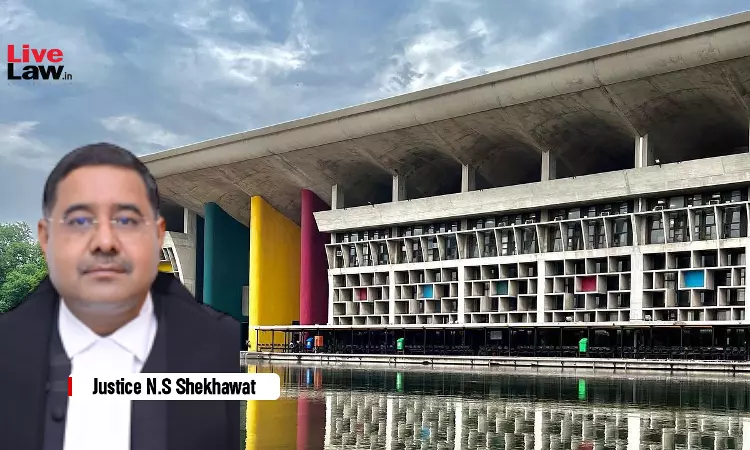
The Punjab and Haryana High Court has upheld the State's decision to initiate a fresh recruitment process for the post of Member (Non-Judicial), Punjab State Human Rights Commission (PSHRC), despite an earlier recommendation in favour of the petitioner.Justice N.S. Shekhawat noted, "During the course of arguments, no such infirmity has been pointed out by the petitioner. Even otherwise, in...
This is a premium content
Available exclusively to
Our subscribers
Subscribe Premium 
INR 1099+GST
Your support helps us to bring you more content at
an affordable subscription scheme !!!
All payment options available
The Punjab and Haryana High Court has upheld the State's decision to initiate a fresh recruitment process for the post of Member (Non-Judicial), Punjab State Human Rights Commission (PSHRC), despite an earlier recommendation in favour of the petitioner.
Justice N.S. Shekhawat noted, "During the course of arguments, no such infirmity has been pointed out by the petitioner. Even otherwise, in the present case, the matter remained pending for almost 03 years and the initiation of a fresh recruitment process, after passage of considerable time, constitutes a legitimate administrative response aimed at ensuring efficacy in public administration."
Even, no arbitrariness, discrimination or malafide has been pleaded or proved by the petitioner. In the end now, this Court can also not overlook the fact that the posts of public importance cannot remain unfilled for an indefinite duration, particularly, where the earlier process had not culminated in lawful appointment and a substantial period of time had elapsed. The administrative necessity and public interest justify the de novo recruitment, where earlier process becomes stale or inconclusive, added the Court.
The post of Member (Non-Judicial) in the PSHRC was advertised on October 29, 2022. The petitioner applied in January 2023. A Selection Committee constituted under Section 22 of the Protection of Human Rights Act, 1993—comprising the Chief Minister, Speaker, Home Minister and Leader of Opposition—recommended his name on January 11, 2024.
However, the file was returned by the Governor's Secretariat in September 2024. Thereafter, the State decided to initiate the appointment process afresh and issued a new advertisement in June/July 2025.
Challenging the fresh advertisement, the petitioner sought quashing of the new recruitment notice; and a mandamus directing the State to finalise the earlier process and appoint him based on the Selection Committee's recommendation.
The State argued that under Section 22 of the 1993 Act, appointment is made by the Governor. The Selection Committee's recommendation is merely recommendatory. Since the matter did not fructify into an appointment, the earlier process stood concluded.
No candidate from the previous selection was appointed and the petitioner did not even apply pursuant to the fresh advertisement, it added.
After hearing the submissions, the Court held that the Governor is the competent appointing authority under the statute and a recommendation by the Selection Committee does not create an indefeasible right to appointment.
The petitioner failed to challenge the “foundational decision” of return of the file by the Governor's Secretariat. In the absence of a challenge to that operative decision, the fresh advertisement could not be indirectly assailed, it noted further.
Reiterating settled law, the Court observed that mere inclusion in a select list or recommendation does not confer a vested right to appointment. At best, a candidate has a right to fair and non-arbitrary consideration.
The bench noted that at this stage, the main grievance of the petitioner arose from the issuance of fresh advertisement for the post of Member (Non-Judicial) as the petitioner's name had been recommended by the Committee to the Governor, who was the competent authority as per the statutory provisions, who apparently, was designated as the Appointing Authority.
Since the Governor had returned the file and the candidature of the petitioner was virtually rejected, in that eventuality, the failure to challenge the foundational decision is fatal and no substantive relief can be granted in the absence of challenge to the operative administrative decision, which formed the basis of a subsequent action.
Justice Shekhawat opined that, "a fresh advertisement issued pursuant to the competent authority's directions cannot be impugned indirectly, especially when the principal decision remains unchallenged. Thus, the instant petition suffers from a defective and incomplete prayer and is liable to be dismissed on this ground alone. Still further, the advertisement in question following the lapse of time and administrative reconsideration squarely falls within the executive domain."
Public Interest Consideration
The Court emphasised that the matter had remained pending for nearly three years and that posts of public importance—particularly in a statutory human rights body—cannot remain unfilled indefinitely.
In the absence of any pleaded or proved arbitrariness, discrimination or mala fide, the Court held that initiation of a de novo recruitment process was a legitimate administrative decision aimed at ensuring functional efficacy of public institutions.
Holding that no enforceable right accrued to the petitioner from the Selection Committee's recommendation and that the fresh recruitment was justified in public interest, the Court dismissed the writ petition.
Mr. Naveen Bhardwaj, Advocate with Mr. Kishore Bhardwaj, Advocate
Ms. Nishtha, Advocate for the petitioner.
Mr. Animesh Sharma, Addl. A.G., Punjab.
Title: Birendra Singh Rawat v. State of Punjab and another


