



- Home
- /
- High Courts
- /
- Punjab and Haryana High Court
- /
- Punjab & Haryana High Court Refuses...
Punjab & Haryana High Court Refuses To Quash Arrest Warrants Issued Against Absconding AAP MLA In Alleged Rape Case
LIVELAW NEWS NETWORK
13 Feb 2026 5:25 PM IST
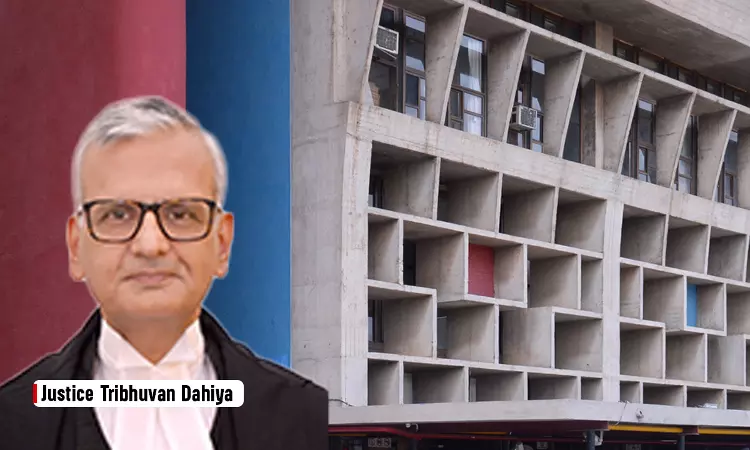
The Punjab and Haryana High Court has refused to quash arrest warrants and proclamation proceedings issued against Aam Aadmi Party MLA Harmeet Singh Pathanmajra in a rape and cheating case.Justice Tribhuvan Dahiya said, "the petitioner, who is accused of serious and heinous offences, has deliberately disregarded the investigative process and is absconding. He is also accused of slipping out...
This is a premium content
Available exclusively to
Our subscribers
Subscribe Premium 
INR 1099+GST
Your support helps us to bring you more content at
an affordable subscription scheme !!!
All payment options available
The Punjab and Haryana High Court has refused to quash arrest warrants and proclamation proceedings issued against Aam Aadmi Party MLA Harmeet Singh Pathanmajra in a rape and cheating case.
Justice Tribhuvan Dahiya said, "the petitioner, who is accused of serious and heinous offences, has deliberately disregarded the investigative process and is absconding. He is also accused of slipping out of the country by adopting fraudulent means. Issuance of arrest warrants against him, therefore, cannot be termed a measure of harassment; rather, it was justified to secure his presence for investigation."
The Court added that, the petitioner has intentionally evaded the process of law and has gone to the extent of attacking the police to flee from custody. "This is a case of open defiance of the process by breaking the law. Accordingly, no exception can be taken to the orders passed by learned Magistrate issuing arrest warrants against him."
The petitioner had sought quashing of the orders passed on 05.09.2025 and 11.09.2025 issuing arrest warrants and non-bailable warrants. The order dated 06.10.2025 issuing proclamation under Section 84 of the Bharatiya Nagarik Suraksha Sanhita, 2023 (BNSS) and order dated 20.12.2025 declaring him a proclaimed person.
The proceedings arose out of FIR dated 01.09.2025 registered at Police Station Civil Lines, Patiala under Sections 376, 420 and 506 IPC (with Section 376(2)(n) added later), based on a complaint by the petitioner's wife alleging rape and exploitation.
Counsel for Pathanmajra, Advocate Nikhil Ghai contended that the complaint had earlier been inquired into by the Deputy Inspector General of Police, Ropar Range, who had found no cognizable offence. He alleged political vendetta and argued that the FIR was registered after his relations with the ruling party soured.
The petitioner was arrested on 02.09.2025 at Karnal but escaped from custody after allegedly attacking the police party. A separate FIR was registered in that regard.
On an application moved by the SHO, the Magistrate issued arrest warrants on 05.09.2025 and subsequently non-bailable warrants on 11.09.2025 after the earlier warrants could not be executed.
As the petitioner allegedly continued to evade arrest and remained absconding, proclamation proceedings under Section 84 BNSS were initiated. The proclamation was issued on 06.10.2025 and duly published. After expiry of the mandatory 30-day period, he was declared a proclaimed person on 20.12.2025, and proceedings under Section 85 BNSS were initiated.
Ad AG Chanchal Singla argued that there was no violation of procedure in issuing the arrest warrants or declaring the petitioner a proclaimed person. There was valid reason for issuing the warrants as the petitioner had run away from custody after attacking the police party, and failed to join investigation. He sneaked out of the country despite issuance of look out notices against him pursuant to the arrest warrants and fled to Australia, as mentioned in the petition itself.
This fact has come to the knowledge of respondents for the first time on receiving advance notice of the petition. He further submitted that non-bailable warrants can be issued by the Magistrate when a person is evading the arrest, he added.
After hearing the submissions, the Court noted that it was undisputed that the petitioner was arrested but escaped from custody after allegedly attacking the police. In such circumstances, the Magistrate was justified in issuing arrest warrants.
Rejecting the argument that warrants cannot be issued during investigation, the Court relied on Shravan Gupta, which had extensively discussed Dawood Ibrahim Kaskar and held that the power under Section 73 CrPC is not confined to the post-cognizance or trial stage. It can be exercised during investigation to secure the presence of an absconding accused.
The Court further observed that the proclamation was duly published, the serving official's statement was recorded and the mandatory 30-day period under Section 84 BNSS had expired before declaring the petitioner a proclaimed person and the compliance under Section 84(3) BNSS stood established.
Justice Dahiya held that the petitioner's conduct demonstrated “open defiance of the process by breaking the law,” particularly in view of the allegation that he escaped from custody and left the country.
The Court concluded that issuance of NBWs and proclamation proceedings could not be termed harassment, but were justified measures to secure his presence in a case involving serious allegations.
Mr. Nikhil Ghai, Advocate for the petitioner.
Mr. Chanchal K. Singla, Additional Advocate General, Punjab.
Title: Harmeet Singh Pathanmajra v. State of Punjab and another


