



- Home
- /
- High Courts
- /
- Punjab and Haryana High Court
- /
- Spurious Liquor Death: Punjab &...
Spurious Liquor Death: Punjab & Haryana High Court Refuses Bail To Man Accused Of Supplying ENA, Orders Expeditious Trial
LIVELAW NEWS NETWORK
12 March 2026 7:20 PM IST
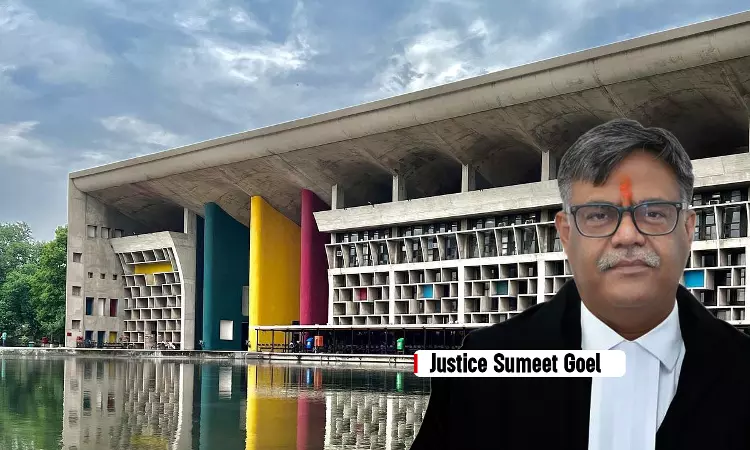
Observing that refusal of bail in serious offences must be balanced with the constitutional mandate of speedy trial, the Punjab and Haryana High Court held that where bail cannot be granted despite prolonged custody, courts must ensure expeditious conclusion of trial to prevent a “travesty of justice.”The court was dealing with a case involving an accused who had allegedly supplied...
This is a premium content
Available exclusively to
Our subscribers
Subscribe Premium 
INR 1099+GST
Your support helps us to bring you more content at
an affordable subscription scheme !!!
All payment options available
Observing that refusal of bail in serious offences must be balanced with the constitutional mandate of speedy trial, the Punjab and Haryana High Court held that where bail cannot be granted despite prolonged custody, courts must ensure expeditious conclusion of trial to prevent a “travesty of justice.”
The court was dealing with a case involving an accused who had allegedly supplied Extra Neutral Alcohol (ENA), which was allegedly used to manufacture the liquor that led to multiple deaths.
Justice Sumeet Goel said, “Ergo, in cases where, notwithstanding the lapse of time, the Court in its judicious wisdom finds that other factors preclude grant of bail, a proactive approach to prevent travesty of justice must be adopted. In such cases, the refusal to grant bail must be coupled with a peremptory mandate of expeditious conclusion of trial."
Delay In Trial Causes Sufferings To Victim
The judge added that the chronic protraction of criminal proceedings serves as a systemic blight that transcends the individual interest of the accused, inflicting a highly deleterious impact upon the collective conscience of the society. While legal discourse frequently centers on the hardship of the incarcerated, it is a grave juridical error to overlook the active suffering and anguish visited upon the victim.
"For the aggrieved; an interminable trial is not merely a procedural delay but a form of secondary victimization leading to a state of perpetual emotional purgatory where the wounds of offense are kept raw by the lack of finality," it added.
Court's Golden Mean Approach
The bench said, where relief is being sought, solely upon the ground of procedural delay, the Court must adopt a golden mean approach, where the rights of the accused/incarcerated person are protected without reducing the criminal justice system to a state of toothlessness.
"Ergo, the Constitutional inquiry into delay must be a contextual assessment of whether the continued detention remains constitutionally permissible under the specific penumbra of the case. Unless the delay is so inordinate that it shocks the judicial conscience, it cannot be treated as a solitary determinant for enlargement," it added.
Justice Goel opined that a plea of delay cannot be examined in a legal vacuum or an abstraction; instead it must be weighed against the gravamen of allegations; specific role attributed to the applicant; trajectory of the trial; risks involved in enlargement of the applicant on bail, etc.
These observations were made while dismissing a second regular bail petition filed by Anshul Garg, who is accused of supplying Extra Neutral Alcohol (ENA) allegedly used in the manufacture of spurious liquor that led to multiple deaths in Haryana.
The case arises out of FIR No. 387 dated November 10, 2023 registered at Police Station Chhapar, Yamunanagar district, for offences under Sections 120-B, 201, 328 and 302 of the IPC along with Section 72-A of the Punjab Excise Act, 1914.
According to the prosecution, the FIR was registered after one Jagmal allegedly died on November 9, 2023 after consuming poisonous country-made liquor. The complaint was lodged by his son, who alleged that the liquor had been purchased from certain individuals.
During investigation, police claimed to have uncovered a larger network allegedly involved in the manufacture and distribution of illicit liquor. Subsequently, three more persons — Anil Kumar, Paramjeet and Sushil — were also reported to have died after allegedly consuming the spurious liquor.
The petitioner was not named in the original FIR. However, during investigation his name allegedly surfaced through disclosure statements of co-accused, who claimed that ENA used in preparing the illicit liquor had been procured from him.
Senior Advocate Vinod Ghai, appearing for the petitioner, argued that the accused had been falsely implicated and his name did not appear in the FIR.
It was contended that his implication was based solely on disclosure statements of co-accused, which are inadmissible unless supported by independent corroborative evidence. The defence further submitted that no recovery had been effected from the petitioner and there was no documentary material linking him to the alleged manufacture or supply of illicit liquor.
The petitioner also claimed that he runs a licensed Ayurvedic manufacturing unit and had been authorised during the COVID-19 pandemic to procure ENA for manufacturing sanitizers.
Opposing the plea, the State submitted that the case involved a well-organised conspiracy relating to the manufacture and circulation of spurious liquor that allegedly caused multiple deaths.
The prosecution argued that the petitioner played a crucial role in the supply chain by providing ENA, which served as a key raw material used to prepare the poisonous liquor.
It was also pointed out that the petitioner's earlier bail plea had already been dismissed on merits and there had been no substantial change in circumstances to justify reconsideration.
The High Court reiterated that while second or successive bail petitions are legally maintainable, they can succeed only when there is a substantial change in circumstances after rejection of the earlier petition.
Justice Goel observed that the allegations were grave in nature as they related to the manufacture and circulation of illicit liquor that resulted in loss of human lives.
The Court further noted that although the petitioner was not named in the original FIR, his alleged involvement surfaced during investigation based on material collected subsequently.
The Court also took into account the petitioner's criminal antecedents, holding that past involvement in criminal cases is a relevant factor while deciding bail, particularly where there is apprehension that the accused may repeat similar activities or influence witnesses.
Rejecting the plea of parity with co-accused who had been granted bail, the Court held that parity cannot be applied mechanically and the role of each accused must be assessed individually.
The Court further observed that long incarceration alone cannot justify bail where the allegations are serious and the role attributed to the accused is significant.
“Offences of this nature strike at the very root of public order and societal conscience,” the Court noted.l
While refusing bail, the Court recognised concerns about delay in criminal trials and emphasised that the right to a speedy trial under Article 21 of the Constitution must be preserved.
Accordingly, the High Court directed the trial court to make an earnest effort to expedite the proceedings and conclude the trial preferably within one year, if necessary by conducting day-to-day hearings.
Mr. Vinod Ghai, Senior Advocate with Mr. Sajal Bansal, Advocate and Mr. Arnav Ghai, Advocate and Mr. R.S. Bagga, Advocate for the petitioner.
Mr. Gurmeet Singh, AAG Haryana.
Title: Anshul Garg v. State of Haryana


