



- Home
- /
- High Courts
- /
- Punjab and Haryana High Court
- /
- Superdari Bond For Seized Vehicle...
Superdari Bond For Seized Vehicle Having Ancillary Role In Offence Is To Ensure Production, Can't Be Indemnity For Market Value: P&H High Court
LIVELAW NEWS NETWORK
17 Dec 2025 4:30 PM IST
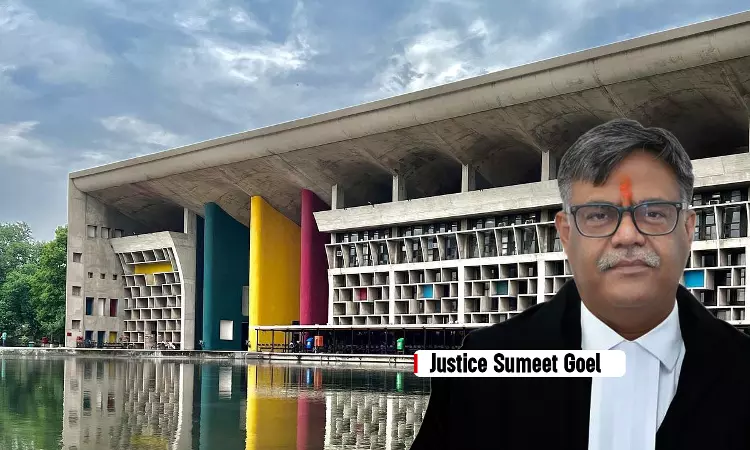
The Punjab & Haryana High Court has said that when a seized vehicle has played only an ancillary or incidental role in the alleged offence, the conditions imposed for its release on superdari must be carefully calibrated and cannot be punitive in nature. Emphasising the principle of proportionality, the Court held that the primary purpose of a superdari bond is merely to secure the...
This is a premium content
Available exclusively to
Our subscribers
Subscribe Premium 
INR 1099+GST
Your support helps us to bring you more content at
an affordable subscription scheme !!!
All payment options available
The Punjab & Haryana High Court has said that when a seized vehicle has played only an ancillary or incidental role in the alleged offence, the conditions imposed for its release on superdari must be carefully calibrated and cannot be punitive in nature.
Emphasising the principle of proportionality, the Court held that the primary purpose of a superdari bond is merely to secure the production of the property before the Court as and when required, and not to operate as an indemnity equivalent to the vehicle's full market value.
Justice Sumeet Goel said, "The determination of justness, reasonableness and proportionality of conditions imposed for the release of seized property on sapurdari/superdari is fundamentally dependent on a careful assessment of several contextual factors; which include: the nature of property (fungible or non-fungible); the role of property in the commission of the crime (corpus delicti or ancillary involvement); and its prima facie evidentiary value. This assessment becomes critical for determining the conditions to be imposed for release on sapurdari/superdari."
The Court explained that where the property itself represents the subject matter of crime (e.g., cash or jewellery recovered as stolen property), the conditions, particularly the bond amount, are required to be proportionate to its equivalent monetary value.
It added that however, where property like a vehicle is involved, and it played only an ancillary circumstantial or incidental role (e.g., used for transit, and not as the weapon of crime), the imposition of conditions must be sharply distinguished.
The judge highlighted that, in such cases, the primary purpose of the bond is solely to ensure the property's subsequent production before the Court if and when required, and not to serve as an indemnity for vehicle's full market value, as that may tantamount to imposing disproportionate condition(s) which is punitive in nature.
"The condition should instead be structured to secure attendance & production, often achieved through a more reasonable bond amount coupled with the claimant executing an undertaking not to alienate or damage the property," the Court said.
The development comes while hearing the petition seeking modification of the Special Judge's order dated 08 July 2025, passed in FIR registered under Section 7 of the Prevention of Corruption Act, 1988 at Police Station CBI ACB Branch, Chandigarh.
The petitioner, who had already been granted regular bail on 20 May 2025, sought release on superdari of his Hyundai Grand i10 (Model 2016) and iPhone 12, which were seized at the time of his arrest. While allowing the release, the Special Judge directed the petitioner to furnish a sapurdari bond of ₹10 lakh for the vehicle and ₹1 lakh for the mobile phone, each with one surety of the like amount.
Aggrieved by what was termed as “excessive and disproportionate” conditions, the petitioner approached the High Court.
Counsel for the petitioner argued that the vehicle was a 2016 model with a substantially depreciated market value, and the mobile phone was a four-year-old personal device with negligible residual value.
It was contended that such onerous bond amounts defeated the very purpose of granting sapurdari, especially when the petitioner had limited financial means.
Opposing the plea, the CBI argued that the petitioner had been caught red-handed while accepting a bribe of ₹27,000, and that the allegations were serious in nature. It was submitted that valuation of the seized property is not the sole criterion for fixing bond amounts, and the trial court had exercised its discretion judiciously to secure compliance with judicial directions.
After examining the rival submissions, the High Court undertook a detailed analysis of the law governing sapurdari/superdari under Sections 451 and 457 CrPC, and their corresponding provisions under Sections 499 and 505 BNSS. Relying on Supreme Court judgments in Basava Kom Dyamogouda Patil v. State of Mysore and Sunderbhai Ambalal Desai v. State of Gujarat, the Court reiterated that seized property should not be retained longer than absolutely necessary, as prolonged custody leads to depreciation and loss.
After hearing the submissions, the Court referring to catena of judgement including Sunderbhai Ambalal Desai Versus State of Gujarat 2003(1) RCR Criminal 380, observed that the underlying legislative schema is premised on the fundamental principle that property seized in connection with an alleged offence ought not to be retained in the custody of the court or the investigating agency for any period longer than absolute necessary.
Deprivation Of Right To Property Must Be Guided By Principle Of Fairness, Justice
Justice Goel pertinently noted that prolonged and unnecessary retention invariably leads to the depreciation, decay or complete destruction of the property, constituting not only significant loss to the rightful owner but also resulting into an avoidable administrative burden on the State.
"This legislative imperative demands that criminal courts should pass appropriate and timely orders for the interim custody and swift disposal of seized articles once their immediate evidentiary integrity has been secured. This approach is also in consonance with the constitutional right to property as enshrined under Article 300A of the Constitution of India, which mandates that: 'No person shall be deprived of property save by authority of law," it added.
The Court observed that, the term 'authority of law' must be interpreted not merely as a reference to a statutory provision, but as an embodiment of principles of justice, fairness and reasonableness. Where the facts and circumstances of a case, or the nature of property, do not necessitate its physical retention as corpus delicti, especially when photographs, videography, or detailed panchnamas can preserve its evidentiary value, the continued withholding of the property from rightful claimant ceases to be a proportionate investigative measure.
Judicial Discretion Must Be Governed By Principles Of Proportionality
The judge stated that the primary objective of the conditions to be imposed is two fold:
Firstly, to ensure proper, safe and accountable custody of the property during the pendency of proceedings.
Secondly, to guarantee its unhindered production before the court whenever the need arises for purpose of evidence, identification, or final disposal. However, the exercise of this judicial discretion is not absolute; it must be governed by the fundamental principles of proportionality and reasonableness.
"The conditions imposed must serve the intended purpose of temporary custodianship and not operate as an indirect punitive measure against the claimant or arbitrary hurdle to the release," it emphasised.
The bench added that pertinently, requiring excessive bank guarantees, demanding sureties far exceeding the property's depreciated value, or imposing unreasonable restrictions on its use may render the order for release practically nugatory, amounting to taking away with one hand the benefit conferred by the other.
In the present case, the Court noted that the Special Judge, while ordering for release of the vehicle (Hyundai Grand i10, Model 2016) and the mobile phone (iPhone 12), vide the impugned order, has imposed a bond amount of Rs. 10,00,000/- and Rs. 1,00,000/-, respectively.
It opined that, "the excessive amount bond imposed is patently contrary to the settled principles governing the ambit and scope of sapurdari/superdari, as such a requirement is manifestly oppressive and disproportionate to both the intrinsic value and the nature of property in question, particularly considering the fact that, imposition of condition(s) was to ensure proper safe-keeping and subsequent production (if so directed)."
Moreover, the impugned order appears to have been passed in a mechanical and unreasoned manner, notably failing to record any satisfaction or justification underpinning the imposition of this exorbitant bond amount, the judge said.
Allowing the petition, the High Court modified the impugned order and reduced the bond amounts as follows:
₹1,00,000 for the vehicle, with one surety in the like amount, and ₹10,000 for the mobile phone, with one surety in the like amount.
Mr. Ritik Mahindroo, Advocate and Ms. Sukhman Jot Dhaliwal, Advocate for the petitioner.
Mr. Ravi Kamal Gupta, Advocate for the respondent-CBI.
Title: Ashok Kumar Yadav v. Central Bureau of Investigation, Chandigarh


