Trusteeship Of Public Charitable Trust Prima Facie Cannot Be Bequeathed Through Will: P&H High Court
Aiman J. Chishti
28 Oct 2026 5:30 PM IST
The Punjab and Haryana High Court has held that a co-trustee of a public charitable trust, prima facie, cannot appoint a successor to her seat through her will.
The Court said trusteeship is a personal office of confidence that does not pass by inheritance, and that management of a public trust cannot become a “hereditary or family entitlement.”
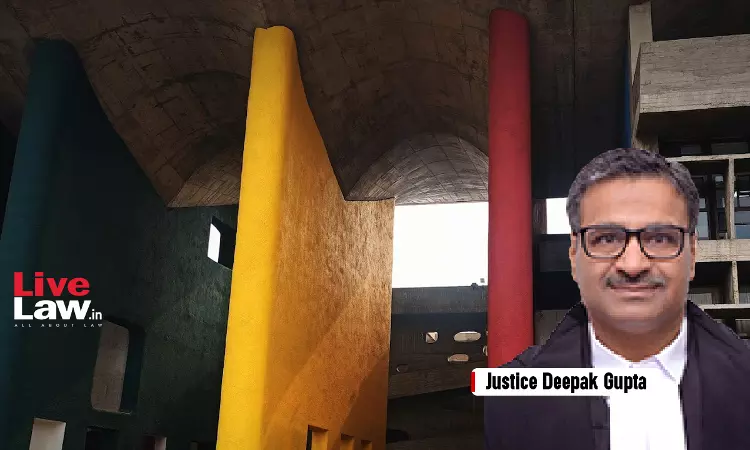
Justice Deepak Gupta partly allowed a revision petition filed by Janhit Sewa Charitable Trust, Faridabad.
Until the suit is decided, the Court restrained the daughter-in-law of a deceased life trustee from acting as a trustee on the strength of her mother-in-law's will.
The Court observed,
“Even if the Will is genuine and validly executed, it cannot confer a right which the testatrix herself was not competent to pass on. The trusteeship of a public charitable trust is not personal property that can be bequeathed like an ordinary estate.”


The trust was created by a deed dated June 2, 1989, with Shambhu Dayal Shastri as “the trustee”. Its objects include relief to the poor, education and medical relief, and it is undisputedly a public charitable trust.
In 2004, Shastri appointed his wife Asharfi Devi and his two sons, Prahlad Sharma and Mahender Sharma, as whole-life trustees. After his death in 2007, the trustees chose Prahlad Sharma as principal trustee and chairman. Mahender Sharma (Defendant No. 2) was removed as trustee by a resolution in August 2015, following an FIR over an alleged assault on the trust's sewadars. The High Court declined to stay his removal in 2017, and his challenge to it remains pending in a separate suit.
Asharfi Devi died in 2019, leaving a registered will dated October 6, 2015. The will, bequeathed her properties to Mahender Sharma and said he would accordingly be “head” of the trusts, made his wife, Ashulika Sharma (Defendant No. 1), “nominee” for the trusts in which the testatrix was a lifetime trustee.
The trust filed a suit seeking a declaration that the will, insofar as it appoints either defendant as trustee, is void and not binding on the trust. It also sought an injunction restraining them from obstructing the trust's functioning.
In 2019, the trial court granted interim protection, noting that neither the trust deed nor the supplementary deed allowed a trustee to appoint a successor by will. However, in March 2026, the trial court dismissed the injunction application, and the Additional District Judge, Faridabad, affirmed that order. The courts held that, the registered will carried a presumption of genuineness, Clause 6(b) of the trust deed empowered the testatrix to nominate a trustee, an injunction would amount to final relief, related questions were pending in other suits.
Scope Of Interference Under Article 227
Citing Wander Ltd. v. Antox India, the Court acknowledged that it does not sit in appeal over discretionary interlocutory orders. However, relying on Shalini Shyam Shetty v. Rajendra Shankar Patil and Radhey Shyam v. Chhabi Nath, it held that discretion resting on a misreading of the basic document, non-consideration of material evidence, or a wrong legal premise is not judicious and can be corrected. The Court said:“Concurrence of the two courts does not insulate an order, whose foundation is a misconstruction of a document.”
Construction Of The Trust Deed
The Court noted that the deed defines “the trustee” as the founder Shambhu Dayal Shastri and his “successors in office”, and uses singular language throughout. Clause 6(b) allows “the trustee” to nominate successors in office. Where more than one person is nominated, it allows him to frame rules for their meetings.
Read as a whole, the Court held that the power under Clause 6(b) belonged to the single founder-trustee as the means of providing for the office after him. It did not prima facie allow each member of a group of successor-trustees to “carve out and perpetuate a personal seat” by will. If it did, each life trustee could hand a seat to someone of their choice, and that person to another, turning management of a public trust into a family entitlement. The Court said this would be contrary to Clauses 9 and 10 of the deed, which irrevocably dedicate the trust property to public charitable purposes.
The Court accepted that Section 1 of the Indian Trusts Act, 1882 excludes public charitable trusts. Even so, it held that the general equitable principles underlying Sections 47, 73 and 75 apply. Under those principles, a trustee cannot delegate the office, and new trustees are appointed by the person empowered by the instrument, or failing such person, by the continuing trustees or the court, not by the will of a deceased co-trustee.
The Court also found that there was nothing to show that Asharfi Devi was ever the founder's sole successor in office, or that any rule authorised an individual life trustee to nominate her own successor. The collective choice of a chairman after the founder's death pointed to collective rather than individual succession and the trial court's impugned order departed from its own 2019 prima facie view without giving reasons.
The courts below had read Clause 6(b) in isolation, which went to the very foundation of the prima facie case. The Court said this was not merely a choice between two plausible readings. The appellate court treated the testatrix's attendance at a Satsang in January 2016 as answering the plea of mental incapacity. The High Court called this a premature appreciation of evidence, but expressed no opinion on capacity because the case turned on her competence under the deed.
The respondents' claim that the will was not challenged was factually incorrect. The first relief in the suit is a declaration that the will is void.
The interim relief sought was co-extensive with the permanent injunction prayed for. The Court held that the principle that interim relief should not amount to final relief, from Deoraj v. State of Maharashtra, did not apply, because restraining the defendants preserved the position as it stood during the testatrix's lifetime.
Objections to the trustee's authority to sue, and under Section 92 and Order 31 CPC, had been rejected under Order 7 Rule 11 in 2024, and that order was never challenged. Relying on Vidyodaya Trust v. Mohan Prasad R., the Court noted that a suit by a public trust against persons claiming its management does not necessarily fall within Section 92 CPC.
Earlier litigation was disclosed in the plaint, so no deliberate suppression was made out.
On balance of convenience, the Court noted that the trust handles public donations. Allowing a person whose title is prima facie doubtful to take part in management could expose its decisions and accounts to challenge. Ashulika Sharma had held no office in the trust during the testatrix's lifetime, and refusing her interim relief would cause her no irreparable loss.
The Court held that Mahender Sharma's claim under the will was as unsustainable as his wife's. However, his independent claim to trusteeship depends on the validity of his 2015 removal, which is pending in another suit. The Court therefore upheld the refusal of a general injunction against him, but barred him from claiming or acting as trustee or head of the trust on the strength of the will.
The Court did not consider the submission that he had been convicted in the assault case, since the judgment was not on record and his appeal is pending.
The revision petition was partly allowed with the directions that, Until the suit is decided, Ashulika Sharma is restrained from acting as, or holding herself out as, a trustee, and from obstructing the trust's functioning, management, accounts or property on the strength of the will. Mahender Sharma shall not claim to be, or act as, trustee or head of the trust on the basis of the will. His independent claim remains governed by the 2017 order and the pending suits.
The managing trustees shall maintain proper accounts, including donation-box collections, as Clause 7 of the deed requires, and file half-yearly statements before the trial court with copies to the defendants. The Court clarified that all observations are prima facie and will not affect the trial on merits or the other pending suits.