



- Home
- /
- High Courts
- /
- Punjab and Haryana High Court
- /
- Accused Facing Offences Punishable...
Accused Facing Offences Punishable With Less Than 10 Years Can't Be Declared 'Proclaimed Offender' U/S 84(4) BNSS: P&H High Court
Aiman J. Chishti
27 Oct 2026 5:15 PM IST
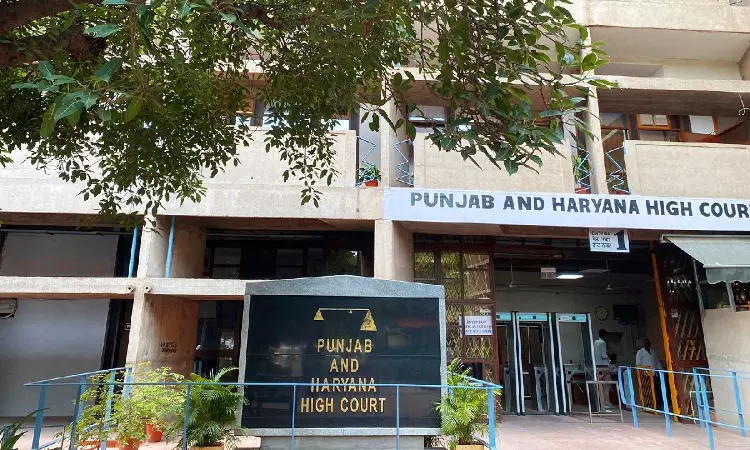
The Punjab and Haryana High Court has held that an accused facing offences that are not punishable with imprisonment of ten years or more cannot be declared a “proclaimed offender” under Section 84(4) of the Bharatiya Nagarik Suraksha Sanhita, 2023. At most, such an accused can be declared a “proclaimed person” or “absconder.”Justice Shalini Singh Nagpal set aside a...
This is a premium content
Available exclusively to
Our subscribers
Subscribe Premium 
INR 1099+GST
Your support helps us to bring you more content at
an affordable subscription scheme !!!
All payment options available
The Punjab and Haryana High Court has held that an accused facing offences that are not punishable with imprisonment of ten years or more cannot be declared a “proclaimed offender” under Section 84(4) of the Bharatiya Nagarik Suraksha Sanhita, 2023. At most, such an accused can be declared a “proclaimed person” or “absconder.”
Justice Shalini Singh Nagpal set aside a Kharar Magistrate's order declaring the accused in a cheating and criminal breach of trust case a proclaimed offender.
The Court observed,
“...the offences invoked against the petitioner i.e. Sections 406, 420 and 120-B IPC are not punishable with imprisonment of 10 years or more as per Section 84(4) BNSS. Therefore, petitioner could not have been declared proclaimed offender but a “proclaimed person” or “absconder”. On this ground too, impugned order is vitiated.”
The Court also found that the proclamation itself was invalid because it was never publicly read out in the place where the petitioner resided.
The petitioner is an accused in a 2023 FIR registered at Police Station Kharar, District SAS Nagar (Mohali), under Sections 406, 420 and 120-B IPC. The High Court had granted him regular bail on November 27, 2024.
He absented himself from the trial court on March 12, 2026. Notice was issued to him for March 24 and April 16, 2026. When he did not appear on April 16, the Judicial Magistrate First Class, Kharar, cancelled his bail, forfeited his bonds and issued non-bailable warrants against him.
On June 5, 2026, the Magistrate recorded that his presence could not be secured through the existing process and ordered a proclamation, returnable on August 5, 2026. He was not declared a proclaimed offender that day. Instead, the case was adjourned three times for the serving official to appear. On September 29, 2026, the serving official's statement was recorded, and the petitioner was declared a proclaimed offender the same day.
The petitioner argued that his bail was cancelled without notice and that the procedure under Section 84 BNSS was not followed. He also submitted that the dispute with the complainant had been settled through a compromise and that he was ready to join the proceedings.
The State, contended that the petitioner had failed to appear despite publication of the proclamation and had been rightly declared a proclaimed offender.
Apart from the Section 84(4) defect, the Court relied on the co-ordinate bench decision in Anita Sharma v. State of Punjab (CRM-M-41715-2021), which summarises the essential requirements for a valid proclamation. On applying them, the Court found three further defects.
No recorded satisfaction of absconding. The Magistrate's order of June 5, 2026 recorded only that the petitioner's presence could not be secured through the existing process. It recorded no prima facie satisfaction that he had absconded.
Proclamation never read aloud. The serving official's statement showed that he affixed copies of the proclamation in the petitioner's locality, at the bus stand, Kharar and on the court complex notice board.
The statement did not show that the proclamation was ever read out. The Court held:
“The three sub-clauses (a)-(c) in Section 84(2)(i)(a) BNSS are conjunctive and not disjunctive, which means that there would be no valid publication of the proclamation unless all the three modes of publication are proved. All three sub-clauses are mandatory and any violation whereof entails quashing of the order declaring an accused, a proclaimed person/offender.”
No fresh proclamation for the new date
The proclamation was returnable on August 5, 2026, but the case was adjourned until September 29. No fresh proclamation was issued for that date, and it was never notified to the petitioner. Relying on Ashok Kumar v. State of Haryana and Navneet Sharma v. State of Punjab, the Court held that the trial court had failed to comply with Section 84(1) BNSS.
The Court allowed the petition and quashed the order dated September 29, 2026, subject to the following conditions, the petitioner must deposit costs of Rs. 30,000 in the Poor Patient Welfare Fund, PGIMER, Chandigarh, within 30 days.
Tags
Aiman J. Chishti
Aiman J. Chishti is a Principal Correspondent with LiveLaw, covering Punjab And Haryana High Court

