



- Home
- /
- High Courts
- /
- Punjab and Haryana High Court
- /
- Usufructuary Mortgage | Right To...
Usufructuary Mortgage | Right To Redeem Property Doesn't Get Extinguished Merely By Passage Of 60 Years: P&H High Court
Aiman J. Chishti
26 Nov 2026 1:10 PM IST
The Punjab and Haryana High Court has held that in a usufructuary mortgage, the mortgagor's right to redeem does not end merely because the limitation period has run from the date the mortgage was created. A usufructuary mortgage is one where the mortgagee holds the land and takes its produce in lieu of interest. The Court said the mortgagees therefore cannot claim to have become owners on...
This is a premium content
Available exclusively to
Our subscribers
Subscribe Premium 
INR 1099+GST
Your support helps us to bring you more content at
an affordable subscription scheme !!!
All payment options available
The Punjab and Haryana High Court has held that in a usufructuary mortgage, the mortgagor's right to redeem does not end merely because the limitation period has run from the date the mortgage was created.
A usufructuary mortgage is one where the mortgagee holds the land and takes its produce in lieu of interest. The Court said the mortgagees therefore cannot claim to have become owners on that basis.
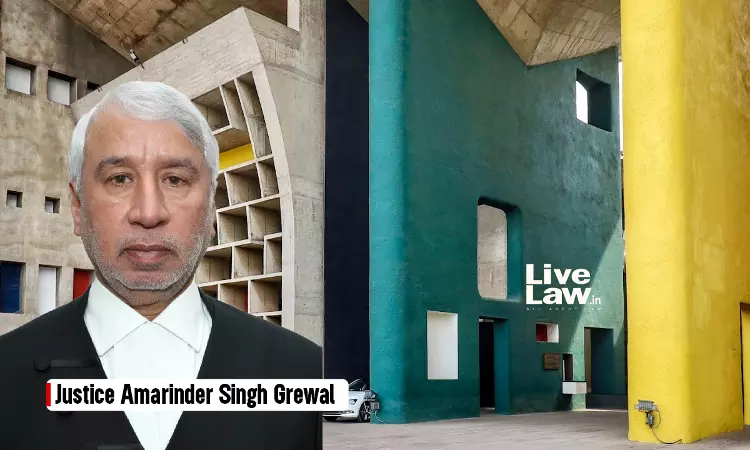
Justice Amarinder Singh Grewal observed,
“Once a mortgage always a mortgage and any stipulation which prevents a mortgagor from getting back the property mortgaged is void, meaning thereby, mortgage is always redeemable. In usufructuary mortgage, the right to redeem has been held to continue till the mortgage money is paid for which there is no time limit and thus, mere expiry of a period of 60 years from the date of creation of mortgage does not extinguish the right of the mortgagor i.e. the appellant-State.”
The Court allowed, in part, two regular second appeals filed by the State of Punjab in 1999 over 44 bighas 6 biswas of land in village Toran, Tehsil Ghanaur, District Patiala.
According to the plaintiffs, the original owner had mortgaged the land, with possession, to their predecessors for ₹300 in 1950 Bikrami (around 1893 AD), when the area was part of the erstwhile Patiala State. They said the land was later declared Nazool (government land). After consolidation, they said, the State was recorded as the mortgagor and their predecessors as the mortgagees.
The plaintiffs claimed that because the mortgage was never redeemed, the period of limitation for redemption expired in 1953 AD. Relying on Section 28 of the Limitation Act, 1908, they argued that the mortgagor's right had been extinguished and that they had become owners. They filed the suit after the Tehsildar issued a notice in 1994 proposing to dispossess them from the land as Nazool land.
The State argued that the mortgage had already been redeemed, that the land had been declared Nazool and free from encumbrances, and that the occupants were unauthorised. It filed a counter-claim for possession.
In 1997, the trial court decreed the suit and dismissed the State's counter-claim. The District Judge, Patiala, dismissed the State's appeal in 1998.
The State contended that even if the mortgage had not been redeemed, the plaintiffs could at best be mortgagees, because “once a mortgage, always a mortgage”. It said the courts below wrongly counted limitation from the date the mortgage was created. In a usufructuary mortgage, the State argued, the right to redeem arises only when the mortgage money is paid.
The respondents argued that the State had not filed a separate appeal against the dismissal of its counter-claim. They said the trial court's findings on that issue had therefore become final and were barred by res judicata. They also argued that the State had failed to prove that the mortgage was redeemed within 60 years.
Limitation Runs Only When Mortgage Money Is Paid
The Court relied on the Full Bench decision in Ram Kishan v. Sheo Ram. In that case, the High Court held that in a usufructuary mortgage with no fixed time for redemption, the right to redeem arises only when the mortgagor pays, tenders or deposits the mortgage money, and not on the date of the mortgage.
It also relied on the Supreme Court's decision affirming that view in Singh Ram v. Sheo Ram (2014) 9 SCC 185, where it was held, “A usufructuary mortgagee is not entitled to file a suit for declaration that he had become an owner merely on the expiry of 30 years from the date of the mortgage.”
Composite Appeal Against Suit And Counter-Claim Permissible
The Court rejected the res judicata objection, relying on the Supreme Court's recent decision in Basudev v. Sanjay Kumar (2026 SCC OnLine SC 1534). There, the Supreme Court held that where a suit and a counter-claim are decided by one common judgment, both can be challenged in a single composite appeal. The appeal must set out the grounds against each separately and be valued as two appeals for court fees.
Following the course adopted in Basudev, the High Court set aside the first appellate court's judgment and restored the first appeal. It directed the State to file a separate appeal against the dismissal of its counter-claim and pay the court fee for it. The District Judge, Patiala, will then decide both appeals on merits “in view of the observations made hereinabove, as expeditiously as possible.”
The Court also noted that, under Pankajakshi v. Chandrika and later Supreme Court decisions, questions of law need not be framed in second appeals before the Punjab and Haryana High Court, because its jurisdiction is governed by Section 41 of the Punjab Courts Act, 1918.
Mr. Amtiaz S. Sandhu, AAG, Punjab for the appellant.
Mr. Pawan Kumar, Senior Advocate with Ms. Eshita Bedi, Advocate and
Mr. Anubhav, Advocate for respondents Nos.1, 3, 3a, 3b, 3c and 4.
Tags
Aiman J. Chishti
Aiman J. Chishti is a Principal Correspondent with LiveLaw, covering Punjab And Haryana High Court

