



- Home
- /
- High Courts
- /
- Rajasthan High Court
- /
- Can't Demolish Properties For Road...
Can't Demolish Properties For Road Widening Without Examining Title Claims, Fair Hearing: Rajasthan High Court
Nupur Agrawal
22 Aug 2026 10:16 AM IST
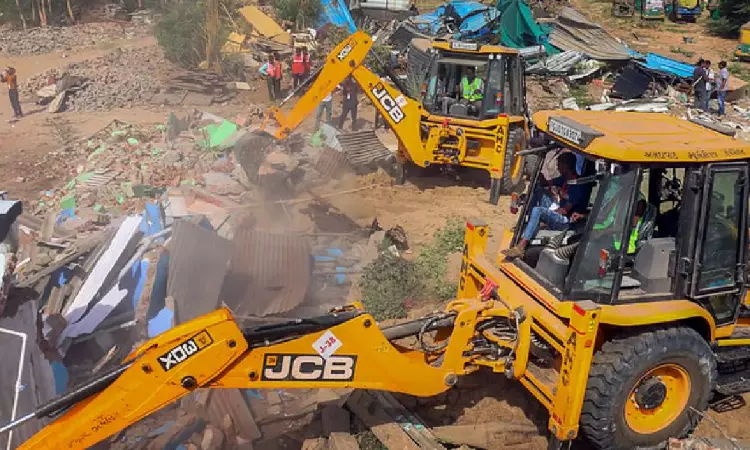
The Rajasthan High Court directed the constitution of a committee to examine the title claims and grievances of persons facing eviction and demolition for road construction and widening under Sriganganagar's Master Plan, holding that they must be given a fair hearing before any such action is taken.The bench of Justice Anoop Kumar Dhand observed that while development and road expansion...
This is a premium content
Available exclusively to
Our subscribers
Subscribe Premium 
INR 1099+GST
Your support helps us to bring you more content at
an affordable subscription scheme !!!
All payment options available
The Rajasthan High Court directed the constitution of a committee to examine the title claims and grievances of persons facing eviction and demolition for road construction and widening under Sriganganagar's Master Plan, holding that they must be given a fair hearing before any such action is taken.
The bench of Justice Anoop Kumar Dhand observed that while development and road expansion in accordance with the Master Plan should not be obstructed, authorities could not deprive persons of their properties without following due process of law.
The Court further directed that if a person's valid title is established but the property is nevertheless required for road construction or widening in public interest, a decision must be taken to compensate them.
“In the considered opinion of this Court, the city's development and beautification efforts, as outlined in the Master Plan, should proceed without obstruction. However, it is equally essential to ensure that property owners whose assets are subject to demolition are given a fair hearing. Accordingly, a Committee is required to be constituted to examine each case and redress the grievances of the petitioners.”
For context, the Court was hearing a bunch of petitions seeking restraint on the respondents from demolishing the residential properties of the petitioners and declaring their act of attempting to undertake such demolition without following due process, as illegal.
The petitioners submitted that they were lawful owners/possessors of the subject property, but the State was forcing them out for construction/widening of the road, as per the Master Plan, without affording opportunity of hearing or any compensation.
On the contrary, the State argued that the properties were required to give effect to the Master Plan, and the petitioners were encroachers, having no right, title or interest in the subject property. It was submitted that they were not able to establish any rightful ownership, basis the documents relied upon by them.
After hearing the contentions, the Court highlighted,
“A Master Plan is a policy document for guiding the future development of the cities or towns in a planned manner which cannot be modified or revised and the same cannot be permitted to set at naught, at the whims and fancies of the authority concerned or anyone else just to serve the interest of the individuals.”
At the same time, the Court ruled that that as per the Rajasthan Municipalities Act, 2009, there were many provisions that prohibited encroachments, however, the municipal authorities were required to issue notice to the individuals/establishments, before taking any action against them.
While underscoring Article 21, the Magna Carta, and various Supreme Court decisions, the Court observed that due process of law had to be followed, that involved proper notice and opportunity of being heard, before the State deprived the citizens of their properties.
In this background, the Court directed constitution of a committee of higher officials of the Department within 15 days, to provide opportunity of hearing to all the petitioners and decide their representations.
Title: Ram Prasad v State of Rajasthan & Ors, and other connected petitions
Citation: 2026 LiveLaw (Raj) 346
Tags


