



- Home
- /
- High Courts
- /
- Rajasthan High Court
- /
- Earning Capacity Of Adult Sons...
Earning Capacity Of Adult Sons Doesn't Negate Wife's 'Independent' Right To Permanent Alimony: Rajasthan High Court
Sparsh Upadhyay
3 April 2026 10:11 PM IST
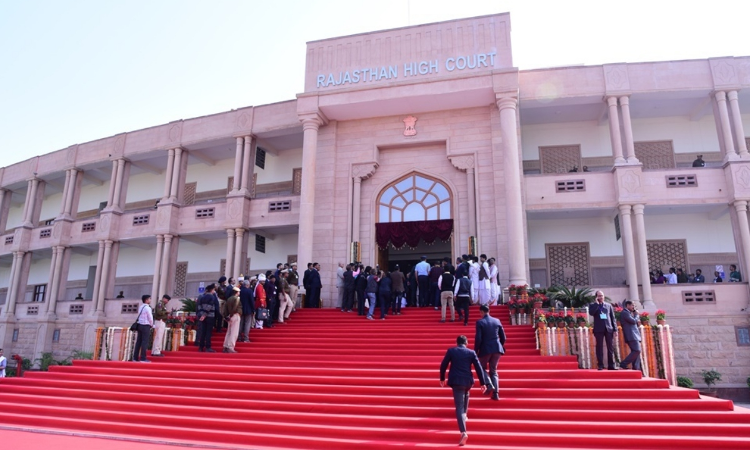
The Rajasthan High Court has recently observed that a divorced wife's right to permanent alimony is an 'independent' & 'distinct' right that cannot be diluted or negated merely because she has adult, earning sons. Clarifying that these factors at best may have a bearing on the quantum, but cannot negate the basic entitlement of the wife, the Court remarked...
This is a premium content
Available exclusively to
Our subscribers
Subscribe Premium 
INR 1099+GST
Your support helps us to bring you more content at
an affordable subscription scheme !!!
All payment options available
The Rajasthan High Court has recently observed that a divorced wife's right to permanent alimony is an 'independent' & 'distinct' right that cannot be diluted or negated merely because she has adult, earning sons.
Clarifying that these factors at best may have a bearing on the quantum, but cannot negate the basic entitlement of the wife, the Court remarked thus:
"…majority and earning capacity of the sons, though legally relevant, does not substantially dilute the wife's entitlement under Section 25 of the Hindu Marriage Act. Permanent alimony is not contingent upon dependency of children alone, but is a distinct and independent right of the spouse arising out of the dissolution of marriage".
A Bench of Justice Arun Monga and Justice Yogendra Kumar Purohit thus enhanced the permanent alimony awarded to a wife from ₹25 lakh to ₹40 lakh.
The Bench noted that the scope of Section 25 of the Hindu Marriage Act is not merely subsistence-oriented but is intended to secure dignified sustenance and long-term financial stability for the economically disadvantaged spouse.
Case in brief
The Court was dealing with two cross-appeals challenging a Family Court's order dissolving the marriage between the parties and directing the husband, a Specialist Medical Officer, to pay ₹25 lakh as permanent alimony.
In her appeal, the wife sought an enhancement of the alimony amount to ₹2 crore, while the husband, in his appeal, challenged the alimony amount. He claimed it was excessive and that his adult, able-bodied sons are legally obliged to support their mother.
For context, the marriage between the parties was solemnized in April 1994. They separated in 2009 and the wife filed for divorce in 2015. The Family Court in Jodhpur dissolved the marriage by its judgment passed in August 29, 2025. Neither party challenged the divorce decree.
Arguments put forth
It was the case of the appellant-wife that her husband-respondent earned a monthly salary of ₹90,000, which, combined with private practice, RTO-related medical examinations and a medical agency, totalled an approximate monthly income of ₹2,90,000 initially.
However, during the High Court proceedings, she asserted that his earnings were approximately ₹8-10 lakhs per month. Consequently, she sought ₹2 crore as permanent alimony.
The husband, on the other hand, denied this claim regarding his monthly salary. Instead, he asserted that the wife is a qualified advocate practising before the High Court and is earning approximately ₹50K per month and is also employed as a teacher in a private school.
It was also contended by the husband's counsel that both sons have attained majority and do not suffer from any disability; therefore, the financial responsibility for their maintenance cannot be imposed upon him.
The husband also argued that, as able-bodied adult sons, they are legally obliged to support their mother (appellant) and the trial court erred in disregarding this settled position.
The husband also pleaded that he has financial obligations towards his aged, bedridden mother, who incurs medical expenses of approximately ₹35K per month and a disabled dependent brother.
High Court's observations
The High Court, at the outset, noted that while the husband has financial obligations toward his parents and brother, these liabilities are not of such overwhelming magnitude as to substantially erode his capacity to make a reasonable one-time provision for his wife.
Regarding the wife's earning capacity, the Court noted that the burden to prove her independent income lies upon the husband.
The Court found no cogent evidence of stable or sufficient income enabling her to maintain herself at a standard commensurate with that enjoyed in the matrimonial home, noting that documents produced by the husband pertained to a period prior to 2011.
Regarding the husband's financial status, the Court relied on his affidavit filed before the trial court, which reflected a regular and stable monthly income in the range of ₹2 lakhs.
The Court also took note of his immovable assets, including a self-acquired residential house and an undivided share in ancestral agricultural and residential property.
Significantly, the Court observed that the wife does not possess any independent residential accommodation. The Bench stressed that the right of a divorced wife to secure a reasonable residence is a well-recognized facet of maintenance jurisprudence.
It added that the amount awarded must, therefore, be sufficient to enable her to secure at least a modest dwelling and ensure long-term financial security.
Importantly, the bench rejected the husband's contention regarding the majority and earning capacity of the sons. It noted that these factors do not substantially dilute the wife's entitlement under Section 25 of the Hindu Marriage Act.
The bench, however, also rejected the wife's exaggerated claim of ₹2 crore as disproportionate. It underscored that the Court must guard against converting alimony into a measure of enrichment rather than support.
"What is required is a balanced, realistic, and equitable determination, which neither unduly burdens the husband nor leaves the wife in a state of financial vulnerability", the bench stated.
Against this backdrop, considering the long duration of the marriage (15 years) and separation (16 years), the wife's lack of independent income and residential security, the husband's stable earning capacity and rising inflationary trends, the Court concluded that the initial ₹25 lakh award was on the lower side.
The High Court thus enhanced the permanent alimony to ₹40 lakh while directing the husband to pay the amount within six months.
Until then, he has been directed to continue providing the ongoing monthly maintenance of ₹45,000/-.
Case title - Shobha Kanwar vs Narpat Singh
Case citation : 2026 LiveLaw (Raj) 123
Tags

Sparsh Upadhyay
Sparsh Upadhyay is an Associate Editor with LiveLaw.

