



- Home
- /
- High Courts
- /
- Rajasthan High Court
- /
- Rajasthan HC Quashes 'Organ...
Rajasthan HC Quashes 'Organ Removal' Case Against Shelter Home, Says Culpable Homicide Charge Impossible When Act Alleged On Dead Body
Nupur Agrawal
4 April 2026 6:00 PM IST
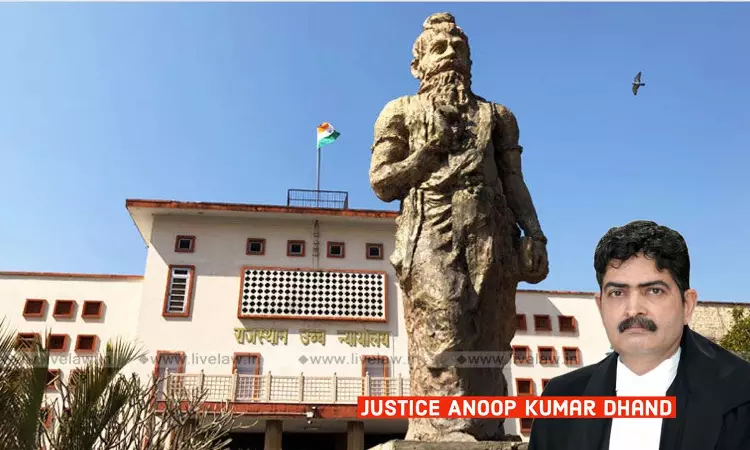
The Rajasthan High Court quashed the cognizance for culpable homicide not amounting to murder taken against a charitable home shelter working for the destitute, accused of illegal organ removal, by the family member of a person who was rescued by the society. It was opined that the charges were legally unsustainable and based on mere speculations. The bench of Justice Anoop Kumar...
This is a premium content
Available exclusively to
Our subscribers
Subscribe Premium 
INR 1099+GST
Your support helps us to bring you more content at
an affordable subscription scheme !!!
All payment options available
The Rajasthan High Court quashed the cognizance for culpable homicide not amounting to murder taken against a charitable home shelter working for the destitute, accused of illegal organ removal, by the family member of a person who was rescued by the society. It was opined that the charges were legally unsustainable and based on mere speculations.
The bench of Justice Anoop Kumar Dhand highlighted the admitted position of complainant that his brother had died of natural causes but was subject to organ removal by the petitioners thereafter, and opined that if an act was committed on a dead body, it could not be culpable homicide since the victim had already passed, and the essential requirement of attempting to cause death of a living human was missing.
“…308 IPC applies to the acts committed against a living person with the intention or knowledge that such acts would cause death of the person. It is quite surprising that cognizance has been taken against the petitioners with the allegation that after the death of the deceased-Sitaram, an attempt was made to cause his death by way of removing organs from his body.”
The Court was hearing a matter wherein the society had found a 60-year old person in very critical condition on the road who was taken it. On account of severe weakness, the person died of cardiopulmonary failure, post which his last rites were performed by the society.
Subsequently, after two months, the complainant came looking for the deceased, claiming to be his brother, and alleged that after his death, his brother was subjected to illegal organ removal by the society. Hence, an FIR was filed, in which negative report was submitted by the police.
After a period of one month, another FIR was filed in the same matter with same allegations, in which cognizance was taken by the trial court, which was challenged before the Court.
After hearing the contentions, the Court considered that it was an admitted case of the complainant that his brother was in a healthy condition, and had died naturally and was subjected to illegal organ removal by the accused.
The Court held that an attempt to commit the offence of culpable homicide could not be possible on a person who was already dead, since it was considered as an “impossible attempt”. “Because the desired outcome of an attempt, i.e., attempt to cause death upon a dead person, is legally and physically impossible. Hence, no case is made out to take cognizance against the petitioners.”
Reference was made to the Transplantation of Human Organs and Tissues Act, 1994 (THOT) and the Court observed that THOT prescribed the entire mechanism for the kind of allegations made by the complainant, yet no such procedure was adopted. In this background, the Court held that the allegations made by the complainant were hypothetical and imaginative.
“Had it been a case that at the time of conducting post Mortem of the deceased or at the time of preparing his inquest report, certain organs were found missing from his body, then certainly this case would have fallen under Section 18 of THOT Act, 1994…These documents are primary evidence to prove that the organs were removed…”
The Court observed that it was necessary to look at the conduct of the complainant as well wherein he was not bothered to find his brother even after the latter went missing and no attempt was made to look for his whereabouts.
The Court further stated that the petitioner was a society working with a pious motive, and if such vexatious allegations were levelled and relied upon, no one would made any efforts to save the humanity and human beings.
“The last rites of even unidentified dead bodies should be performed with honour and dignity, while taking their religion belief into consideration. Recognition of posthumous legal rights gives the dead significant moral standing within the Indian Legal System. Performing the last rites of the dead strives to honour a decedent's right and protect his rights.”
Accordingly, the cognizance taken against the petitioner was set aside.
Title: Bishan Lal & Anr. v State of Rajasthan & Anr.
Citation: 2026 LiveLaw (Raj) 125
Tags


