



- Home
- /
- High Courts
- /
- Rajasthan High Court
- /
- 'Only Prima-Facie Case Needed At...
'Only Prima-Facie Case Needed At Summoning Stage': Rajasthan High Court Upholds Cognizance Order Against In-Laws In Dowry Death FIR
Nupur Agrawal
8 April 2026 10:15 AM IST
Rajasthan High Court dismissed a plea against a trial court order taking cognizance against a woman's in-laws under Section 498A IPC, observing that at the stage of summoning there has to be only prima facie satisfaction and that the allegations of dowry demands, torture by the in-laws were sufficient to proceed against them, As per admitted facts, the deceased married the petitioners' son...
This is a premium content
Available exclusively to
Our subscribers
Subscribe Premium 
INR 1099+GST
Your support helps us to bring you more content at
an affordable subscription scheme !!!
All payment options available
Rajasthan High Court dismissed a plea against a trial court order taking cognizance against a woman's in-laws under Section 498A IPC, observing that at the stage of summoning there has to be only prima facie satisfaction and that the allegations of dowry demands, torture by the in-laws were sufficient to proceed against them,
As per admitted facts, the deceased married the petitioners' son on 08.02.2015 and she passed away under unnatural circumstances on 24.03.2015 while committing suicide by hanging. This fact was not disputed that the incident did not occur at the matrimonial home but at the deceased's parental home. It was alleged that immediately after marriage, the petitioners as well as co-accused persons started torturing and misbehaving with the deceased for not bringing sufficient dowry.
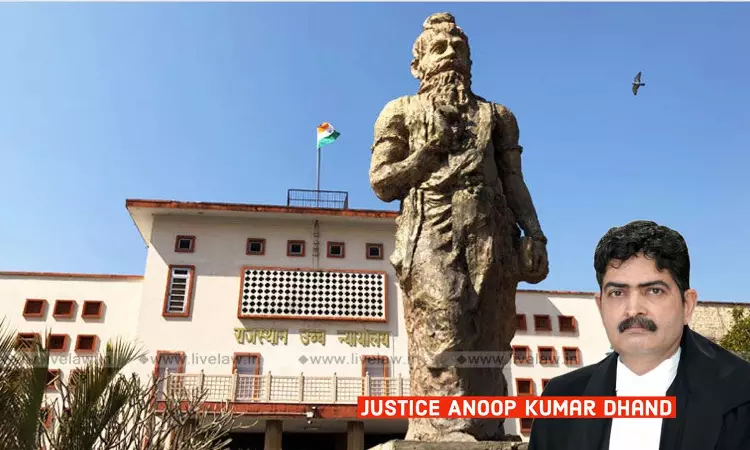
The bench of Justice Anoop Kumar Dhand held that at the stage of summoning of accused, there had to be just prima facie satisfaction of the Court.
The court said that while the petitioners' allegation that the deceased was suffering from Bipolar Disorder, though no such evidence was placed before the trial court, and whether this was the reason behind the suicide cannot be adjudicated by the high court at this stage. This fact, the court said, would be appreciated by the Trial Court at appropriate stage of the trial.
"However, the statements of PW1 to PW3 reveal allegations against the petitioners that they demanded dowry and tortured the deceased for bringing insufficient dowry, which is sufficient to proceed against them for commission of offences under Sections 498A and 304B IPC...The entire purpose of criminal trial is to go to the truth of the matter. Once there is satisfaction of the Court that there is evidence before it that an accused has committed an offence, the court can proceed against such a person. At the stage of summoning an accused, there has to be a prima facie satisfaction of the Court. The evidence which was there before the Court was of an eye witness who has clearly stated before the Court that a crime has been committed, inter alia, by the petitioners. The Court need not cross-examine this witness. It can stop the trial at that stage itself if such application had been moved under Section 319. The detail examination of the witness and other witnesses is a subject matter of the trial which has to begin afresh".
Petitioners' son was an accused in a case of cruelty filed by the family of his deceased wife who had committed suicide by hanging within 1.5 months of the solemnization of their marriage. Subsequently, an application under Section 319, CrPC was filed seeking summoning of petitioners as well. This application was allowed and the petition was filed before the Court.
It was argued by the petitioners that the deceased was suffering from bipolar disorder and was mentally ill, undergoing treatment of several doctors. In such a case, if she had committed suicide, the petitioners could not be held responsible for the same. Further, it was submitted that at the stage of Section 319, much more than a prima facie case was required to be seen.
On the contrary, it was argued that the deceased had passed away under unnatural circumstances, leaving behind a suicide note, in which clear and specific allegations were made against the petitioners for spoiling her life.
After hearing the contentions, the Court highlighted that no such evidence was placed on record suggesting bipolar disorder of the deceased. Rather, certain documents indicating her treatment of several doctors was produced. However, the Court said that whether the disease was the sole reason for the suicide, could not be adjudicated at this stage.
The court also took note of a "suicide note" seized by the Investigating Officer during the course of investigation; it however said that the note had been sent for FSL to find out if the deceased had written it or not, adding that "even this piece of evidence would be appreciated by the Trial Court at the appropriate stage of the trial".
At the same time, it was opined that the allegations of the complainants against the petitioners that they demanded dowry and tortured the deceased was sufficient to proceed against them.
In this background, the Court held that no error was committed by the lower court in passing the order. It said,
"In the considered opinion of this Court, at this stage more than prima facie case is required to be seen against the accused not charge-sheeted. The merits and the defence of the accused cannot be appreciated at this initial stage of taking cognizance. The defence, so put by the accused, with regard to their false implication would be taken into account by the Trial Court at the appropriate stage of trial. There is much more prima facie evidence available on the record for summoning them to face the trial. Considering the overall facts and circumstances of the case and the evidence available on record, this Court is of the considered opinion that there is more than a prima facie case to proceed against the petitioners under Sections 498A and 304B IPC".
Accordingly, the petition was dismissed; however the arrest warrants against the petitioners were converted to bailable warrants.
Case Title: Mangtu Ram & Anr. v State of Rajasthan & Anr.
Citation: 2026 LiveLaw (Raj) 129
Tags


