



- Home
- /
- High Courts
- /
- Rajasthan High Court
- /
- Husband Not Liable For Wife's Dues...
Husband Not Liable For Wife's Dues From Her Tenure As Sarpanch Without Proof Of His Involvement: Rajasthan High Court
Nupur Agrawal
7 Sept 2026 10:20 AM IST
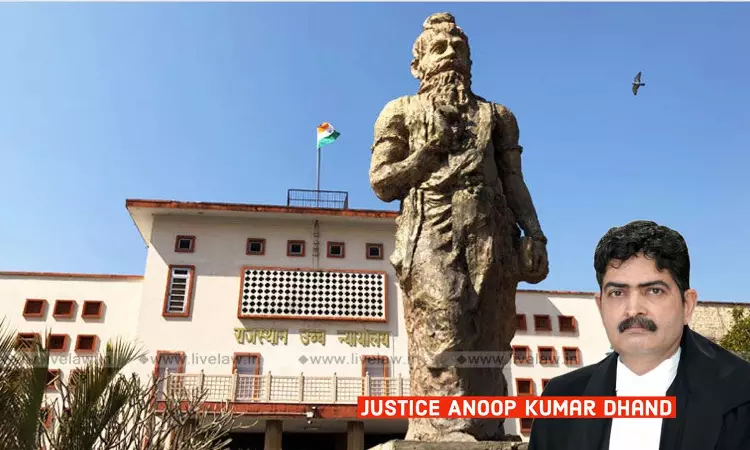
The Rajasthan High Court has held that husband and wife were separate entities, and neither could be held liable for the misconduct or disgraceful act of the other, done in the capacity of a public representative, unless they have also indulged in the same. The bench of Justice Anoop Kumar Dhand opined, a spouse of an erstwhile public representative, could not be asked to pay dues owed by...
This is a premium content
Available exclusively to
Our subscribers
Subscribe Premium 
INR 1099+GST
Your support helps us to bring you more content at
an affordable subscription scheme !!!
All payment options available
The Rajasthan High Court has held that husband and wife were separate entities, and neither could be held liable for the misconduct or disgraceful act of the other, done in the capacity of a public representative, unless they have also indulged in the same.
The bench of Justice Anoop Kumar Dhand opined, a spouse of an erstwhile public representative, could not be asked to pay dues owed by of his/her husband/wife in their capacity as the former public representative, unless it was proved that the concerned spouse was also involved in the related misconduct.
“A Public Representative himself/herself is alone liable and responsible for his/her disgraceful act or any misconduct. If at all any recovery proceedings are initiated against him/her, he/she alone is liable to clear the dues and deposit the amount pending against him/her. This Court fails to understand how recovery proceedings can be initiated against the family members of the erstwhile Sarpanch or any other Public Representative.”
For context, the Court was hearing a petition by a husband who was desirous of contesting the Panchayati Raj Election for Gram Panchayat, Falenda, for which a no-dues certificate was required from the concerned department.
This no-dues certificate was denied to him on the ground of some alleged pending dues to be recovered from his wife that related to some work done by her during her tenure (1995-2000) as a Sarpanch of the Gram Panchayat, Falenda.
In relation to these dues, auction/attachment proceedings were initiated against the wife, against which a petition was preferred by her. An interim order was passed in this petition, staying the auction proceedings, and the petition was still pending before the concerned court.
It was agued by the petitioner that he could not be barred from contesting the elections on the grounds of his wife's dues that related to her tenure, since there was no provision of such ineligibility under the Panchayati Raj Act, 1994.
On the contrary, the State argued that the husband was duty bound to clear the dues of his wife.
After hearing the contentions, the Court highlighted that a surety or a guarantor could be held liable for depositing the due amount owed by the person against whom recovery proceedings were initiated. However, in the present case, the petitioner, even though being the husband, was not the surety or the guarantor for his wife.
The matter was a separate and independent one between the State and the former Sarpanch, and the petition could not be compelled to clear the dues of her wife, former Sarpanch.
“There is neither such provision under the Panchayati Raj Act, 1994 nor the Panchayati Raj Rules, 1996, contains any provision authorizing the recovery of any such amount from the family members of the Sarpanch, in case, the said amount is not paid or deposited by him/her… If any recovery of any amount is due against such person and if he/she fails to deposit the same, it cannot be treated as civil/penal liability for his/her family members to deposit the due amount.”
While underscoring the fact that it was a classic case of non-application of mind, the Court expressed its “pity” for the respondents for forcing the petitioner to clear the dues owed by her wife. It held that he could not be held liable for the dues, unless it was proved by enquiry that he was also involved in the works of the Panchayat or in the misconduct or disgraceful act of his spouse.
Accordingly, the petition was allowed, and the State was directed to issue the no-dues certificate to the petitioner.
Title: Ramlaxman Meena v State of Rajasthan & Ors.
Citation: 2026 LiveLaw (Raj) 368
Tags


