



- Home
- /
- High Courts
- /
- Rajasthan High Court
- /
- Interim Stay Can Be Granted In...
Interim Stay Can Be Granted In Time-Barred Appeal Without Condoning Delay Only In 'Exceptional Cases': Rajasthan High Court
Nupur Agrawal
4 Sept 2026 11:30 AM IST
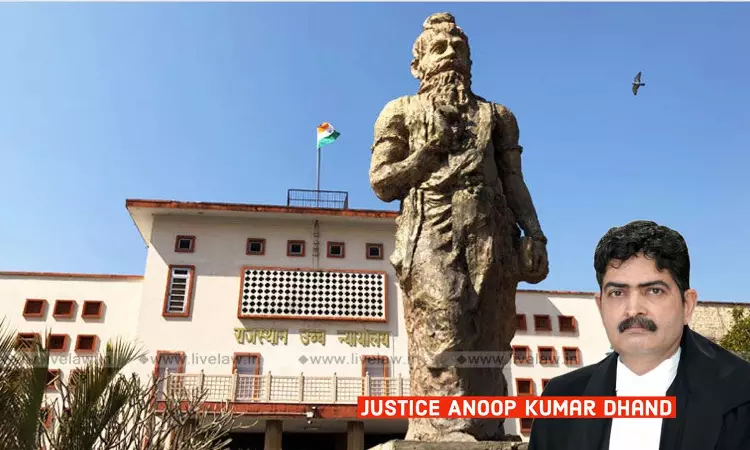
The Rajasthan High Court has set aside an interim order passed by the Revenue Appellate Authority (“RAA”) in a time-barred appeal, opining that interim stay in a time-barred appeal could be passed only in extreme circumstances of a given case where the order in appeal had some serious consequences. The bench of Justice Anoop Kumar Dhand held that without condoning the delay in...
This is a premium content
Available exclusively to
Our subscribers
Subscribe Premium 
INR 1099+GST
Your support helps us to bring you more content at
an affordable subscription scheme !!!
All payment options available
The Rajasthan High Court has set aside an interim order passed by the Revenue Appellate Authority (“RAA”) in a time-barred appeal, opining that interim stay in a time-barred appeal could be passed only in extreme circumstances of a given case where the order in appeal had some serious consequences.
The bench of Justice Anoop Kumar Dhand held that without condoning the delay in such time-barred appeal, the appellate authority lacked jurisdiction to entertain the same.
For context, the petitioner had filed a suit for declaration and permanent injunction against the respondent, which was dismissed in default. Thereafter an application for restoration was filed, which was allowed in 2022. Against this order, the respondent filed an appeal before the RAA, after more than 3 years (time barred).
While issuing notices, the RAA passed an interim order in this appeal, staying the operation of the 2022 order, without deciding the application for condonation of delay. This order was challenged by the petitioner in the present matter.
It was the case of the petitioner that the RAA could not have passed the interim order without condoning the delay in a time-barred appeal.
After hearing the contentions, the Court observed that the question of limitation pertained to the very jurisdiction of the Court, striking at the root of the court's competence to entertain the appeal.
“Unless the delay in filing the appeal is condoned, the appeal cannot be said to have come into existence in the eyes of law. In the absence of a validly instituted appeal, the Court lacks jurisdiction to hear and decide a time barred appeal on merits. Hence, unless delay is condoned in accordance with law, the appeal cannot be treated as having been validly instituted.”
Reference was made to the Supreme Court decision in Union of India & another v. Jahangir Byramji Jeejeebhoy in which it was it was held that Court owed a duty to first determine the bona fides of the explanation of the party seeking condonation. Without such condonation, the Court shall not start with the merits of the case.
In this background, the Court held that without condoning the delay in filing an appeal, the appellate authority lacked jurisdiction to entertain the same. It was further opined that interim stay order could be passed in time-barred appeal, only in extreme circumstances.
It was highlighted that, in the present case, there was no such special or exceptional circumstances before the RAA to pass the interim stay, without condoning the delay.
On this count, the Court held that the interim order passed by the RAA was not sustainable in the eyes of law, and hence, was set aside.
Title: Manni Devi v Bhuli Devi & Ors.
Citation: 2026 LiveLaw (Raj) 362
Tags


