



- Home
- /
- High Courts
- /
- Rajasthan High Court
- /
- Rajasthan High Court Asks State To...
Rajasthan High Court Asks State To Frame Policy Curbing Khap Panchayat 'Diktats', Says Social Boycott Violates Citizens' Fundamental Rights
Malavika Prasad
13 April 2026 12:15 PM IST
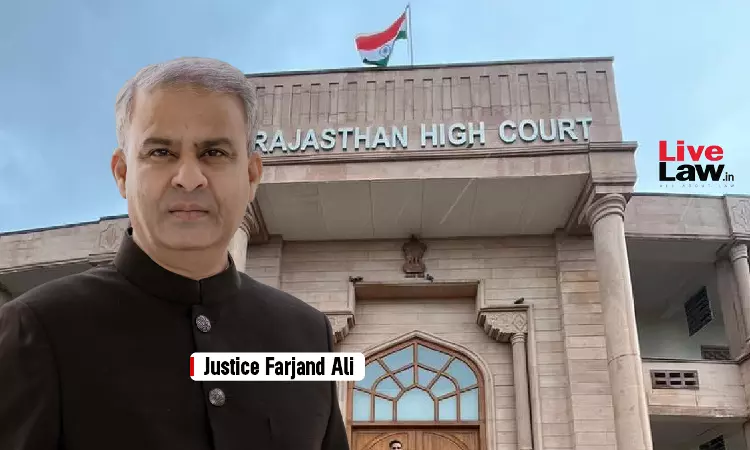
The Rajasthan High Court has issued a slew of directions to the State Government including formulation of a policy and Standard Operating Procedure to ensure comprehensive adjudication of complaints by citizens against "diktats" and "social boycott orders" issued by Khap Panchayats. In doing so the court highlighted that Khaps "have been a deeply concerning practice appears to be prevalent...
This is a premium content
Available exclusively to
Our subscribers
Subscribe Premium 
INR 1099+GST
Your support helps us to bring you more content at
an affordable subscription scheme !!!
All payment options available
The Rajasthan High Court has issued a slew of directions to the State Government including formulation of a policy and Standard Operating Procedure to ensure comprehensive adjudication of complaints by citizens against "diktats" and "social boycott orders" issued by Khap Panchayats.
In doing so the court highlighted that Khaps "have been a deeply concerning practice appears to be prevalent in certain rural settings" wherein a group of influential persons who have no lawful authority, assume themselves to be an extra-legal governing body. These bodies, acting in the guise of a “panchayat” or association, issue diktats to the villagers at large, mandating a complete social and economic boycott of a particular individual or family.
The court was hearing a batch of various petitions alleging imposition of social boycott, coercive monetary exactions, and the infliction of trauma and mental harassment at the hands of self-styled Panchs.
Among various issues the court noted that the petitions highlighted Misuse of Community Power wherein local caste panchayats, though lacking any statutory recognition, have arrogated to themselves the role of adjudicatory authorities; Social Boycott & Isolation; Forced Monetary Demands wherein in instances substantial monetary exactions are imposed under the guise of penalties or conditions for social acceptance; Suppression of Personal Choices wherein some petitions indicated that individuals are penalized for exercising autonomy in personal matters, particularly in choosing life partners.
Justice Farjand Ali while examining the "practice of social boycott" said that it is in direct affront to the fundamental rights guaranteed under the Constitution of India, particularly the rights to equality, nondiscrimination and life with dignity.
"Any extra-constitutional authority or informal body assuming the power to impose such sanctions is wholly impermissible in the eyes of law. The absence of a dedicated legislation in the State of Rajasthan has resulted in a regulatory vacuum, leading to ineffective prevention, inadequate prosecution, and continued perpetration of social boycott practices. The situation, thus, warrants serious consideration at the legislative and executive level, so that an appropriate legal framework may be put in place to effectively address and eradicate this pernicious practice," the court said.
Some Khap Panchayats assumed themselves as extra-constitutional centres
The court said that a Panchayat traditionally signifies a village-level institution of self-governance which is constitutionally recognized. Meanwhile, in contradistinction, the term Khap denotes a traditional, caste-based, and non-statutory social organization, typically comprising members of a particular clan, caste, or a cluster of villages; this the court said "neither recognized by law nor vested with any adjudicatory authority". However its functioning is premised upon customary practices and social conformity rather than constitutional legitimacy. It said:
"This Court cannot remain oblivious to the stark reality that, over a period of time, certain Khap Panchayats have assumed unto themselves the character of parallel, extra-constitutional power centers. Cloaked under the guise of preserving age-old traditions and maintaining social order, these bodies have, in effect, transgressed into domains reserved exclusively for institutions established under law. What has metamorphosed over the years is not merely their authority, but the alarming expansion in the scope of matters upon which they seek to impose sanctions, often encroaching upon the most sacrosanct realm of an individual's life, namely, personal autonomy. Issues pertaining to marriage by choice, inter-caste or inter-religious unions, and individual expression are subjected to collective scrutiny in such assemblies, culminating in diktats that are wholly bereft of legal sanction.
The continued existence and operation of such bodies is sustained not by law, but by the social acceptance and obedience accorded to their decisions by members of the concerned community. Typically comprising elderly members of the clan, these assemblies convene at periodic intervals and proceed to adjudicate upon the lives of individuals in a manner that is alien to the rule of law. The consequences of such adjudications are often draconian, ranging from imposition of fines and social boycott too, in extreme cases, the perpetration of heinous crimes such as socalled “honour killings.” This Court is constrained to observe that the very edifice of Khap Panchayats stands in direct conflict with the constitutional ethos. Their actions are de hors the Constitution, and strike at the very root of fundamental rights guaranteed under Part III of the Constitution of India".
Right to choose partner can't be interfered with by Khaps
The court highlighted that Article 14 guarantees equality before law and equal protection of laws, "which stands violated when individuals are singled out and subjected to discriminatory social sanctions". Meanwhile Article 15 which prohibits discrimination on grounds of religion, race, caste, sex, or place of birth, is "often the very foundation upon which Khap diktats are issued". It further said:
"However, the most egregious violation is of Article 21, which protects the right to life and personal liberty, and has been expansively interpreted to include the right to dignity, autonomy, and the freedom to make intimate personal choices, including the choice of a life partner. The constitutional courts have, time and again, emphasized that the right to choose one's partner is an intrinsic facet of Article 21, and any interference, whether by the State or by non-State actors such as Khap Panchayats, is wholly impermissible.
The notion of “honour killing,” which finds its genesis in such extra-judicial bodies, is nothing but a barbaric manifestation of regressive social control. It entails the elimination of individuals for exercising choices that are perceived to bring disrepute to familial or caste honour. Such acts not only shock the conscience of the Court but are also an affront to the constitutional morality that must prevail over social morality. The diktats issued by Khap Panchayats are, therefore, not merely void ab initio, but carry with them a deep-seated stigma that irreparably scars the lives of those subjected to them. The victims, in such circumstances, are not offenders, but individuals who have dared to assert their constitutionally protected freedoms"
In this backdrop, the court said, the issue of Khap Panchayats demands a calibrated yet firm response wherein the remedy does not lie solely in punitive action, but also in systemic reform.
The court referred to Shakti Vahini v. Union of India & Ors. (2018) where Supreme Court had deprecated the extraconstitutional functioning of Khap Panchayats or similar assemblies, holding that they cannot assume the role of law enforcement agencies or interfere with the fundamental rights of individuals, particularly in matters concerning marriage. It said that the Apex Court, recognizing the pernicious and agonising impact of honour crimes, had laid down a comprehensive framework comprising preventive, remedial, and punitive measures to be implemented by the State machinery.
Directions
The court noted that while directions had been issued by the Apex Court indicating recourse under IPC and had aid down a framework; however in actual application, it was noticed that the acts complained of do not squarely fall within the strict ingredients of the aforesaid offences. The situation thus presents a serious legal vacuum, the court said.
It thus directed:
1. Concerned authorities, including the District Magistrates/Collectors, Superintendents of Police, Station House Officers, and the officials of local self government bodies such as Panchayats and Municipalities, shall strictly implement preventive, remedial and punitive measures in Shakti Vahini, and any deviation may invite contempt.
2. State shall designate a Nodal Officer at the District level, who shall function in close coordination with the District Collector, Superintendent of Police, local police machinery, and representatives of Panchayati Raj Institutions as well as Municipal Bodies, so as to maintain constant vigil over such unlawful activities. Nodal Officer shall ensure prompt and timely reporting of any such incident to the designated State-level authority, which shall, in turn, monitor compliance and take necessary steps in accordance with law.
Office of such institutional mechanism/Special Cell shall be made easily accessible to the victims, ensuring that any aggrieved person can approach the authorities without any impediment or delay. Upon receipt of any complaint, the concerned authority shall forthwith conduct a preliminary inquiry and prepare a detailed report, which shall be duly communicated to the Superintendent of Police as well as the District Magistrate for initiating appropriate action in accordance with law.
3. A centralized mechanism/office shall be established for maintaining consolidated data pertaining to such cases at the State level. The authority shall compile, analyse, and preserve records indicating the number of incidents reported from various districts relating to acts of cruelty, harassment, or other allied offences.
4. On pending petitions on such issues the court directed the Director General of Police, Rajasthan, Jaipur to depute a senior and responsible officer not below the rank of Additional Superintendent of Police, who shall take over all the concerned FIRs and conduct an independent, fair, and comprehensive investigation therein. The IO shall conclude the investigation in each case expeditiously within a period of 90 days, and shall submit appropriate reports before the jurisdictional courts strictly in accordance with law, be it in the form of charge-sheet, final report, or closure report, as the facts and evidence may warrant in each individual case.
5. The Court deemed it appropriate to direct the State Government to take necessary steps towards formulation of an appropriate policy framework.
"Accordingly, the State Government, through the Home Department, is directed to consider and formulate a comprehensive policy dealing with the prevention, prohibition, and redressal of incidents involving unlawful assemblies, coercive social practices, and allied offences, keeping in view the principles laid down by the Hon'ble Supreme Court in Shakti Vahini (supra). The said policy shall, inter alia, provide for preventive, remedial, and punitive measures to be undertaken by the authorities and clearly defined roles and responsibilities of District Magistrates, Superintendents of Police, Station House Officers, and other concerned officials so also mechanisms for interdepartmental coordination and timely response".
6. The court directed the State to frame a Standard Operating Procedure (SOP) to operationalize the aforesaid policy, delineating step-by-step procedures to be followed by the field-level functionaries upon receipt of any information or complaint regarding such incidents.
The SOP shall specifically include– A prompt response protocol; Time-bound registration of FIRs and initiation of legal action; Measures for victim protection, assistance, and access to remedies; Reporting and documentation requirements to ensure accountability and transparency.
The court directed that the State Government shall endeavour to finalize the policy and SOP within a reasonable period of time. Once formulated, the policy and SOP shall be circulated widely to all concerned authorities and shall be given due publicity, so as to ensure awareness, effective implementation, and strict compliance at all levels.
While concluding the court suggested:
"This Court also expects the State to remain alive to the gravity of the situation and to take expeditious steps towards enacting a comprehensive legislative framework to address and regulate such issues effectively. It is suggested that the State may consider bringing forth a comprehensive and codified legal framework, incorporating appropriate penal provisions, to expressly criminalize the issuance, enforcement, or abetment of such diktats of social and economic boycott, including prohibitions relating to sale, purchase, trade, business, transactions, accommodation, facilities, services, social interaction, and all forms of association. The matter deserves earnest deliberation at the legislative level so as to ensure that no citizen is subjected to such unlawful exclusion or deprivation under the coercive dictates of extra-constitutional bodies. The State is accordingly expected to take note of this concern and to consider appropriate measures in accordance with law".
The petitions were disposed of.
Case title: Deepa Ram Meghwal v/s State of Rajasthan & Others and Batch
S.B. Criminal Writ Petition No. 1344/2025
Citation: 2026 LiveLaw (Raj) 131

Malavika Prasad
Malavika Prasad is a Desk Editor with LiveLaw

