



- Home
- /
- High Courts
- /
- Rajasthan High Court
- /
- 'Filing Indecent Photos Invades Her...
'Filing Indecent Photos Invades Her Privacy': Rajasthan HC Issues Guidelines To Protect Sexual Offence Victim's Identity In Court Filings
Nupur Agrawal
28 May 2026 9:00 PM IST
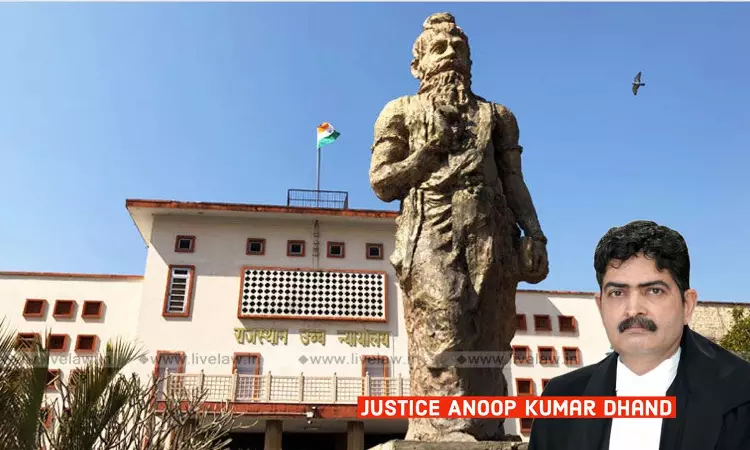
Taking a serious note of the practice of annexing "obscene" photographs, videos of parties in pleas concerning sexual offence cases thereby disclosing the prosecutrix/survivor's identity, the Rajasthan High Court issued a slew of directions for the high court Registry and the State's trial courts on filing of such material. The Court highlighted the adverse implications on the woman...
This is a premium content
Available exclusively to
Our subscribers
Subscribe Premium 
INR 1099+GST
Your support helps us to bring you more content at
an affordable subscription scheme !!!
All payment options available
Taking a serious note of the practice of annexing "obscene" photographs, videos of parties in pleas concerning sexual offence cases thereby disclosing the prosecutrix/survivor's identity, the Rajasthan High Court issued a slew of directions for the high court Registry and the State's trial courts on filing of such material.
The Court highlighted the adverse implications on the woman involved after her identify was revealed owing to such practice.
While underscoring gross violation of Article 21, the bench of Justice Anoop Kumar Dhand laid down a “mechanism” to be followed by the Registry and the Trial Courts, where such obscene photos/videos were placed on record by the accused/police/any other party to the litigation
- The Registry must carefully scrutinize all filings relating to sexual offences, to ensure that the anonymity and confidentiality of the prosecutrix/victim/survivor is strictly maintained and the name, parentage, address, social media credentials and photographs of the prosecutrix/victim/survivor must not be disclosed in the filings made in court, including in the memo of parties;
- The Registry must ensure that such particulars do not get reflected in the cause-list of the court in any manner;
- The name, parentage and address of family members of the prosecutrix/victim/survivor— through whom the prosecutrix/victim/survivor could be identified — must not be disclosed in the filings, including in the memo of parties, even if they are accused in the case, since this may indirectly lead to the identification of the prosecutrix/victim/ survivor;
- Since redaction of the identifying particulars of the prosecutrix/victim/survivor from the FIR, chargesheet, proceedings before the trial court and other similar records, is the duty and obligation of the authorities/court that prepare such documents; and insofar as the proceedings before this court are concerned, making complete redaction in each of those documents may not be feasible.
- Files/paper-books/e-portfolio of matters relating to sexual offences filed in this court must not be provided to any person other than the parties to the litigation, to the prosecutrix/victim/survivor and their respective counsel, after due verification of the identity credentials of such persons;
- At the stage of scrutiny of the filings, in the event the Registry finds that the identity credentials of a prosecutrix/ victim/ survivor are disclosed in the memo of parties or anywhere else in the filings, such filings must be returned to counsel who have filed the same, to undertake requisite redactions, before the filings are accepted;
- Investigating Officer must inform the prosecutrix/victim/survivor that they have the right to free legalaid/representation in accordance with the mandate of the Supreme Court in Delhi Domestic Working Women's Forum vs. Union of India & Ors
- If the parties wish to cite in court any identifying particulars of the prosecutrix/victim/survivor, including photographs or social media communications etc., such party may bring the same to court in 'sealed cover'; or file the same in 'sealed cover' or in a 'pass-code locked' electronic folder and share the pass-code only with the concerned Court Master.
“Filing of photographs or videos in CDs or Pendrives depicting private moments or incidents which took place between the parties or any indecent photograph(s) invading privacy of a person, may in certain cases become a traumatic experience for the individual concerned. These photos/videos of private moments, between the couple and other indecent/obscene pictures also end up disclosing the identity of the victim/women...Such open exposure may tarnish her dignity and may adversely affect her present or prospective marital life. Hence, it is expected from the accused and the Police that such obscene photographs of females should not be produced in open files. If at all the prosecution or the defence, want to place reliance on such photographs/videos, then such material ought to be produced on record in sealed cover along with the case files," the court said.
The Court observed that often such data was used in sexual offences, to portray consent of the complainant. However, filing of such photos/videos amounted to indecent portrayal of the victim, and also invaded her privacy.
It was stated that when the investigation was converted into humiliation, the procedure itself became punishment, and the trial transformed into public shaming, leading to gross violation of Article 21.
Hence, the Court held that while the accused might rely upon such data in his defence, no person could be permitted to place such material on record openly, and it had to be filed only in sealed envelopes to protect the identify and privacy of the victim.
“These memo of petitions, charge-sheets, applications travel from the office of Investigating Agency to the concerned Court and as such, there exists every likelihood that such material is viewed by many persons. Such open exposure of annexed material certainly invades victim's Right to Privacy. There are ample chances of misuse of such photographs (material) by any person through sharing or uploading them on social media or on the internet for his/her personal gains with oblique motive.”
In this background, the Court laid down a mechanism to be followed by the Office/Registry of the Court and the Trial Courts, when such photos/videos were placed on record.
While observing the directions to be non-exhaustive, the Court held that the at the stage of scrutiny, the Registry was expected to apply its mind with an aim to apply the directions passed by the Supreme Court in the case of Nipun Saxena v Union on India (2012).
The Court directed placing of the matter from the administrative side before the Chief Justice, for passing on appropriate orders, in the form of Standing Order/Circular/Notification/Practice Directions, etc., in relation to the mechanism laid down in this order.
Title: N v State of Rajasthan & Anr.
Citation: 2026 LiveLaw (Raj) 210


