



- Home
- /
- High Courts
- /
- Rajasthan High Court
- /
- Rajasthan High Court Raps Jodhpur...
Rajasthan High Court Raps Jodhpur Municipal Corporation For Failure To Hand Over Auctioned Plots Due To Encroachments
Nupur Agrawal
21 Aug 2026 2:00 PM IST
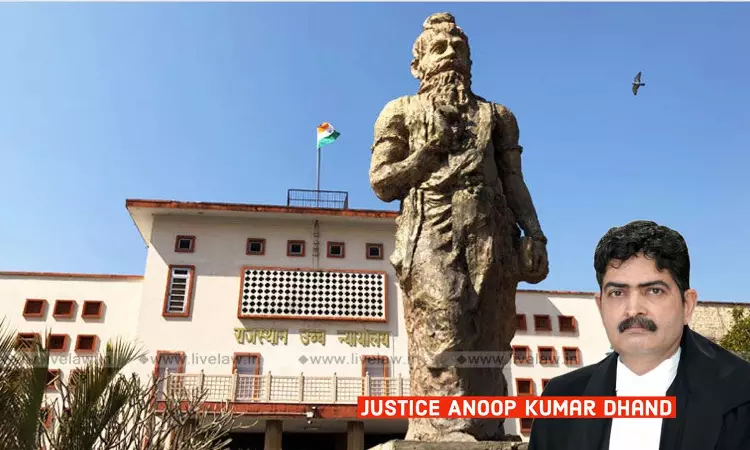
Rajasthan High Court took serious note of Municipal Corporation's inaction against encroachers that led to its inability to hand over possession of auctioned plots to the successful bidders, and opined that the body being part of the government was not supposed to function in a manner that led to litigations. The bench of Justice Anoop Kumar Dhand was hearing a bunch of petitions that...
This is a premium content
Available exclusively to
Our subscribers
Subscribe Premium 
INR 1099+GST
Your support helps us to bring you more content at
an affordable subscription scheme !!!
All payment options available
Rajasthan High Court took serious note of Municipal Corporation's inaction against encroachers that led to its inability to hand over possession of auctioned plots to the successful bidders, and opined that the body being part of the government was not supposed to function in a manner that led to litigations.
The bench of Justice Anoop Kumar Dhand was hearing a bunch of petitions that alleged non-handing over of possession of auctioned plots by the government, as well as impleadment applications by other people alleging right over the said plots on account of having possession, who were being treated as encroachers by the Municipal Corporation.
“By its conduct and performance, the State must create a sense of security in the mind of the citizens and citizens while dealing with the State must be in a position to rely upon the representations made by it. A special sanctity attaches to its acts; a presumption of correctness is available in respect of them and a sense of security is assumed in relation thereto.”
In the background of disputed questions of rights and titles over the subject properties, the Court directed constitution of a committee comprising of Higher Officials of Department of Local Self Government and Commissioner of Jodhpur Municipal Corporation, to decide the representations of the petitioners as well as the applicants.
For context, the matter pertained to 4 plots at Kabir Marg, Jodhpur, who were alleged to have been allocated to the petitioners in an auction. However, their possession was not handed over to the petitioners. On the other hand, certain other people, who had filed applications for impleadment, were contending their rights over the plots based on possession.
The latter set of people (applicants) were treated as encroachers by the Municipal Corporation based on a report by a Joint Commission, and the Court highlighted that it was based on their encroachment that the Corporation was unable to hand over possession to the petitioners.
In this background, the Court referred to Surendra Prasad Mishra Vs. O.N.G.C. (1987) where the Calcutta High Court held that where Govt. or Governmental agency makes a promise knowing or intending that it could be acted upon by the promisee and if the promise acting in accordance therewith and thereby alters his position, the Govt. or the Governmental agency would be held to be bound by the promise and the promise would be enforceable against the Govt. or the Governmental agency at the instance of the promisee, notwithstanding that there is no consideration for the promise or that the promise has not been reduced to writing…
The Court observed that since the possession could not be handed over owing to encroachment, there was no fault of the petitioners and they could not be allowed to suffer due to “negligence, callousness and non-maintenance of the essential record” by the Corporation.
While highlighting inaction on part of the Corporation against the encroachers, it was held the Corporation could not be allowed to sit over the matter, and take any excuse regarding handing over the possession. They were duty bound to do so.
At the same time, while underscoring Article 21 and the Magna Carta, the Court highlighted the requirement of following due process of law before taking any action against any individual or establishment.
Hence, the State was directed to constitute the aforementioned committee to adjudicate upon the representations of the petitioners as well as the applicants to close the allotment process, within a period of 3 months.
Accordingly, the petitions were disposed of.
Title: Smt. Kiran v Municipal Corporation & Anr., and other connected petitions
Citation: 2026 LiveLaw (Raj) 344
Tags


