



- Home
- /
- High Courts
- /
- Rajasthan High Court
- /
- Workmen's Compensation Act | Taking...
Workmen's Compensation Act | Taking Deceased To Hospital On Humanitarian Ground Not Enough To Assume Employment Relationship: Rajasthan HC
Nupur Agrawal
9 Jun 2026 8:00 PM IST
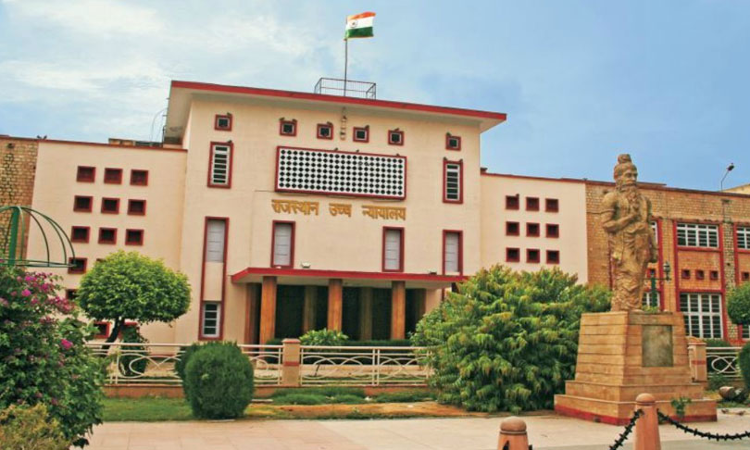
Rajasthan High Court set aside a claim granted in favour of a deceased man's family under the Workmen's Compensation Act, and held that taking deceased to the hospital on humanitarian grounds was not sufficient to establish employer-employee relationship in absence of any documents.The bench of Justice Ravi Chirania opined that in a society, many a times people extended their help to those...
This is a premium content
Available exclusively to
Our subscribers
Subscribe Premium 
INR 1099+GST
Your support helps us to bring you more content at
an affordable subscription scheme !!!
All payment options available
Rajasthan High Court set aside a claim granted in favour of a deceased man's family under the Workmen's Compensation Act, and held that taking deceased to the hospital on humanitarian grounds was not sufficient to establish employer-employee relationship in absence of any documents.
The bench of Justice Ravi Chirania opined that in a society, many a times people extended their help to those in need around them, on humanitarian grounds, however, those acts could not become the basis to assume employer-employee relationship.
For context, the Court was hearing a challenge against the order of the Court of Commissioner, Workmen's Compensation, that directed the petitioner-insurance company to pay compensation to the claimants.
"However, this Court, after examining the record, noted that none of the witnesses have proved the employment of the deceased by any documentary and other cogent evidence. Just because the respondent No. 2- Padam Chand Jain (also the owner of Respondent No. 3) took the deceased to hospital on humanitarian ground, informed the claimant's mother and provided some initial medical help, his act cannot be treated/considered a reason/basis to assume the employment of deceased.
In the society, many a times people extend their support and help to the people in need around them on humanitarian grounds, however, those acts cannot be the basis to assume relationship of employer and employee. This Court, after considering the complete evidence of the above three witnesses and findings as recorded by learned Commissioner, for deciding the two substantial questions of a law as raised, has reached to the definite conclusion that the learned Commissioner committed an error in law while passing the impugned judgment in disregard of the fact that the respondent No. 1 and the other two witnesses have completely failed to satisfy the first basic requirement to claim compensation under the Act of 1923, which is to establish the proof of the employment of the injured/deceased with the employer".
The court observed that the claim under Workmen's Compensation Act can only be filed when there exists an employer-employee relationship. The court said that the Commissioner's award was based on self-assumption as there was no document to reach to such conclusion.
The claimant filed a claim petition before the Commissioner stating that her son was employed as a Khalasi (helper) on a bus owned by respondent No. 2 (owner) and operated by respondent No. 3 (company) on a salary of Rs. 4,000 per month.
On the night of 07.05.2005, while on duty, the deceased had slept on the roof of the bus for guarding it and was found seriously injured the next morning, i.e., on 08.05.2005, near the vehicle. Thereafter, he was taken to the hospital where he died during the course of the treatment.
Respondent 2 and 3 argued that the deceased was never employed with them and they admitted him in the hospital only on humanitarian grounds.
It was the case of the petitioner that no employer-employee relationship was established by any documentary proof, to be existing between the deceased and the other respondent on whose behalf the insurance company was directed to pay.
On the contrary, it was contended by the claimants that the deceased was working with the respondent for almost 12-13 years.
However, the claimant's contention was not supported by any cogent piece of documentary evidence. Further, it was argued by the respondent and the insurance company that the respondent had taken the deceased to the hospital only on humanitarian grounds, without there being any employer-employee relationship between them.
After hearing the contentions, the Court noted that three witnesses had tried to support the claim by their evidence, however, none of them was able to prove the working of deceased by way of any documentary and other cogent evidence, which could establish employer-employee relationship in between the deceased and respondent Nos. 2 and 3.
"The respondent No. 1, mother of the deceased, though stated that the deceased was working for around 10-12 years, however, she failed to give any specific detail regarding the same. She also failed to give any documentary evidence of payment and receipt of wages from respondent Nos. 2 and 3. The police report also concluded regarding the employment, as well, on the basis of the statement of thse above three witnesses, which the learned Commissioner relied upon while passing the impugned judgment..." the court said.
Opining that the Commissioner had committed an error while granting compensation to the claimants, the order was set aside, and the claimants were directed to refund the claim amount within 60 days.
Title: United India Insurance Co. v Shanti Devi & Ors., and other connected petition
Citation: 2026 LiveLaw (Raj) 227


